
A soccer bag checklist works best when it is short enough to run through in a few minutes and organized by what the items do. A single long list of everything a player could own gets skipped. Five zones are easier to check: non-negotiables, footwear, weather and kit, fuel and recovery, and goalkeeper or coach extras. Most bags only need the first two zones filled in every time, and the rest get added depending on the forecast and the position played.
This guide walks through each zone, then ends with a five-minute routine for the night before a match.
The five items that get a player sent home if they are missing
Referees and league officials can stop a player from taking the field without certain items. Rules vary by league and age group, so read your own league’s handbook, but these five come up almost everywhere:
- Shin guards. The Laws of the Game require them, and nearly every league, youth or adult, enforces it. A player without them sits out.
- Footwear suited to the field. Cleats on a surface that bans them, or street shoes on grass, can mean no play. Check the surface before you pack.
- The correct jersey and shorts. Many clubs issue a home and an away kit. Pack the one the coach asked for, and if there is any doubt about a colour clash, pack both.
- Socks long enough to cover the shin guards. The rules expect the guards to be fully covered, so a short sock is a missing item even if the guards are in the bag.
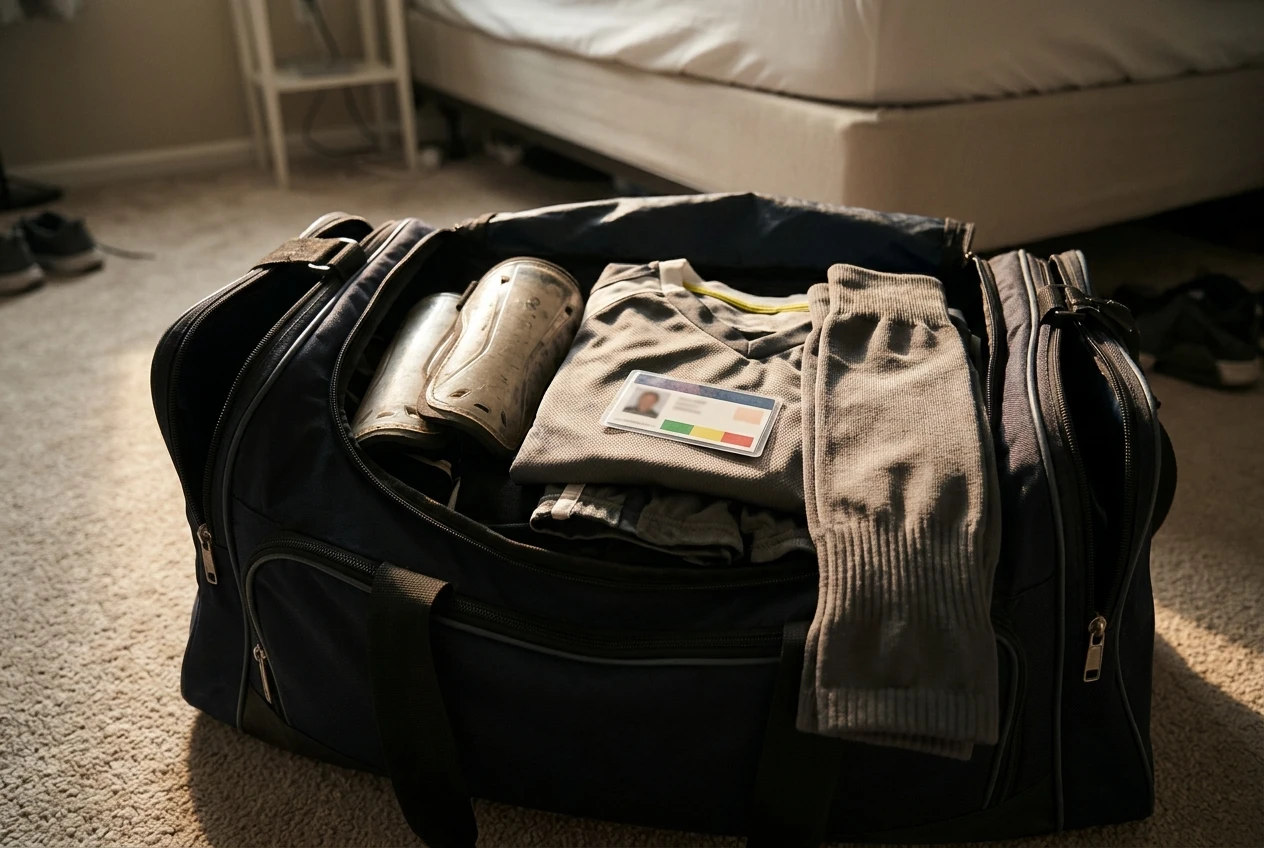
- Registration or player card, if your league uses one. Some youth and adult leagues will not let an unregistered player on the team sheet. If yours issues a card or a digital pass, keep the card in the bag’s front pocket, or screenshot the pass so it is on the phone.
Put these five in the same pocket or at the top of the bag so you can see them at a glance. When you open the bag at the field and the pocket is empty, you know within seconds.
Footwear zone: the right pair for the surface, plus a spare
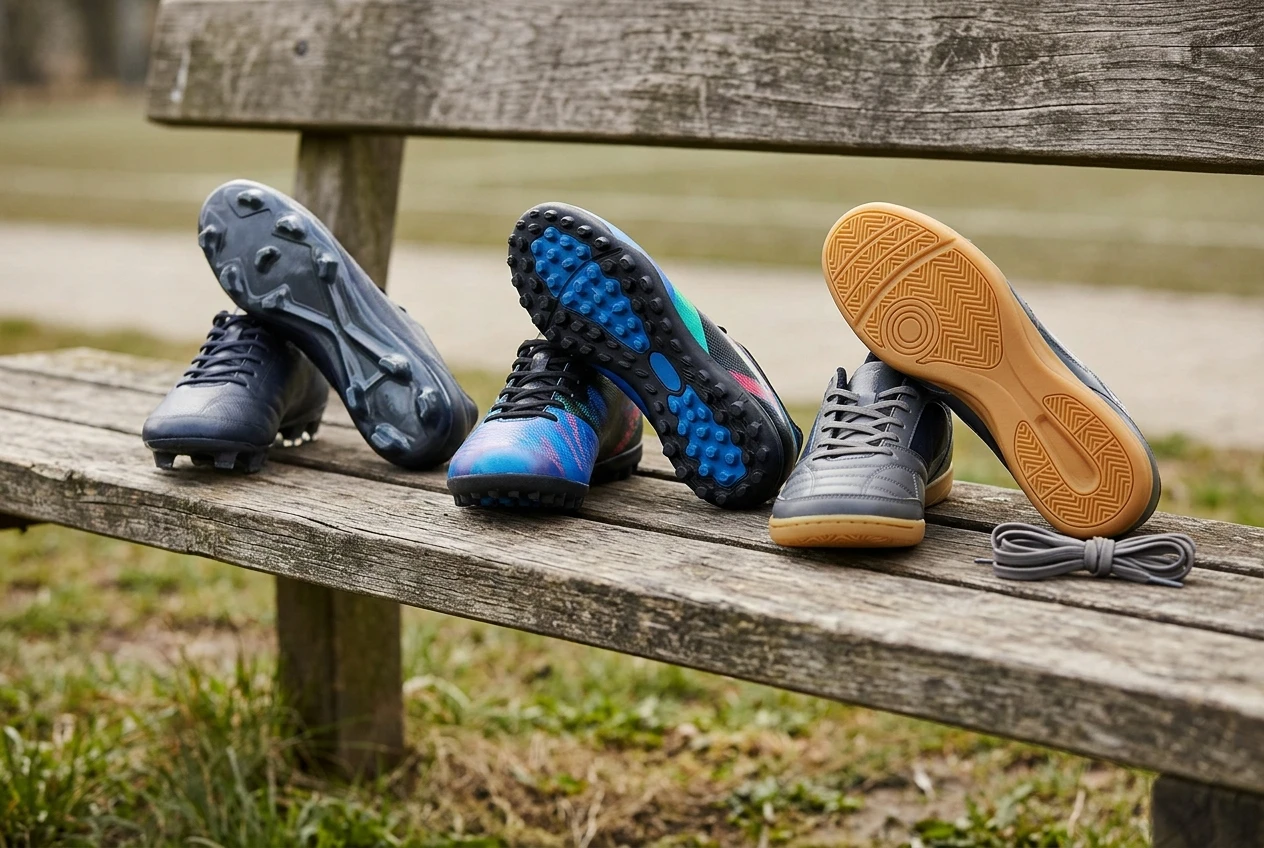
Soccer footwear is the item most often wrong for the day, because the surface changes between home and away fixtures. Firm-ground cleats, artificial-grass cleats, turf shoes and indoor shoes are built for different surfaces, and the wrong stud pattern can feel slippery or put extra load on the knees and ankles. The guide on firm ground vs artificial grass soccer cleats explains how to read the stud pattern on the sole so you can match the pair to the pitch.
If your matches or sessions sometimes move indoors or onto a small-sided turf field, the comparison of turf vs indoor soccer shoes will help you decide which pair belongs in the bag. Players who split their week between surfaces usually need two pairs, and the bag should carry the pair for that day, not both every time.
A few footwear habits are worth building:
- Pack a spare option. A second pair, even an older one, matters if a lace snaps, a stud breaks or the first pair is soaked from the last match.
- Bag shoes separately. A shoe bag or a plastic carrier keeps mud and grass off clean kit. Many bags have a dedicated compartment for this.
- Carry a spare pair of laces. They weigh almost nothing and take the problem away completely.
- Check studs before you pack. If the studs are cracked, worn flat or loose, replace the pair or swap the studs before the match, not at the field.
- Bring something for the walk. Sandals or slides let a player take cleats off before getting in the car, which keeps the car and the bag cleaner.
Protection zone: shin guards, socks and what to check before they go in the bag
Shin guards are the item most likely to be left by the front door because they come out of the bag to dry. Make it a rule that they go back in the bag the same day they are washed or aired out.
The style matters for comfort and for how likely a player is to wear them properly. The article on slip-in, ankle guard or hard shell shin guards compares the main types and who each suits.
Before the guards go in the bag, check these:
- Size and fit. The guard should cover most of the shin, from just below the knee to a few fingers above the ankle. A youth player who has grown since last season may need a larger pair.
- Cracks or deformation. A cracked shell or a flattened foam layer protects less.
- Straps and sleeves. If the guards rely on straps, check the elastic and the hook-and-loop closure. If they slide into a sleeve, check the sleeve for holes.
- Odour and dampness. Guards that go back in the bag damp will smell by the next match, and damp foam breaks down faster.
On socks, pack two pairs: the match socks in the club colour and a spare pair. Socks that cover the guards and stay up through a full match make the guards easier to forget about, which is what you want from protection gear.
Weather and kit zone: what to add for rain, cold and heat
Check the forecast at the same time you check the bag. Matches rarely get called off for ordinary rain or cold, so the player needs a plan for both.
Rain
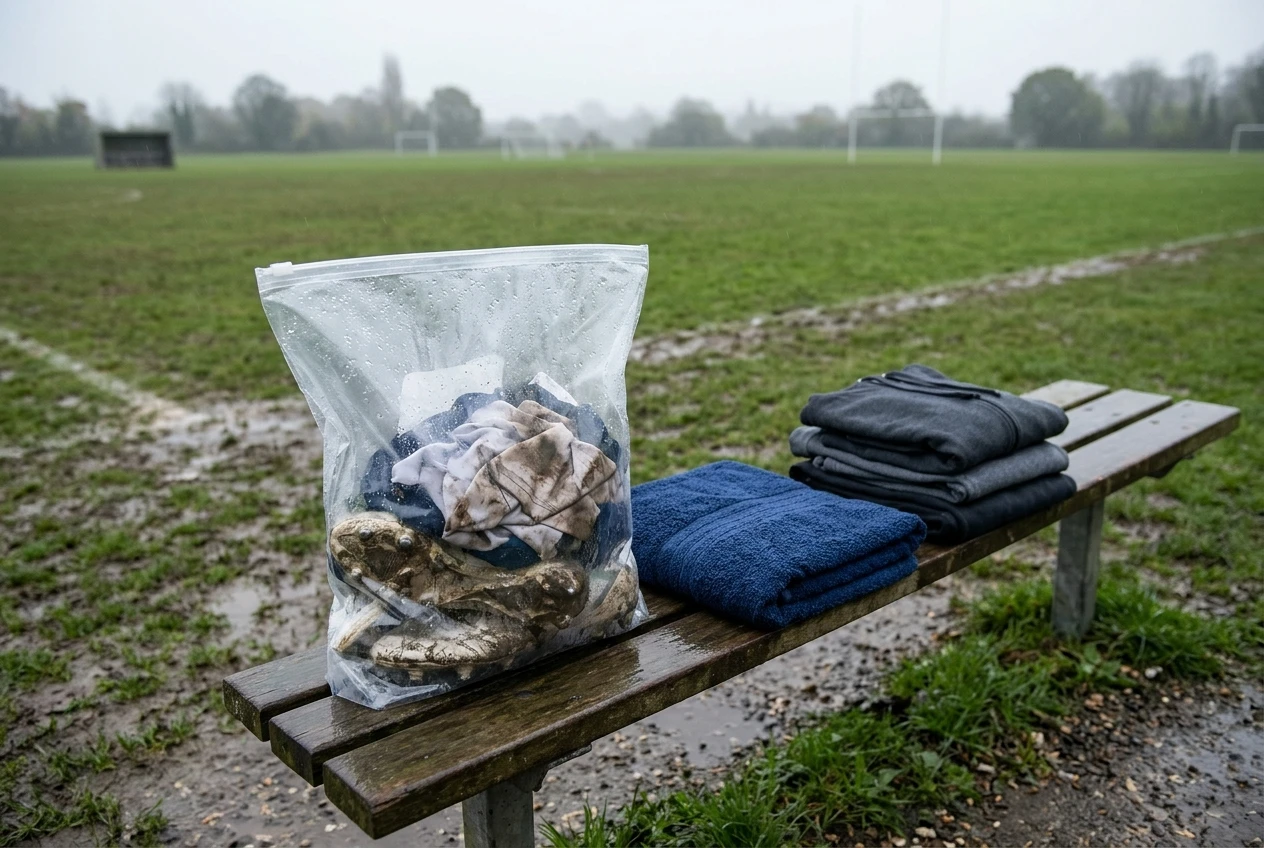
- A towel to dry hands, face and legs before changing
- A plastic or waterproof bag for wet kit and shoes, so they do not soak everything else
- A dry set of clothes, including socks and underwear, for the ride home
- A waterproof jacket for the sideline and for substitutes
- A second pair of match socks if the first pair gets soaked at halftime
Cold
- A long-sleeve base layer under the jersey, if the league allows it (check the kit rules)
- A warm-up top and tracksuit trousers for before kick-off and for substitutes
- A hat and gloves for the warm-up and the sideline
- A thermos or flask of something warm for after the match, which is useful for younger players
Heat
- Extra water, more than you think you will drink
- A hat or cap for the sideline, and sunscreen applied before the match
- A spare shirt, so the player can change when the first one is soaked
- A small cooler bag or an insulated bottle that keeps drinks cold for the second half
Heat is the condition most likely to catch players out because it does not look like bad weather. A bright, dry morning can still be a hard match for a player who has not brought enough to drink.
Fuel and recovery zone: water, snacks and post-match basics
The bag should carry enough for before, during and after the match. At minimum, that means a full water bottle and a snack for after the final whistle. A longer day, such as a tournament with several matches, needs more snacks and more water.
What to eat and when is its own topic. The article on what to eat before a soccer game, during it and afterwards covers the timing in detail, so the bag only needs to hold the foods that fit the plan.
For recovery, pack the basics before the extras:
- Water or an electrolyte drink for after the match
- A snack with carbohydrate and some protein, so the player does not wait until dinner
- Dry, warm clothes to change into, since staying in wet kit cools the body down
- Flip-flops or slides to take the cleats off
Recovery tools such as foam rollers, massage guns and compression gear are optional and usually do not travel in the match bag. The guide on soccer recovery gear tested against the evidence looks at which tools have support and which are mostly hype, which helps before spending money on something that adds weight to the bag.
Goalkeeper and coach extras: gloves, a pump and the small things that save a session
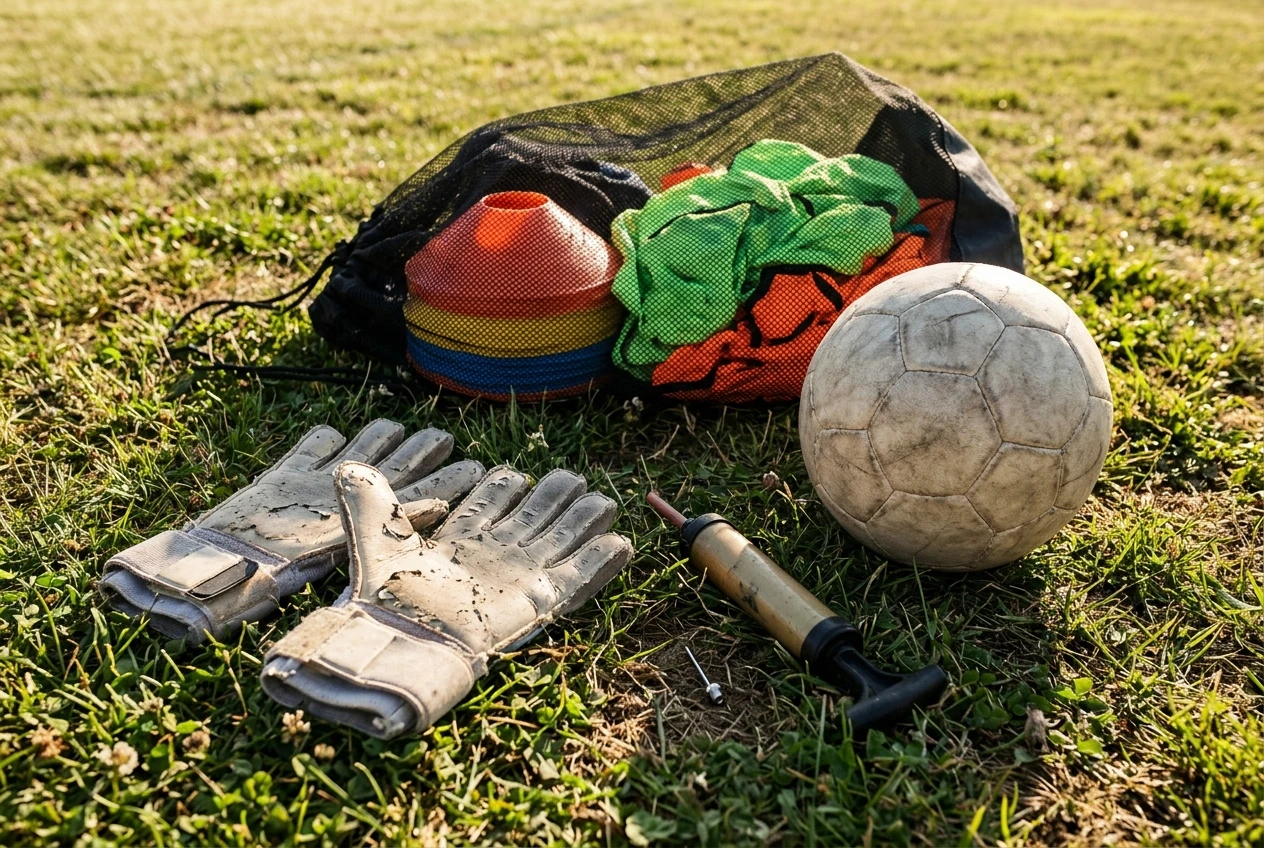
Goalkeepers carry everything above plus a few position-specific items. The most important is gloves. Grip, durability and finger protection vary with the level of play, and the guide to choosing goalkeeper gloves explains how to match them to training, matches and your level. A goalkeeper who trains often may want a training pair separate from the match pair, so the match gloves stay in better condition.
Other goalkeeper extras include:
- A long-sleeve goalkeeper jersey in a colour that differs from both teams, since the referee will ask
- Padded trousers or elbow protection, if the player uses them
- A small bottle of water to dampen gloves before the match, if the manufacturer recommends it
- A towel, kept separate from the one used for the body
Players and coaches who run sessions benefit from a small repair-and-rescue kit. A ball that is soft by the time it reaches the field can delay a session, so a pump and a needle are worth carrying. The roundup of the best soccer ball pumps compares options so you can pick one small enough to stay in the bag all season.
Coaches can add a few more items:
- A basic first aid kit with ice packs, plasters and tape
- A whistle and a notebook or team sheet
- Bibs and a few cones for warm-ups
- A spare ball
Coaches who want to build a fuller kit can look at the soccer equipment for coaches guide.
The five-minute night-before pack, and how to keep the bag from going stale
Do this the evening before, not on the morning of the match, when there is less time and more stress. Set a timer if it helps.
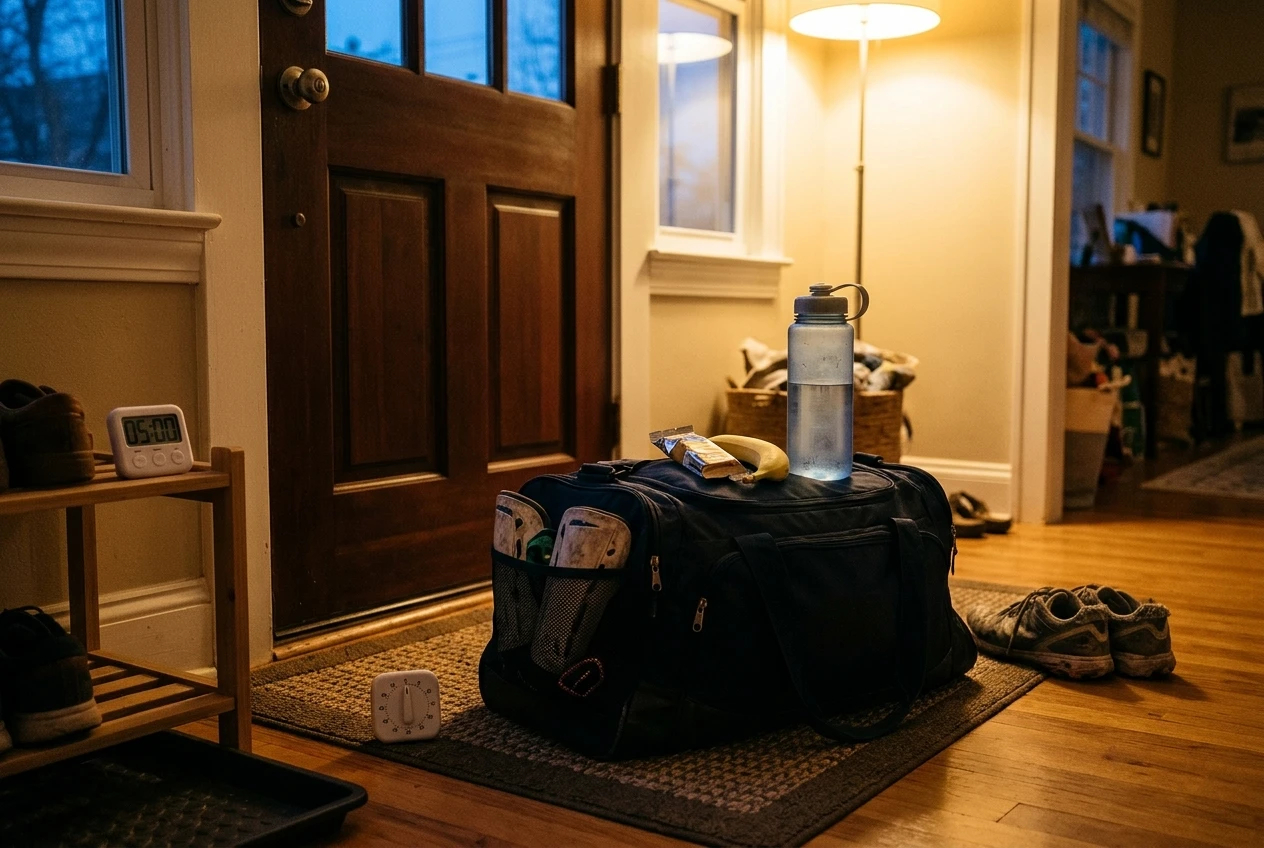
Minute one: empty the bag. Pull everything out onto a bed or floor. Throw away old wrappers and anything that does not belong, and take out kit that needs washing.
Minute two: check the five non-negotiables. Shin guards, footwear, kit, long socks and the registration card. Touch each one and put it back in the bag.
Minute three: check the footwear. Look at the studs, the laces and the soles, and make sure the pair matches tomorrow’s surface.
Minute four: add for the weather. Look at the forecast and add the rain, cold or heat items from the weather zone. Fill the water bottle and put it in the fridge if you can.
Minute five: add the extras. Add the snack, the change of clothes and any goalkeeper or coach items, then put the bag by the front door, where you will see it on your way out.
To keep the bag from going stale between matches:
- Unpack it after every match. Wet kit left in a closed bag grows mould and smell within a day or two.
- Wash and dry the kit straight away. Put it back in the bag as soon as it is dry.
- Restock the consumables. Replace the snack, the tape and the spare laces right after you use them.
- Review the bag each month. Check for items that have worn out or been outgrown, which happens fast with youth players.
- Keep the list somewhere visible. A note on the phone or a card inside the bag lid saves you from relying on memory.
Check your bag against this soccer bag checklist tonight. Then pick the one item you are missing or have worn out, and read the matching gear guide above before you buy.