Soccer asks a lot of the legs in a way that most endurance sports do not. A player sprints, brakes hard, turns, jumps, and takes contact, over and over, for 90 minutes. Then the same player has a training session the next evening, or a second game on Sunday
“best recovery tools for soccer players. Recovery gear is marketed straight at that problem, and a lot of it is expensive.
This guide sorts the popular options by what sports science generally supports and what is mostly trend. It also covers where the first dollar of a recovery budget should go, because the best recovery tools for soccer players are not the ones with the most polished ads.
Why Soccer Recovery Is Its Own Problem
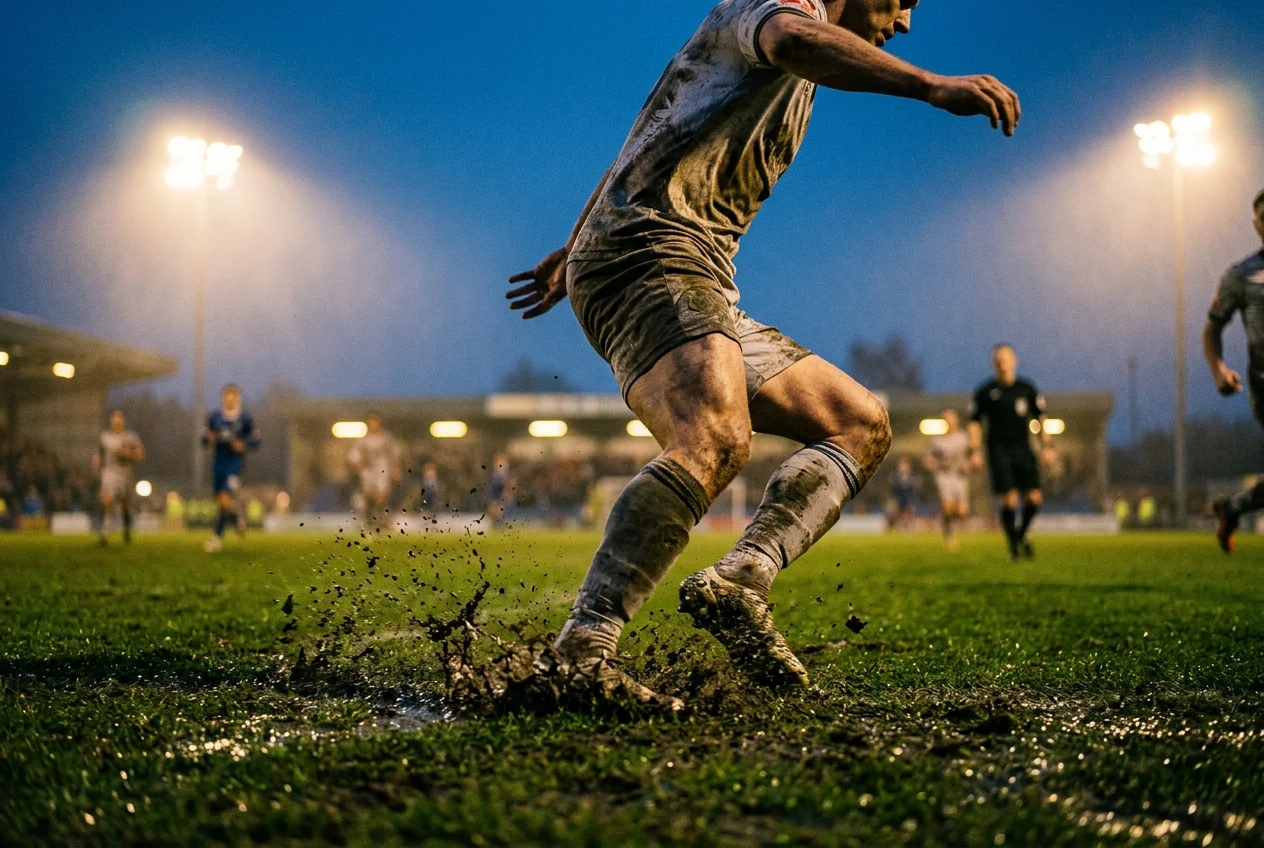
Soccer fatigue has several sources at once, and no single gadget addresses all of them.
- Muscle damage from braking. Slowing down, planting a foot and changing direction load the muscles while they lengthen. This kind of work causes much of the next-day soreness in hamstrings, quads and calves.
- Fuel use. Repeated sprints and constant running draw heavily on stored carbohydrate. Low fuel the next day feels like heavy legs even when nothing is damaged.
- Nervous system and mental fatigue. Decision-making under pressure is tiring, and evening games push bedtime later.
- Contact. Knocks, tackles and awkward landings add bruising and joint irritation that no foam roller solves.
- Schedule. Amateur and school players often stack games, practices, gym sessions and a day job or classes, with no one managing the total.
Because the causes differ, the useful question is not “does this product work?” but “which of these causes does it address, and is there evidence it helps with that?” The answers range from a small benefit to none.
The Filter Used to Separate Useful Recovery Tech From Hype
Every tool below is judged by the same five questions.
- What does it claim to change? Soreness, performance the next day, injury risk and adaptation are four different outcomes. Many products blur them.
- Is the benefit measured or only felt? Feeling better is real and worth something. It is a different claim from performing better or being less injured.
- Does the evidence come from people like you? Studies on elite professionals, or on healthy volunteers doing an unusual lab task, do not always carry over to a 17-year-old playing three games a week.
- Could it get in the way of training? Some recovery methods can reduce the signals your body uses to adapt to training.
- Does it beat the free alternative? If sleeping an extra 45 minutes does more than the device, the device is a second purchase, not a first.
Under this filter, most gear lands in the same place: a small effect on how sore you feel, little proof of better performance, and a price that is out of proportion to the benefit.
Foam Rollers and Massage Guns: What They Do for Soreness and What They Do Not
Foam rolling and percussive massage are the most common recovery tools among amateur players, and they have a similar evidence profile. Studies generally find that they can reduce how sore muscles feel for a short time and may improve range of motion briefly. Those effects are modest and tend to be short-lived.
What they do not do is repair muscle faster in any way that has been shown to matter. Rolling a quad does not clear metabolic waste, flush lactate or break up scar tissue. Those ideas are common in marketing and have little support. The honest description is that pressure on a tender muscle can feel good and can make a stiff muscle feel looser for a while. That is a reasonable thing to want after a hard session.
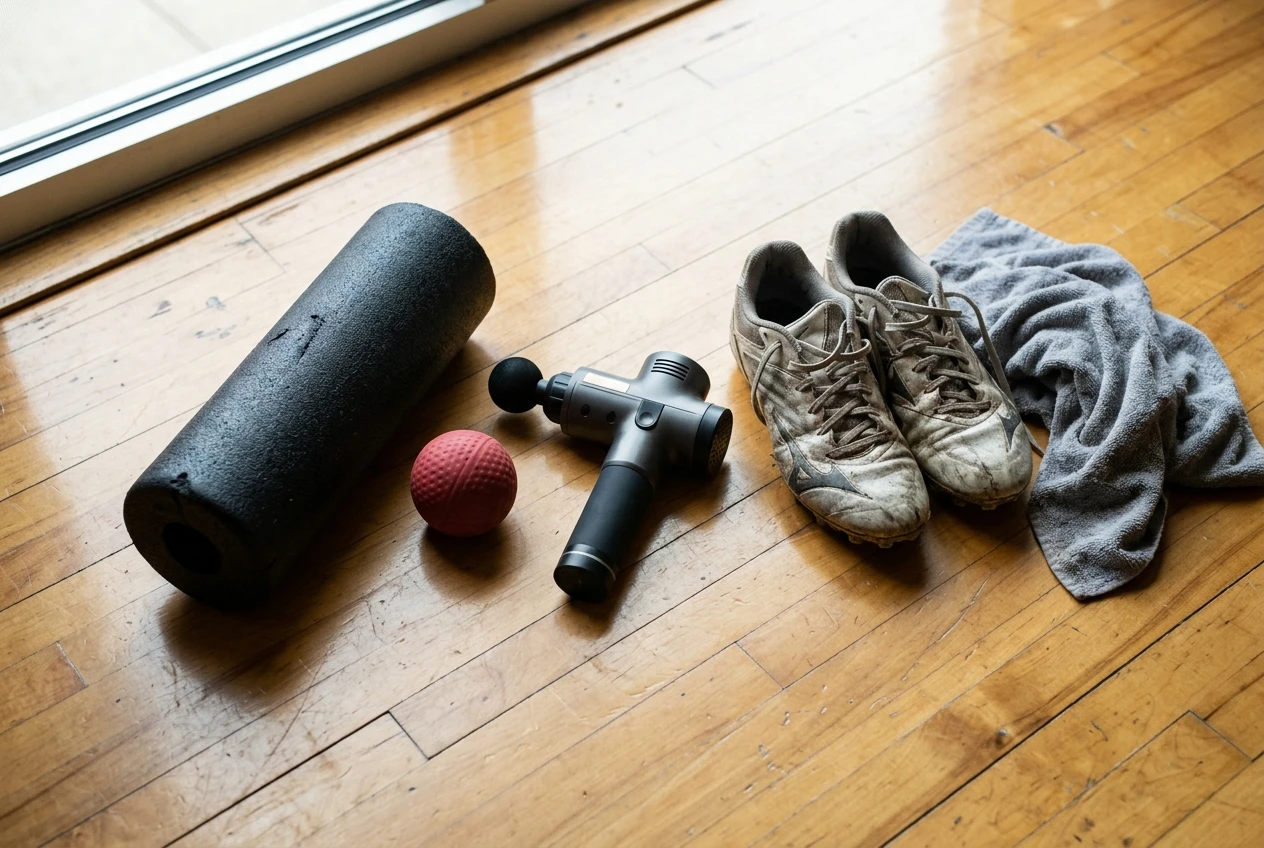
A foam roller and a massage gun do the same job in practice. The gun is faster and easier on the hands and arms, and it costs far more. A basic roller, or even a tennis or lacrosse ball against a wall for the glutes and calves, gets most of the same effect. If a massage gun appeals to you for comfort or convenience, that is a fine reason to buy one, as long as you are clear that it is a comfort purchase and not a recovery upgrade.
Some practical cautions apply to both:
- Avoid pressing hard on a muscle that is genuinely injured. A sharp, localized pain that does not ease is something to have checked, not something to roll out.
- Keep the guns away from bones, joints, the front of the neck and the lower back.
- Use them for a few minutes per area. More time does not buy more benefit.
Compression Gear and Percussion Boots: Who Might Notice a Difference
Compression garments such as tights, socks and sleeves have been studied more than most recovery products. The pattern in the research is a small reduction in perceived soreness when worn after hard exercise, and little to no clear effect on measured performance. Results vary with the garment, the pressure and the activity.
That makes compression a reasonable low-risk option for some players, particularly:
- Players traveling to away games or tournaments, where sitting for hours in a car or on a bus leaves legs feeling heavy.
- Players who simply find the feel of compression comfortable after a match.
- Anyone who already knows they like it. Perceived benefit counts for something, as long as you do not expect it to change your next sprint test.
Pneumatic compression boots, the inflating sleeves that squeeze the legs in cycles, sit in a similar place with a higher price. The evidence for them is thinner than for compression garments, and what exists mostly points to a modest effect on how the legs feel. For a player at the amateur or school level, they are close to the last thing worth buying. They make more sense for someone who has already sorted sleep, food and load and has money left over.
One more point on socks and sleeves: worn on the pitch, they are not the same as recovery compression, and nothing here says they prevent injury. Wear them if you like them, and do not count them as protection.
Cold Water Immersion: When It Helps, and When It Can Work Against Training Adaptation
Ice baths and cold plunges have the strongest reputation and the most complicated evidence. Cold water immersion after hard exercise can reduce how sore you feel in the following day or two, and some studies suggest it can help with fatigue when you have to perform again soon. That is its real use case: a tournament weekend, a cup run, or any stretch where you play again within a day or so and what matters is feeling fresh enough for the next match.
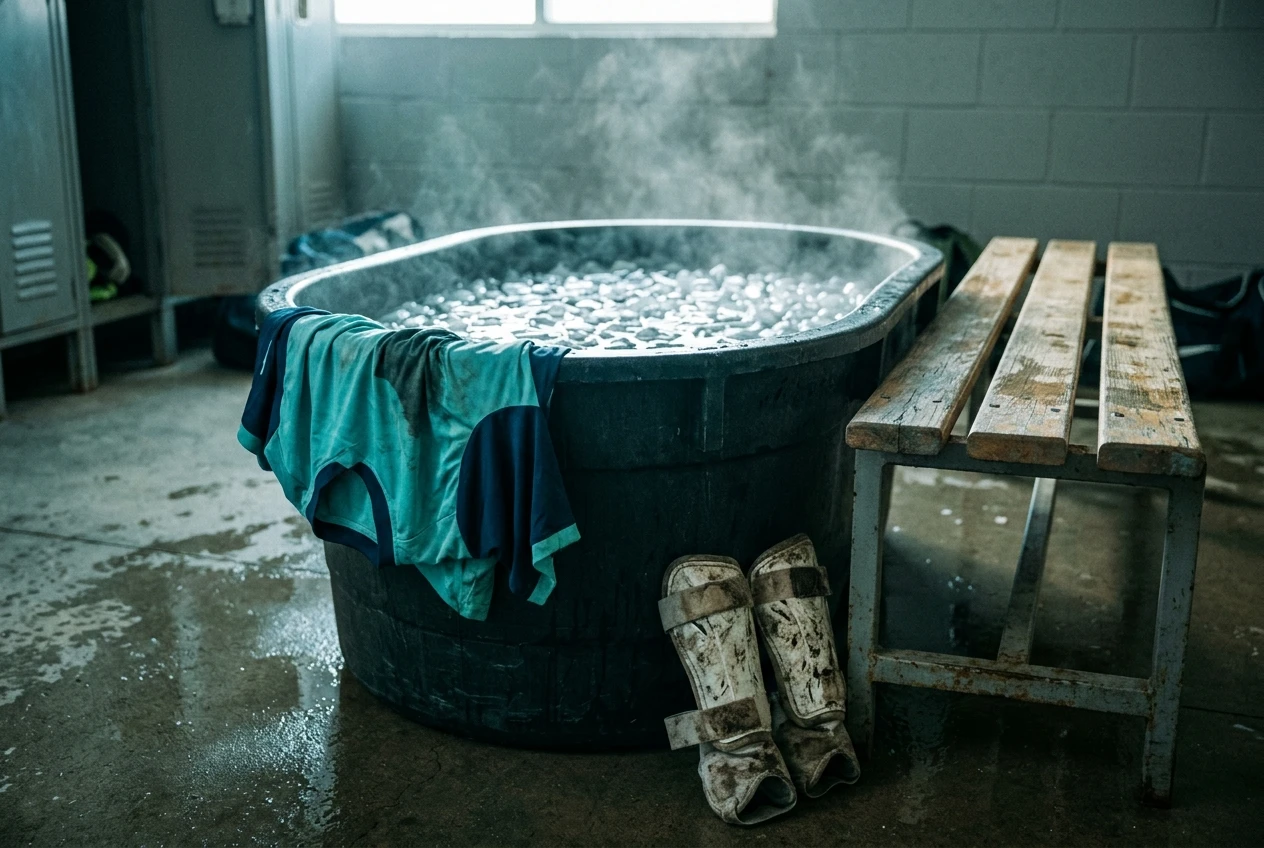
The cost is in training. Research on regular cold water immersion after strength training suggests it can dampen some of the adaptation that the training is meant to produce, including muscle growth and strength gains. The inflammation and stress that cold reduces are part of the signal the body uses to get stronger. If you are in a building phase, with gym work or hard conditioning sessions, a cold plunge straight after can work against what you are trying to do.
A sensible way to use cold, based on that:
- Tournaments and congested fixtures: it is a reasonable tool when the priority is being ready again quickly.
- Building phases and pre-season: skip it right after strength or hard conditioning work, or leave several hours before and after.
- Everyday use: unnecessary for most amateur players. A cool shower is not the same as an ice bath, but it is a much cheaper way to feel refreshed.
Cold water also carries real safety considerations, especially for anyone with heart or circulation issues. Keep sessions short, never plunge alone, and ask a doctor first if you have any health concern.
Wearables and Sleep Trackers: Useful Data or Expensive Anxiety
Wearables measure things that matter: sleep duration, resting heart rate, heart rate variability and training load. Consumer devices are reasonably good at estimating how long you slept and how consistent your schedule is. They are weaker at identifying sleep stages, and the readiness or recovery scores they produce come from proprietary formulas that are not independently verified for soccer players.
That leads to two ways a tracker can help or hurt.
Where it helps. It can show patterns you would not notice yourself: you sleep much less on nights after evening training, your resting heart rate climbs during a heavy fixture week, or your bedtime drifts later on weekends. If the data prompts a change in behavior, it earns its price.
Where it hurts. Some people become preoccupied with a low score and sleep worse because of it. A number that says you are “poorly recovered” can also push you to skip a session you were fine to do, or to feel tired before you have even started.
If you are curious, a basic tracker used for sleep duration and consistency is enough. Treat the score as a rough guide, and trust how you actually feel and how training is going over any single morning’s number. Your own notes, such as hours slept and a 1 to 10 rating of leg heaviness, cost nothing and answer many of the same questions.
Free Recovery You Are Probably Underusing: Sleep, Food and Smart Load Management
Every gadget above works at the edges. The core of recovery is three things, and all of them are cheap.
Sleep
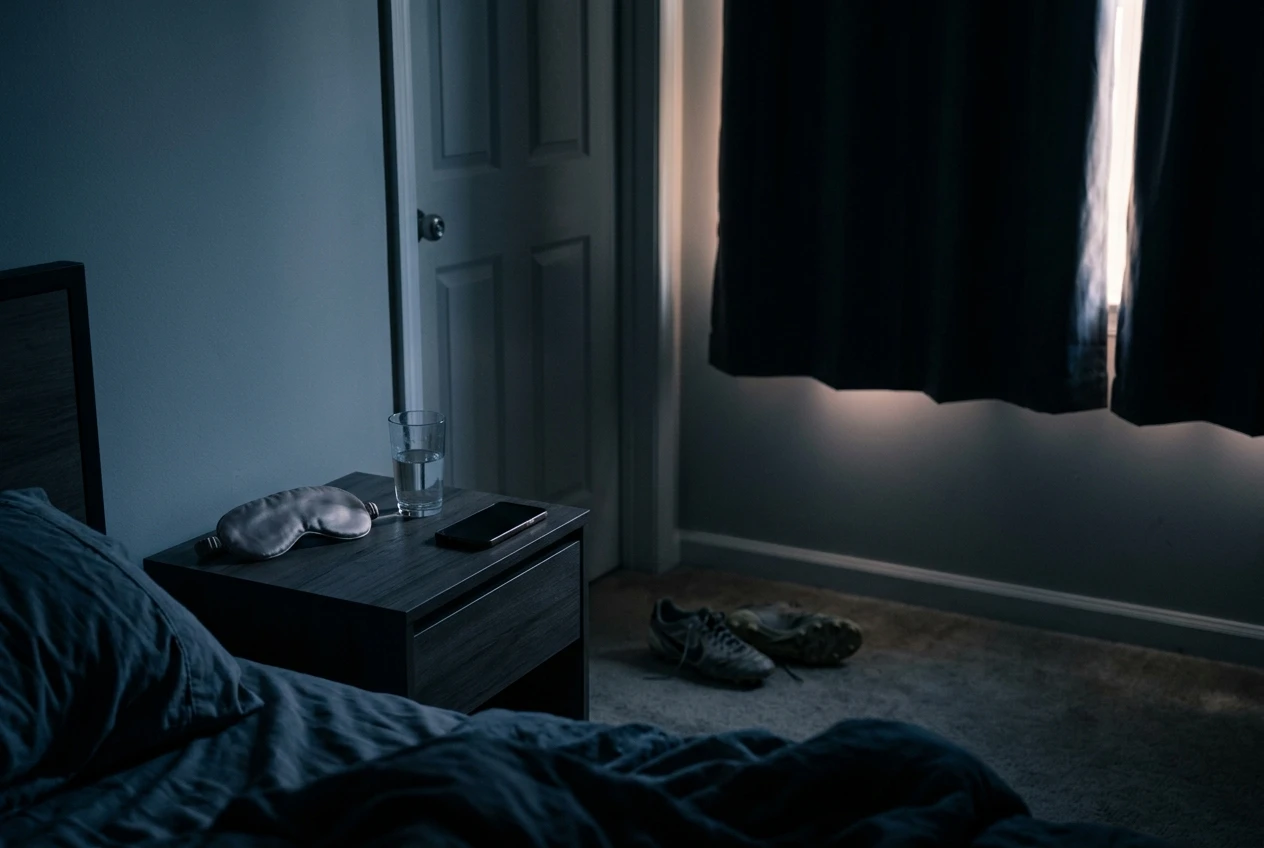
Sleep is when the body does most of its repair, and it also affects reaction time, mood and appetite. Most players who train hard benefit from consistent sleep and wake times, a dark and cool room, and no screens in the last stretch before bed. Late-night matches or training make this harder, so protect the nights you control. If you have to choose between an extra hour of sleep and any recovery device, choose the sleep.
Food and fluids
Muscles rebuild from protein and refill from carbohydrate. After a match or hard session, a meal that includes both within a reasonable window does more for the next day than a roller or boots. Hydration matters too, especially in heat. The details of fueling across the week, not only on match day, are covered in the guide on soccer nutrition beyond match day.
Load management
How much you train and play in a week usually matters more than what you do after. A few principles help:
- Increase hard work gradually rather than in sudden jumps.
- Put easy or rest days after the hardest days.
- If you play several matches in a few days, drop the intensity of training around them.
- Treat persistent heaviness, a nagging ache or poor sleep as information, not something to push through.
If you are planning a build-up, a phased approach is easier on the body. The off-season conditioning plan shows how to structure it so that you arrive at preseason fit without piling on fatigue.
A Sensible Recovery Kit for a Player on a Small Budget, in the Order to Buy It
Spend in this order, and stop when you have what you need.
- Sleep basics. A consistent schedule costs nothing. If light is a problem, an inexpensive eye mask or blackout curtains are the best-value purchase on this list.
- A reusable water bottle and a food plan. Having a recovery snack and meal ready after training, such as milk, yogurt, a sandwich or rice with protein, solves more than any device.
- A foam roller or a lacrosse ball. Either gives you the comfort and short-term loosening that massage tools offer, at the lowest price. Use it for a few minutes after sessions.
- Compression socks or tights, if you travel to games or like the feel. Optional and low-risk, with a small effect on how your legs feel.
- A massage gun, only if the roller is not enough for you or you want the convenience. It is a comfort upgrade.
- A tub or access to cold water, for tournaments and congested fixtures only. Use it sparingly and keep it away from the hours after strength work.
- A basic sleep tracker, if data motivates you rather than worries you.
Percussion boots come last, after everything else is in place and there is still money to spend. At each step the question is the same: does this address something that is limiting my recovery, or is it just appealing?
None of this is medical advice. A pain that is sharp, worsening or lasting more than a few days should be looked at by a physiotherapist or doctor rather than treated with gear.
Before you spend anything, set up the free basics. Start with the guide on fueling, hydrating and recovering across the whole training week, then add the daily stretching routine for soccer players that fits before and after training.