A player who eats well on random days but gets matchday wrong is still showing up underfueled. The opposite is also true: a perfect pre-game meal cannot undo a week of skipped lunches and poor recovery eating. Performance nutrition for soccer is not about finding the right foods, it is about eating the right foods at the right points in the cycle. That distinction is what most advice lists skip, and it is the difference between a player who fades after sixty minutes and one who is still sharp in stoppage time.
Why timing matters more than any single ‘superfood’
No single food fixes a fueling plan. A banana will not save a player who ate a heavy, fat-laden meal three hours before kickoff, and a plate of grilled chicken will not help if it is eaten ten minutes before a sprint-heavy warm-up. The body processes carbohydrates, protein and fluid on different schedules, and each has a window where it does the most good.
Carbohydrate stores in the muscles need a day or more to top up fully. Protein for muscle repair works best in the hours right after hard exercise. Fluid and electrolytes need topping up continuously, not just when a player feels thirsty. A timing-based plan respects those schedules instead of treating every meal as interchangeable.
Fueling the training week: carbs and protein that actually rebuild muscle
The training week sets the foundation that matchday nutrition builds on. On hard training days, carbohydrates should make up the largest part of each meal: rice, pasta, oats, potatoes and whole-grain bread refill the glycogen that gets burned during sprints and repeated high-intensity bursts. Skimping on carbs during the week means showing up to the weekend match already running on a partial tank.
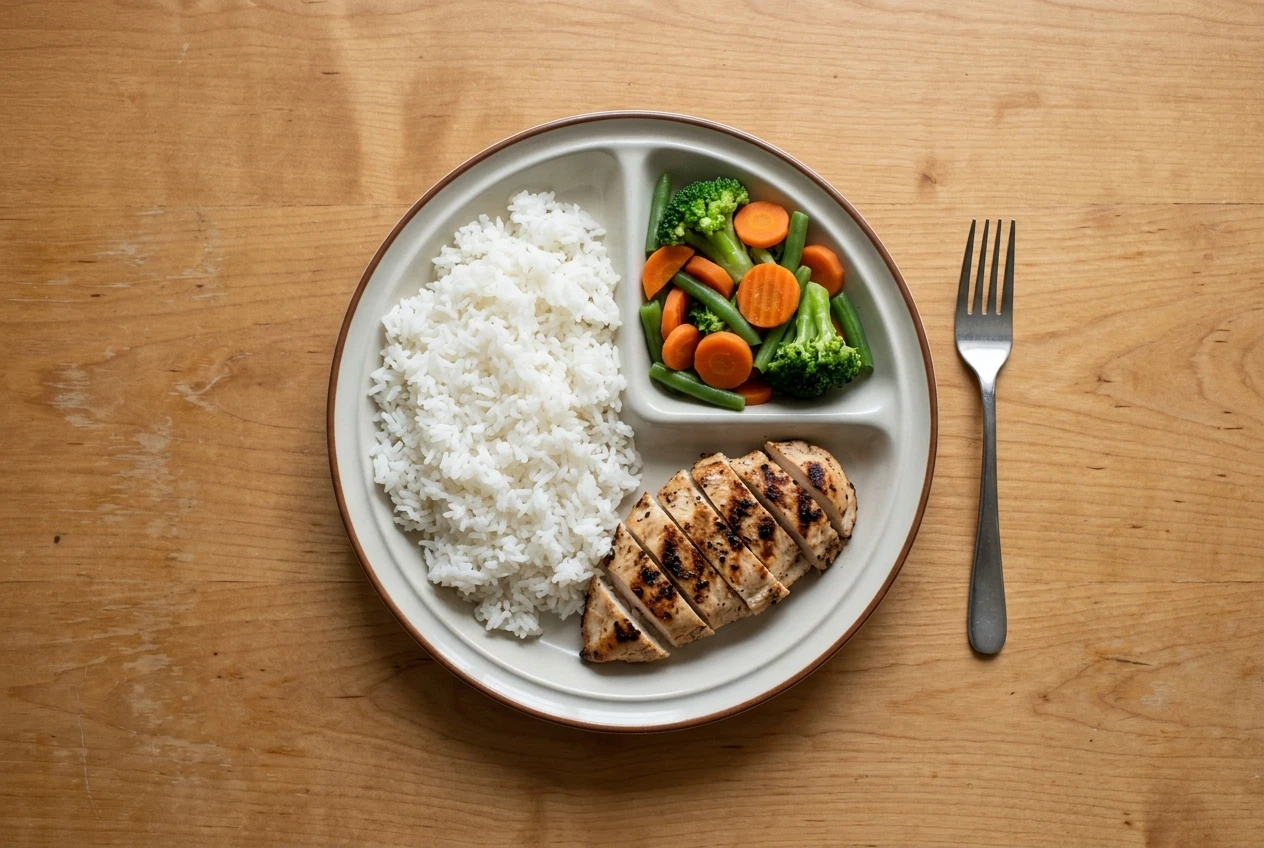
Protein matters just as much, but at a different job. Every training session creates small amounts of muscle damage that needs repairing, and that repair happens over the following 24 to 48 hours. Eggs, chicken, fish, beans, yogurt and milk spread across the day do more for recovery than one large protein serving at dinner. A simple target is a palm-sized portion of protein at each main meal, with carbohydrate portions scaled to how hard that day’s session was.
Lighter training days or rest days are the time to ease off on carb quantity slightly, not cut it out, while keeping protein steady so the repair work continues uninterrupted.
The night before a match: what to eat and what to skip
The meal the night before a match should feel familiar, not experimental. This is not the time to try a new restaurant or a spicy dish, no matter how good it sounds. The goal is topping off glycogen stores with a carbohydrate-forward dinner: pasta with a light sauce, rice with grilled chicken, or a baked potato with fish all work well.
Keep fat and fiber moderate. A large amount of either slows digestion and can leave a player feeling sluggish or dealing with stomach discomfort the next morning. Heavy cream sauces, fried foods and large servings of raw vegetables are better saved for another night. A reasonable portion of vegetables is fine, just not a plate dominated by them.
Hydration starts the night before too. A player who shows up to breakfast already dehydrated is fighting an uphill battle before the match even starts.
Matchday morning: getting the 3-hour pre-game meal right
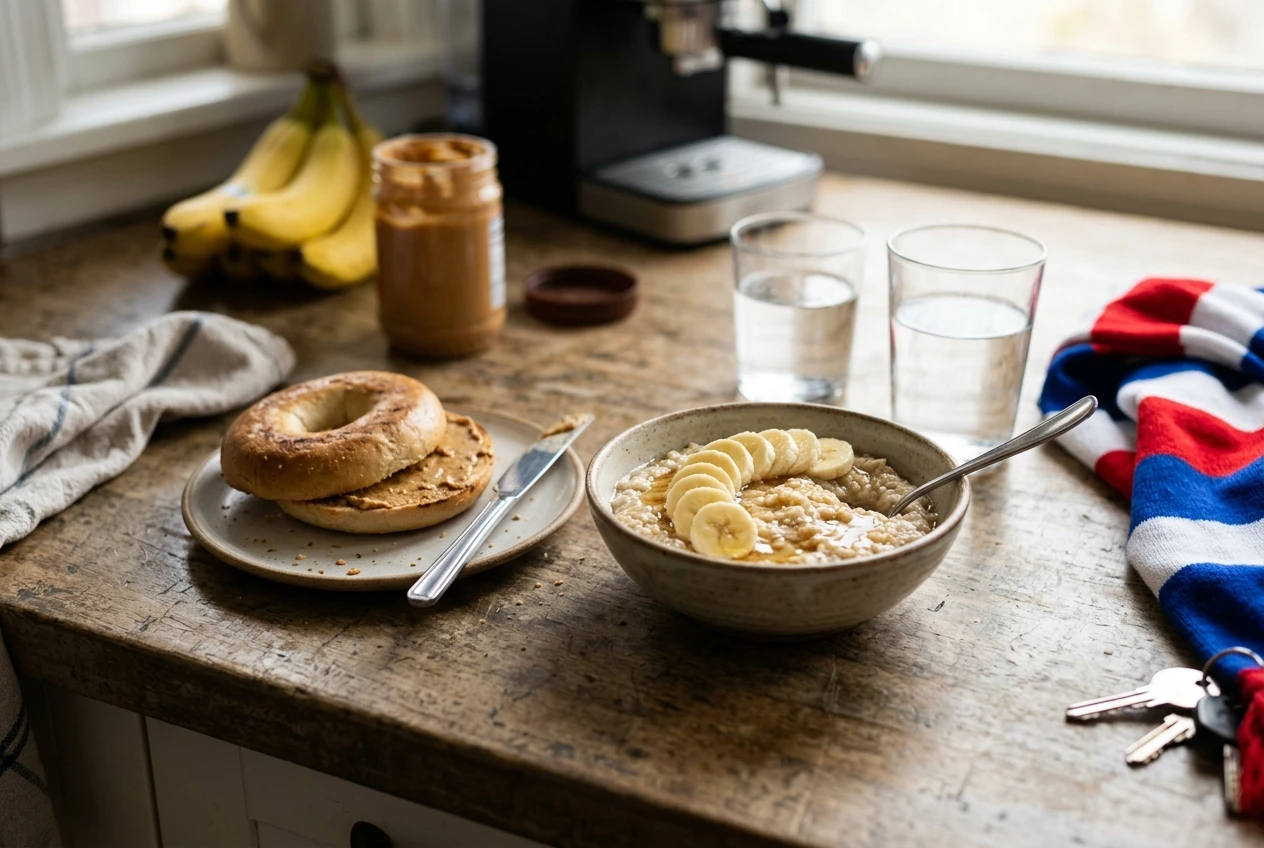
This is the question most players and parents actually have: what to eat before a soccer game so energy lasts the full ninety minutes without sitting heavy in the stomach. The three-hour mark before kickoff is the target window for the main pre-game meal, and it should lean heavily on carbohydrates with a moderate amount of protein and low fat.
Good options include:
- Oatmeal with banana and a small amount of honey
- Toast with eggs and a side of fruit
- A bagel with peanut butter, scaled to a thin layer rather than a thick one
- Rice or pasta with grilled chicken, for players whose stomachs handle solid meals well that early in the day
Avoid high-fat items like bacon, sausage, or heavy cream-based dishes, and go easy on fiber-heavy foods like beans or large raw salads, since both slow digestion and can cause cramping once the whistle blows. Carbonated drinks and large amounts of dairy right before a match can also cause discomfort for some players.
If kickoff is closer than three hours, scale the meal down. A smoothie, a piece of toast with jam, or a banana with a small handful of crackers about 60 to 90 minutes out gives a quick top-up without sitting undigested during the first half.
Halftime fueling: what works in a 15-minute window
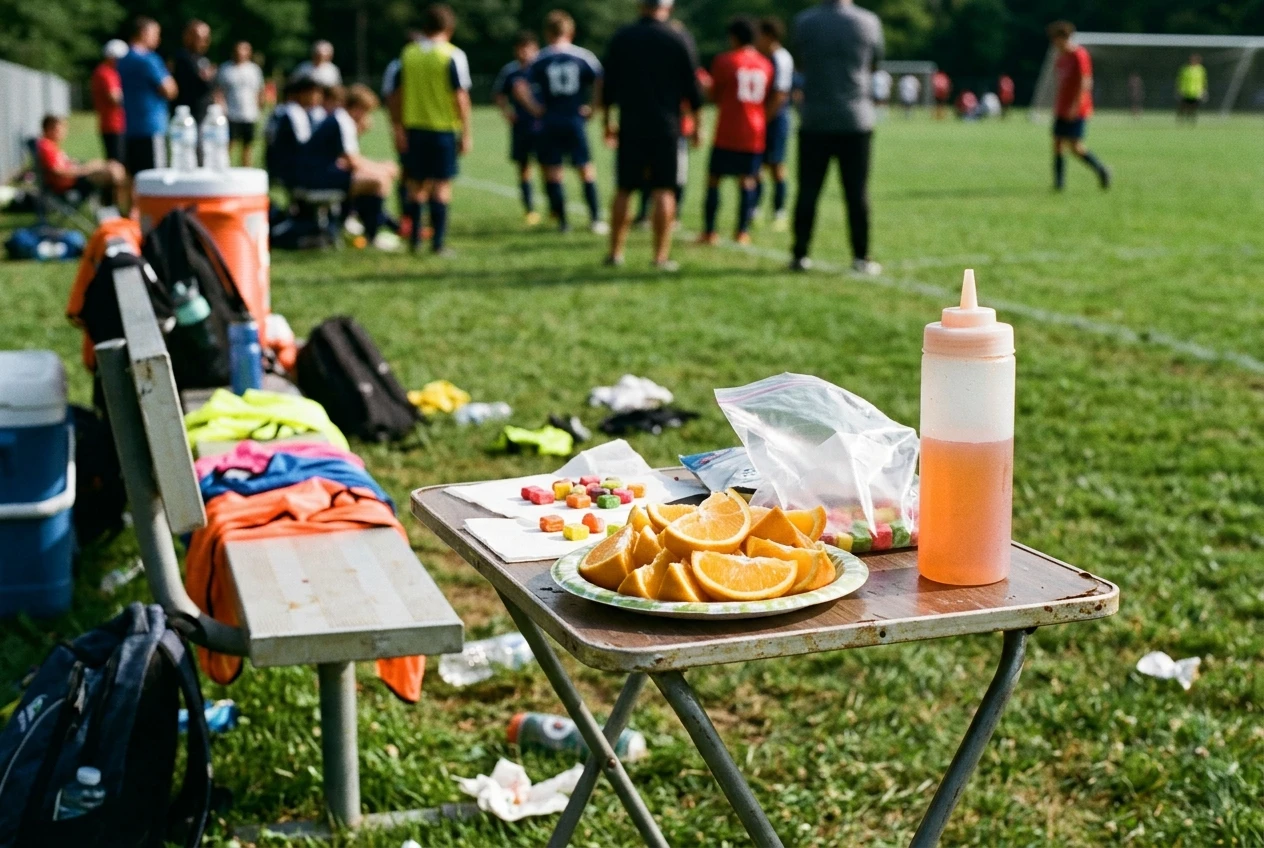
Fifteen minutes is not enough time for digestion, so halftime fueling needs to be fast-absorbing and easy on the stomach. This is where quick carbohydrates earn their keep: an orange, a small handful of dried fruit, a few sports chews, or a diluted sports drink all work.
Water alone is fine for shorter matches, but for a full ninety minutes, especially in warm weather, a drink with some carbohydrate and sodium helps maintain energy and fluid balance into the second half. Avoid anything heavy, fatty, or high in fiber at halftime. A granola bar loaded with nuts and chocolate might sound like a good energy boost, but it digests too slowly to help in the second half and can sit uncomfortably during running.
The first 30 minutes after the final whistle: recovery nutrition that counts
The thirty minutes right after a match is when the body is most ready to absorb carbohydrate and protein for recovery. Waiting two or three hours to eat means missing a chunk of that window, which slows down how quickly a player is ready for the next session or match.

A good recovery snack combines fast carbohydrate with a moderate amount of protein: chocolate milk, a turkey sandwich, yogurt with fruit, or a smoothie with milk and banana all fit the window well. This does not need to be a full meal. A proper meal an hour or two later finishes the job, but that first snack starts glycogen replenishment and muscle repair while the body is primed for it.
Hydration continues here too. Replacing fluid lost through sweat, with a pinch of electrolytes if the match was long or hot, matters as much as the food itself.
Hydration mistakes that quietly wreck a player’s second half
Hydration mistakes tend to be invisible until the second half, when legs feel heavy and concentration slips, and by then it is too late to fix in-game. The most common mistake is drinking only at halftime instead of staying ahead of fluid loss throughout the day. A player who starts a match even mildly dehydrated is already working at a disadvantage before the first sprint.
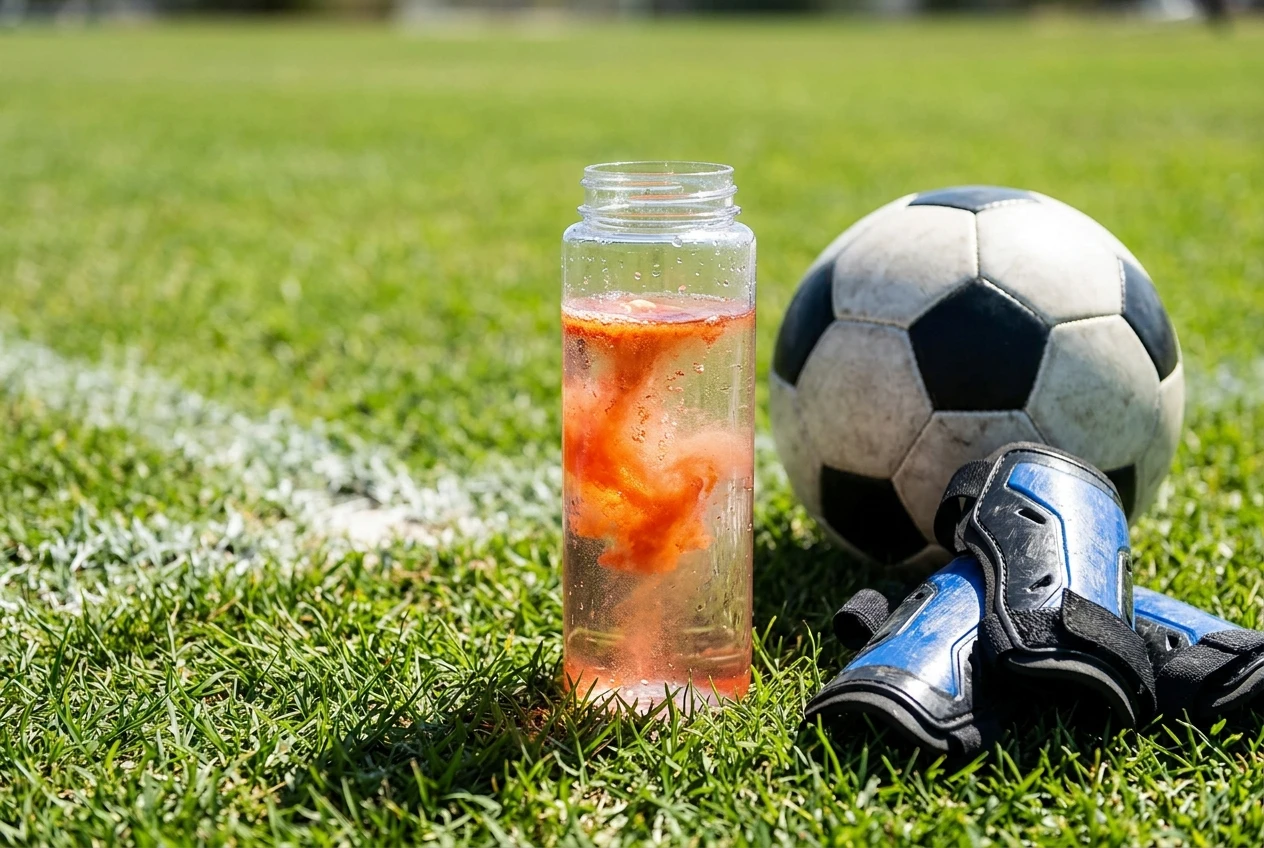
Another mistake is over-relying on water alone for long or hot matches. Water replaces fluid but not the sodium lost in sweat, and low sodium levels can contribute to cramping and fatigue late in a game. A sports drink or water with a small amount of added electrolytes covers that gap better than water alone.
Overdrinking right before kickoff is its own problem. Chugging a large bottle in the final few minutes before the match starts often just means an uncomfortable stomach for the first fifteen minutes. Steady sipping through the morning and during warm-ups works far better than catching up all at once.
Turning this into a weekly routine you’ll actually stick to
A fueling plan only works if it survives a busy week with school, practice, and games stacked on top of each other. The simplest way to make it stick is attaching each eating habit to something that already happens: a carb-forward breakfast on training days, a familiar dinner the night before matches, a recovery snack packed in the bag before every game.
Parents and coaches managing matchday logistics can make this easier by keeping a short list of go-to pre-game and recovery foods on hand, so the question of what to eat is already answered rather than figured out in the car on the way to the field.
Nutrition timing works best alongside a recovery routine that keeps the body ready for the next session, not just the next meal. Pairing this fueling plan with the daily stretching routine for soccer players means recovery and nutrition are working together instead of separately, which is where the real performance gains show up over a season rather than in a single match.