
The best goalkeeper gloves for training and match play are usually two different pairs. A glove built to be as sticky as possible on match day is a poor choice for scraping across a training pitch four nights a week, and a tough, cheaper glove gives up some grip in exchange for life span. Once you see the tradeoffs between grip, durability and finger protection, choosing by level of play and by use gets much simpler than comparing model names.
This guide covers how latex and glove cuts work, what youth, amateur and competitive keepers each need, how to test a pair before you commit, and how to run a two-glove system without overspending.
Why training gloves and match gloves should not be the same pair
Latex wears down every time it touches a ball, the ground or a goalpost. Training usually means far more catches, dives and floor contact than a match, so a glove used for both is being consumed fastest in the sessions where peak grip matters least. By the time the match arrives, the palm is already worn.
The two jobs also reward different things. In a match you want the most grip and the best feel you can afford, because one fumbled cross can decide a game. In training you want a glove that survives repetition, stays comfortable through long sessions and doesn’t cost enough to make you hold back on diving.
Using one pair for both forces a compromise that serves neither. You either baby an expensive glove in training and get less work done, or you play matches in a palm that has lost its tack.
That is the reasoning behind a two-glove system: a durable pair for the work and a better pair kept for games. The details come later in this guide.
Latex grip explained: what makes palms sticky, and what wears them out
The palm of a goalkeeper glove is made of latex foam. Its grip comes from the softness and texture of the foam, which molds slightly around the ball’s surface. Softer, more cushioned latex generally gives more grip and a better feel for the ball, and it also tends to break down faster. Firmer, denser latex lasts longer but feels less tacky.
That tradeoff is the main one in the category, and it is why higher-grip gloves are not automatically better for everyone. Manufacturers describe their palms with their own names and ratings, and those labels differ between brands, so treat them as hints about where a glove sits on the grip-versus-durability scale rather than as a measurement you can compare across brands.
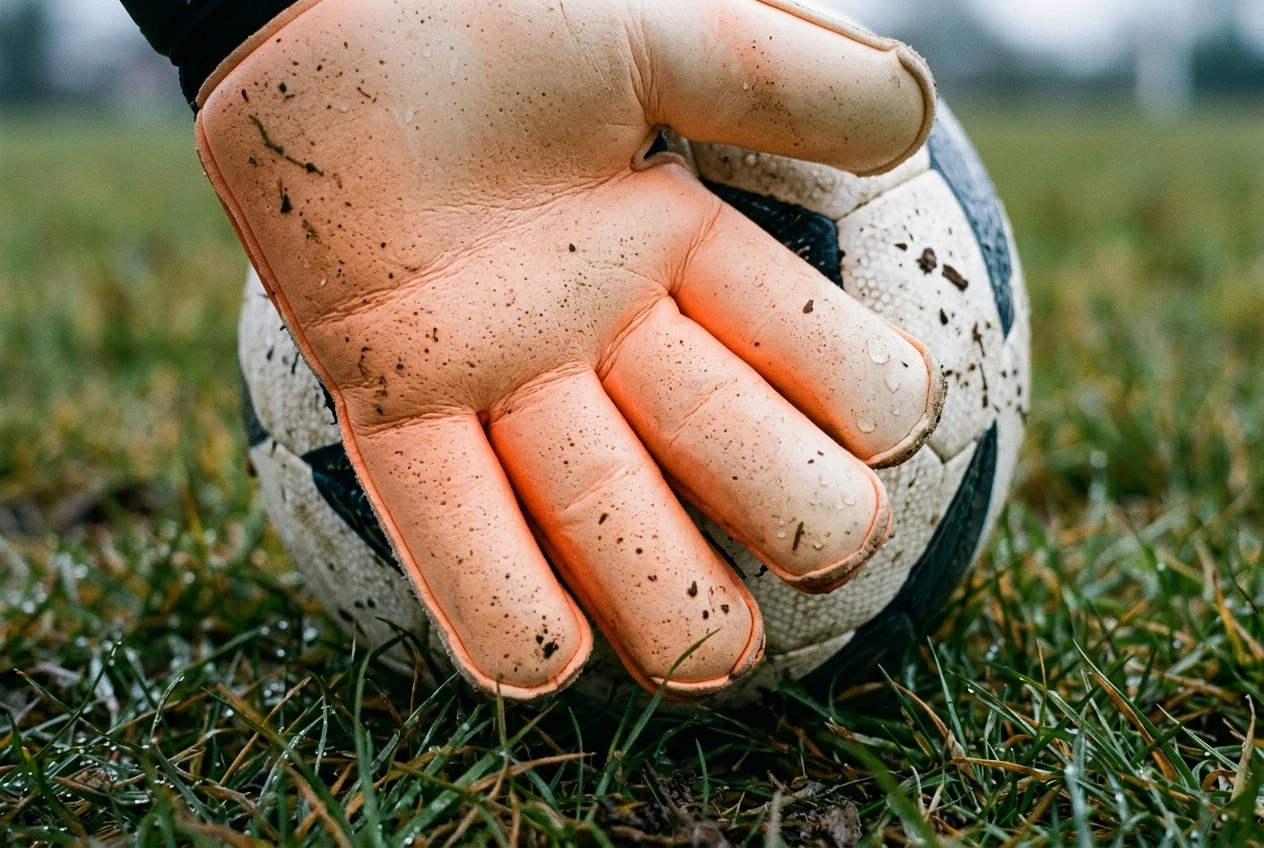
What activates grip
Latex grips best when it is slightly damp. Many keepers wet their palms lightly before a match or during dry weather, and the glove performs better as a result. Dust, dirt, grass and sand on the palm cut the grip sharply, which is why a quick wipe or rinse between halves can bring a glove back.
What wears it out
- Rough surfaces: Artificial turf, hard-packed ground and concrete wear the palm faster than natural grass.
- Dry friction: Catching and dragging the palm across dry surfaces rubs the foam away.
- Dirt left on the palm: Grit stays in the latex and keeps abrading it each time you use the glove.
- Heat and poor storage: Leaving gloves in a hot bag or car, or putting them away wet, makes the latex harden and crumble sooner.
- Time itself: Latex ages even if you barely use it, so a glove stored for a long time may be past its best.
Because the palm is the part that wears out, the quality of the rest of the glove (back hand, wrist strap, seams) often outlasts the grip. A pair can be structurally fine and still be finished as a match glove.
Glove cuts and finger protection: when finger spines are worth it and when they are not
The cut describes how the palm and fingers are stitched together, and it changes both fit and feel. Brands use slightly different names, but the common styles are:
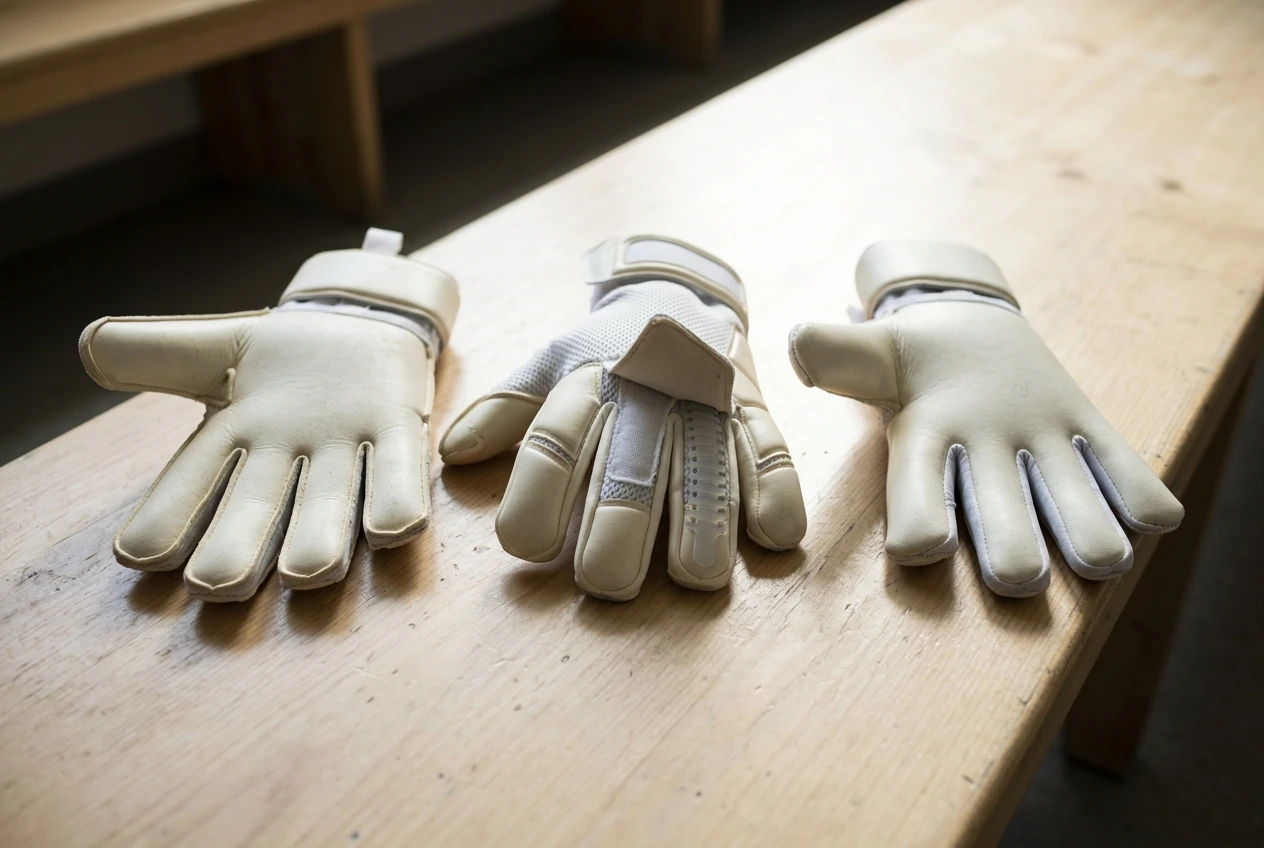
- Flat palm: Made from flat pieces of latex with straightforward construction. The fit is roomier and less snug, and gloves in this style often suit training and younger players.
- Roll finger: The latex wraps around the fingers, so more of the finger sits in contact with the ball. It gives more surface area for catching and often a snugger fit.
- Negative cut: The seams sit inside the glove, so the fit is tight against the fingers. It gives a close feel for the ball but less room, so sizing matters a lot.
- Hybrid cuts: Combinations of the above, aiming to balance contact area and comfort.
Because naming varies from brand to brand, check each manufacturer’s description of its cut instead of assuming two gloves with the same label fit the same way.
Finger spines
Some gloves have flexible inserts, often called finger spines or finger protection, running along the back of the fingers. They are designed to resist the fingers bending backward too far when a hard shot hits them. Some models let you remove the inserts, and others do not include them at all.
Finger protection is worth considering in these situations:
- A young or developing keeper who faces shots with growing power.
- A keeper who has had finger jams or sprains before.
- Anyone who plays often on a firm ball against strong strikers.
It may matter less if you value the closest possible feel for the ball and have no finger history, since protection can make a glove slightly stiffer. Some keepers choose removable spines and take them out in some conditions. Spines reduce the risk of bending injuries but cannot guarantee protection, and anyone with a past finger injury should ask a coach or physio what they recommend.
What a youth keeper needs versus an amateur or competitive keeper
Youth keepers
For young keepers, fit and durability come ahead of top-end grip. Children grow and wear gloves out quickly, and a very expensive glove rarely pays for itself.
- Right size: Gloves that are too big make catching harder and can form bad habits. Use the brand’s size guidance, since sizing differs between makers.
- Reasonable grip: A decent mid-range palm is enough for learning handling.
- Finger protection: Worth considering, especially as shots get harder, and parents can ask the coach for a view.
- Sturdy build: Kids dive on hard surfaces, so tougher latex and solid stitching help.
- A secure wrist strap: It keeps the glove in place and lets the child focus on the ball.
Amateur keepers
Amateur keepers often play on mixed surfaces, train less often than competitive players and pay for kit themselves. The two-glove system is most useful here. A reasonable-grip, harder-wearing glove for training and a better palm for matches is a sensible spread for the money. Choose the cut that suits your hands, and pick finger protection if you have any history of finger problems.
Competitive keepers
At a competitive level, grip and feel matter more because small differences affect handling in high-pressure moments. Keepers at this level tend to go through match gloves quickly, rotate pairs and often use several models for different weather and surfaces. Fit precision is also higher: cut, closure and glove size are chosen deliberately, and many competitive keepers keep a consistent cut across their training and match pairs so the feel doesn’t change between sessions.
How to test grip and fit before you commit, in the shop or at home
A glove can look right and still not suit your hand, so check it before you rely on it.
Fit checks
- Put the glove on and make a fist. The glove should close without strain, and the fabric should not pull tight across the knuckles.
- Spread your fingers wide. There should be no heavy tension at the finger bases.
- Check the fingertips. Your fingers should reach close to the ends without being jammed against them, and the glove should not have a lot of empty space either.
- Fasten the wrist strap. It should hold the glove firmly without cutting off circulation or twisting your wrist.
- Check the thumb. It needs to move freely and sit comfortably.
Grip checks
- Feel the palm. Press a thumb into the latex and see how it springs back. A tacky, cushioned feel suggests a softer palm.
- Try it damp. With a lightly wet palm, grab a ball or press it against a wall and see whether it stays in place.
- Catch and release. Throw a ball against a wall or have someone toss it to you, and notice how securely it holds on a few simple catches.
- Compare two pairs side by side. Wear one on each hand, using different gloves, to feel the difference in grip and fit.
If you are buying online, check the seller’s return policy before wearing the gloves outdoors, because gloves that have touched the ground are often not returnable. Trying them on indoors and doing a few gentle catches helps you judge fit first.
Making gloves last: washing, drying, storage and when to retire a pair
Treat gloves as a consumable, but a little care extends their useful life considerably.
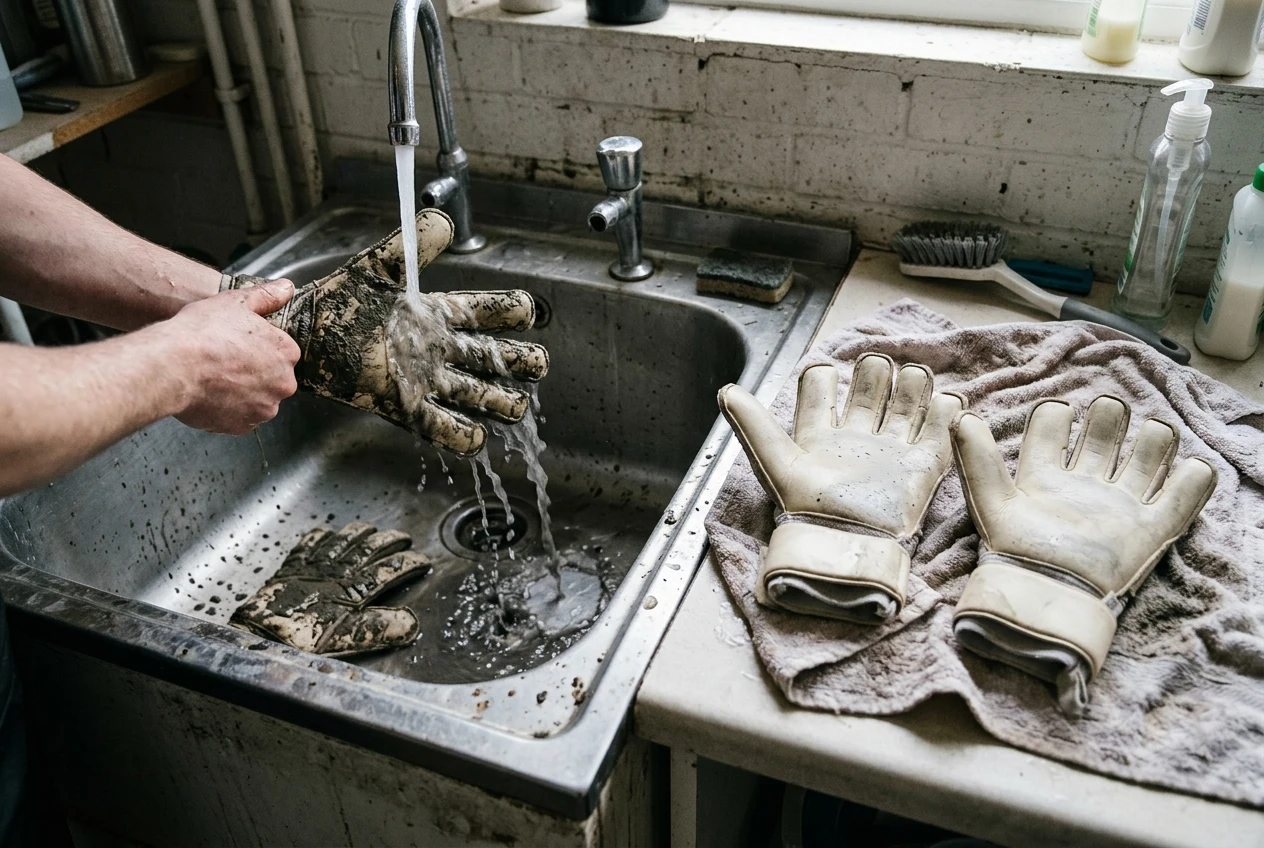
Washing
- Rinse after use: Dirt left in the latex keeps abrading it, so rinse the palm with clean water when you finish.
- Use mild soap or a glove cleaner: Strong detergents and harsh chemicals can break the latex down, so follow the glove maker’s care advice.
- Wash by hand: Use gentle rubbing of the palm with your fingers rather than scrubbing hard or machine washing.
- Don’t wring them out: Twisting can damage the foam and the stitching.
Drying
Let gloves air dry naturally, away from radiators, direct sun and other heat. Heat hardens the latex and shortens its life. Press out excess water gently with a towel and let them dry open.
Storage
Put gloves away dry, and don’t leave them balled up in a wet bag. Keep them somewhere cool and out of strong sunlight, and keep them flat or loosely shaped rather than crushed under heavy kit.
When to retire a pair
- The palm is smooth, shiny or has lost its tackiness even after dampening.
- The latex is flaking, crumbling or has worn through to the layer underneath.
- The seams are splitting or the fingers are coming apart.
- The wrist strap no longer holds firmly.
- The glove smells bad and still smells after washing.
A worn match glove still has life as a training glove. Retire it entirely when it no longer protects your hands or gives enough grip for useful practice.
A simple two-glove setup for a tight budget
You don’t need two expensive pairs. The system works because each pair has a different job.
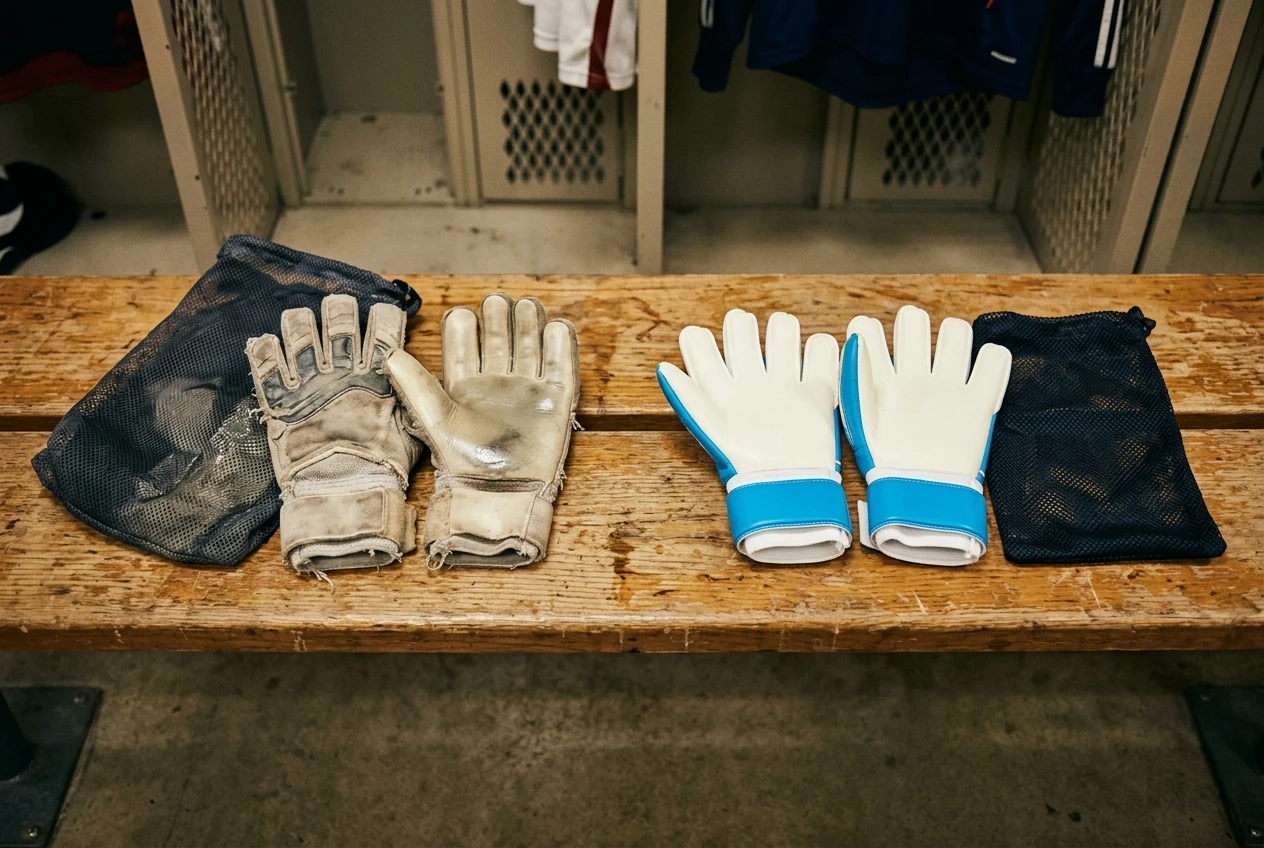
- Buy a durable, reasonably priced pair for training. Pick firmer latex that tolerates floor contact, in the same cut and size you plan to use in matches so your hands get used to the same feel.
- Buy the best match glove you can sensibly afford. Wear it only for games, and keep it clean and dry between them.
- Rotate downward. When the match pair has lost its edge, it becomes your training pair, and the old training pair is retired.
- Replace one pair at a time. Each time you buy, you buy a new match glove, so your spending stays spread out and predictable.
If you can only afford one pair for now, buy a mid-range glove, use it for matches and light training, and do your heavy floor work in old gloves or bare hands where it is safe. Keep rinsing the palm after each session so the grip lasts longer.
Where to go next: the rest of your keeper and training kit
Gloves are one part of the picture. Footwear matters for movement on the pitch, and our guide to the best soccer cleats for your position can help you think about what to wear when you are not in goal. Recovery and fuelling also affect how well you train, so it’s worth building the habit of looking after your body as well as your kit.
Pair your gloves with the right training gear: browse our guide to the best soccer rebounder nets for solo training at /best-soccer-rebounder-nets and put your new grip to work.