Most cleat guides are sorted by brand or price. A more useful way to choose is by what the studs do to the surface under your foot, because that is what decides how much you grip, how easily you release, and how much twisting force reaches your knee and ankle. This guide compares firm ground and artificial grass cleats on that basis and ends with a checklist for players who switch between pitches.
If you want position-specific advice, our guide to soccer cleats by position covers it. Here the question is only the surface.
What Firm Ground and Artificial Grass Cleats Actually Look Like Underneath
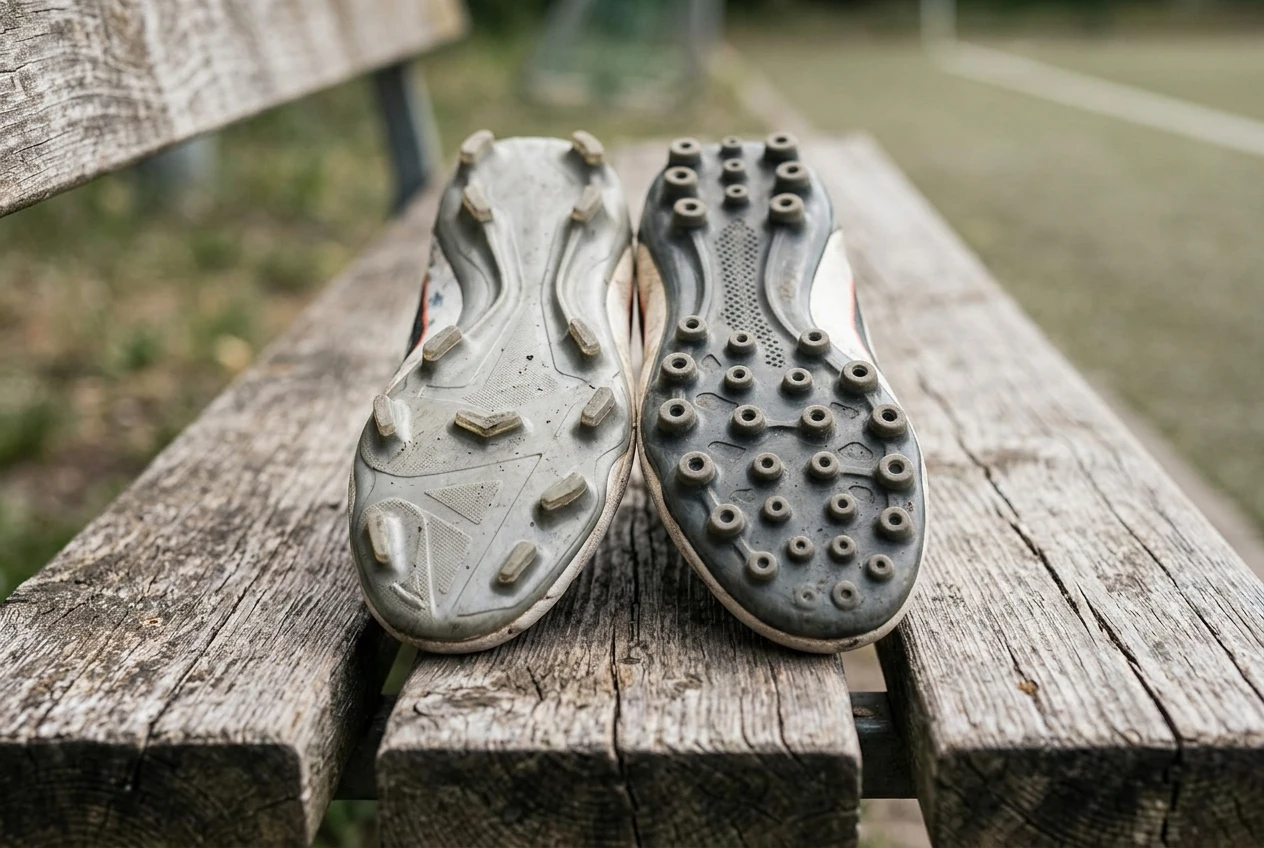
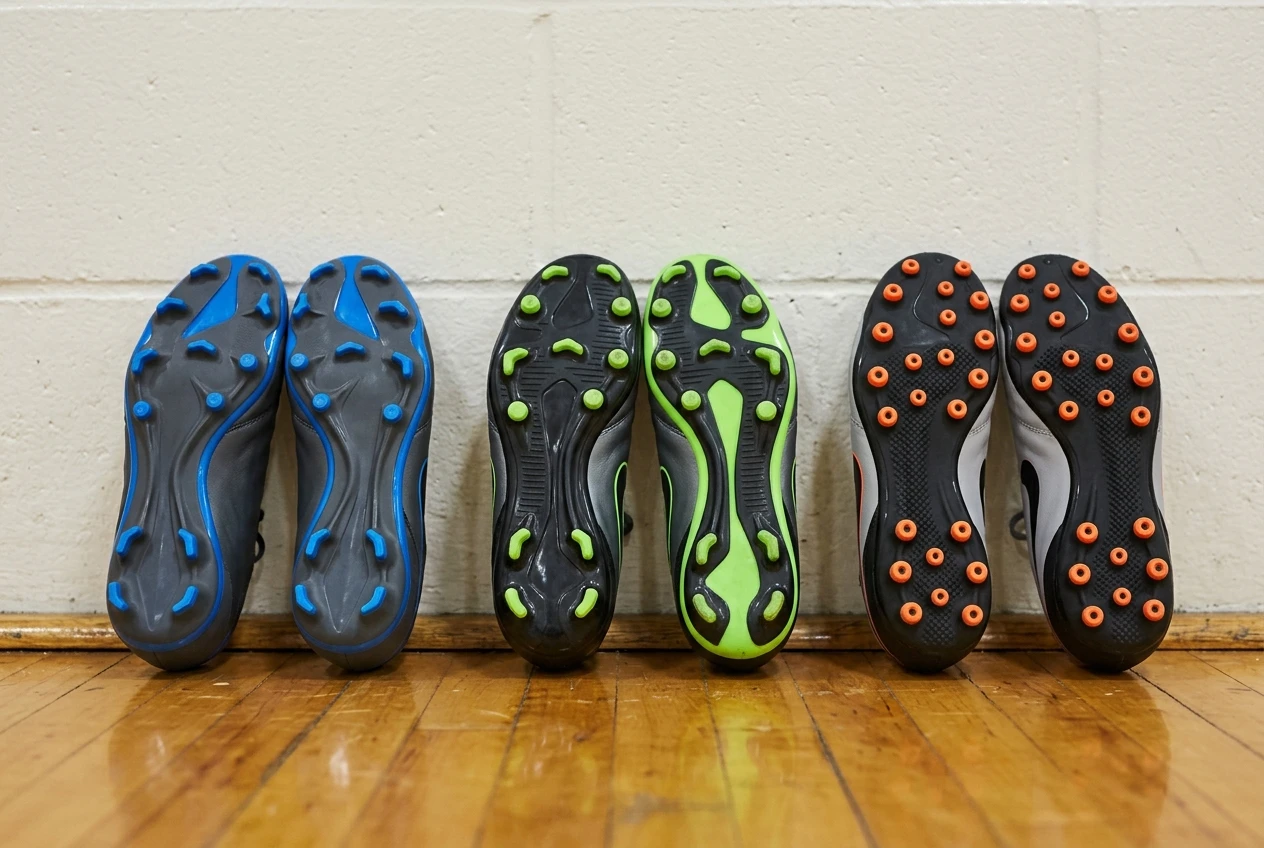
Turn a pair of firm ground (FG) cleats over and you will usually see a smaller number of studs, often 10 to 14 in total, set well apart. They are long relative to the soleplate and frequently bladed, meaning flat and angled rather than round. Some are conical. The layout is designed to push down through natural grass and into the soil below.
Artificial grass (AG) cleats look busier from underneath. The studs are more numerous, shorter, and spaced closer together. They are often hollow or rounded rather than sharp-edged, and many soleplates use a mix of shapes so that no single stud carries the whole Two other labels show up on boxes and are worth knowing:
- SG (soft ground): fewer, longer studs, sometimes with metal tips, made for wet, soft pitches. Many leagues and venues restrict metal studs, so check before you buy.
- MG (multi-ground): a compromise pattern sold as suitable for both natural and artificial surfaces. Labels differ between manufacturers, so read the product page for the surfaces it names.
Whatever the label, the underside tells you most of what you need. Count the studs, look at their length, and look at whether the edges are flat blades or rounded.
Why Stud Shape and Spacing Decide Your Traction
Traction on grass comes from the stud pushing into something that gives way. On natural turf, the ground is soil and root. A long stud sinks in, and the soil around it resists sideways movement. Wide spacing helps here because each stud has room to penetrate without bumping into the next, and the gaps let the sole shed mud.
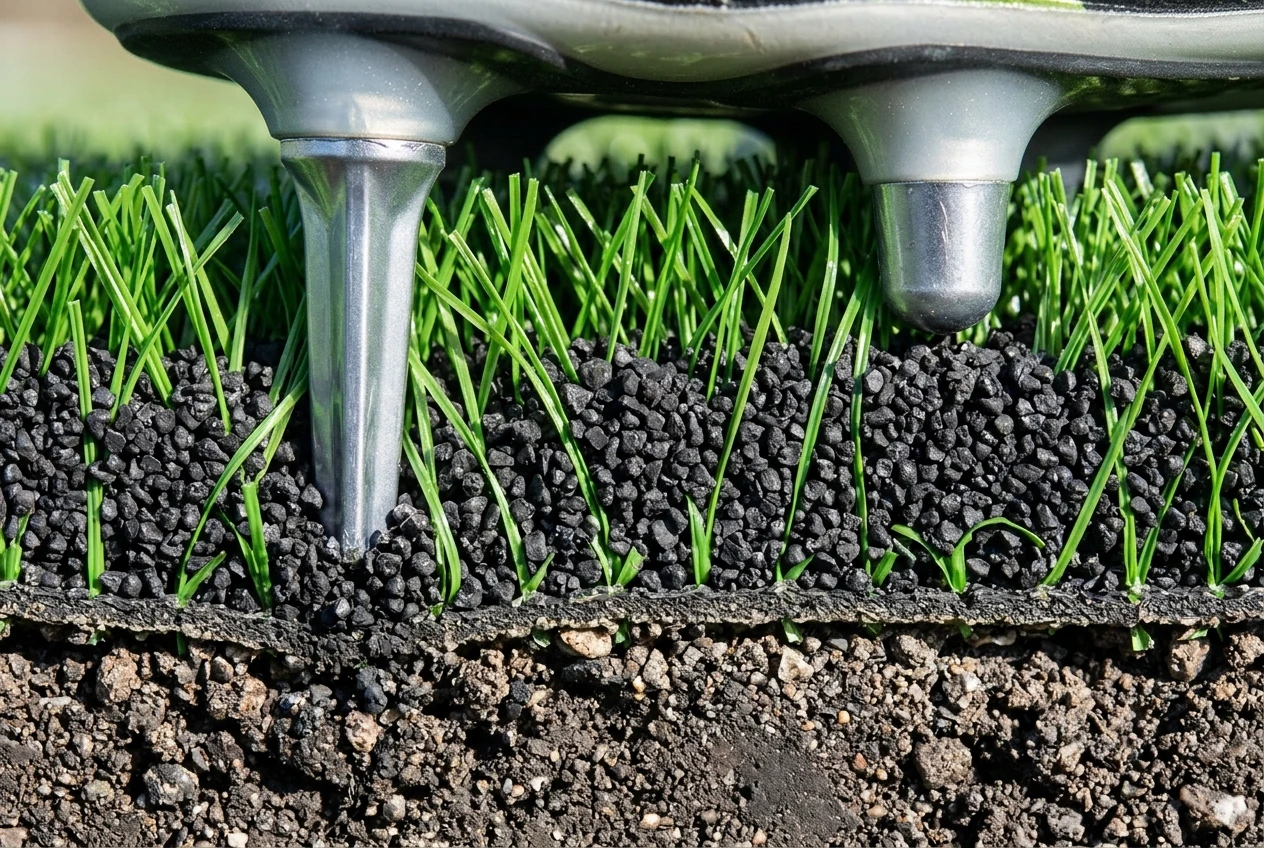
Artificial turf works differently. The playing surface is a layer of synthetic fibre, usually over a rubber or sand infill, laid on a firm base. A long, bladed stud passes through the fibres and infill and can bite into the base layer. Once it is anchored, the stud does not slide when you plant your foot, even while your body is still turning.
That is where traction stops being an advantage. On natural grass the ground tears a little and lets the stud release. On artificial turf, a deeply anchored stud tends to stay put. The result is more grip than you need, and the rotation has to go somewhere.
Shorter, more numerous studs behave differently in three ways:
- They penetrate less, so the foot can still pivot.
- They share your body weight across more contact points, so each stud takes less load.
- Their rounder edges give a little more freedom to rotate on release.
None of this means a short stud grips poorly. On a dry, dense artificial surface a shorter stud usually gives enough hold for running and cutting. It simply holds the foot in a more forgiving way.
How the Wrong Pattern Can Load Your Knees and Ankles on Turf
When you plant a foot and turn, the force from that rotation has to be absorbed somewhere. If the studs release a little, the sole slides or rotates and the load drops. If they stay anchored, the twisting force travels up the shin into the ankle and knee instead.
That is the mechanism behind the concern about long, widely spaced blades on artificial turf. Research on footwear and playing surfaces has examined the link between high rotational traction and non-contact lower limb injuries, and this is why many coaches and physios recommend AG-specific soleplates for regular play on turf. No cleat prevents injury, and the evidence does not support any single pattern as a guarantee. What it supports is matching the pattern to the surface and not choosing the biggest bite available.
There is also a comfort side. A firm ground cleat on a hard artificial pitch has fewer studs carrying your weight, so pressure can concentrate under the forefoot and heel. Players with sore feet after turf sessions are often wearing a soleplate that was never designed for it. Foot soreness is not an injury diagnosis, but it is a reasonable sign to check the soleplate before blaming anything else.
Some situations raise the stakes:
- Young players. Growing players who play several sessions a week on turf use the soleplate far more than a casual adult does.
- Players returning from injury. If you are coming back from a knee or ankle problem, ask your physio or doctor about footwear. A forum answer should not replace that.
- Cutting and pivoting positions. Wide players and midfielders who turn constantly put more rotation through the plant foot.
If a recurring knee or ankle problem shows up after turf matches, get it assessed by a professional rather than trying cleats until it goes away.
How to Read a Pitch and Pick the Right Soleplate Before You Lace Up
You do not need to guess. Spend two minutes on the surface before you choose cleats.
Check what the surface is. Artificial pitches are not all the same. Some have long fibres with deep infill, and others are shorter and denser. Venues often state the surface type on their website or booking page, and it is fine to ask the club or the facility.
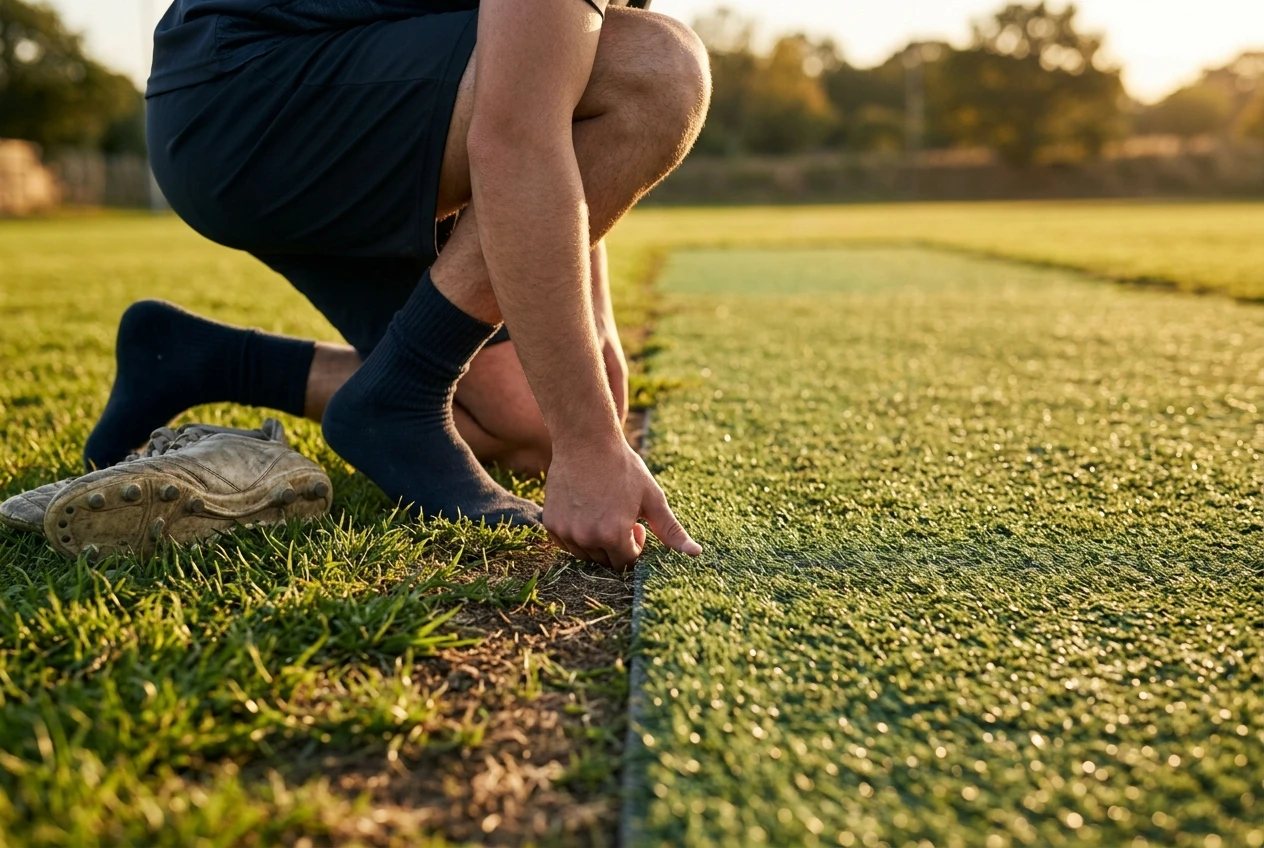
Press a thumb or a stud into it. On natural grass, if a key or the tip of a stud sinks in easily, the ground is soft enough for studs to penetrate. If it feels like concrete under a thin carpet, long blades will not be able to sink in properly.
Note the weather and recent use. Dry summer ground can be as hard as artificial turf, and wet winter pitches can turn soft enough to want longer studs. The surface changes through the season, so the answer can change too.
Look at what other players are wearing. This is a weak signal, because many players choose cleats by look. Still, if everyone on a turf pitch is in short-stud soleplates, ask why.
Read the rules. Leagues, schools and facilities sometimes restrict certain stud types, particularly metal or bladed studs on artificial surfaces. Ask before you buy, since a pair that is not allowed is wasted money.
What to Look for in a Firm Ground Cleat
Firm ground cleats suit natural grass that is dry to slightly damp and firm enough that studs will not sink to the sole. For most amateur players on a decent pitch, this is the standard pair.
Use this checklist:
- Stud layout. Look for studs placed under the ball of the foot and at the heel, with enough space between them to release mud.
- Stud shape. Bladed studs bite harder and are aimed at acceleration and cutting. Conical studs release a little more easily. If you are cautious about rotation, rounder is the safer choice.
- Soleplate stiffness. Stiffer plates feel stable on firm ground and flexible plates feel closer to the pitch. Choose by comfort, not marketing.
- Fit. Your toes should have room, your heel should not lift, and the width should not squeeze the midfoot. A cleat that fits poorly will cause problems whatever the stud pattern.
- Material. Synthetic uppers need less care and often dry faster. Leather stretches and moulds but takes longer to dry.
Treat the label “FG” as a starting point. Check the product page for the surfaces the manufacturer lists, and do not assume it covers artificial turf.
What to Look for in an Artificial Grass Cleat
Artificial grass cleats are made for synthetic pitches, where studs need to grip without locking in. If most of your matches and sessions are on turf, this is the pair to put first.
Look for these features:
- Shorter, more numerous studs. More contact points mean the load is shared. Hollow or rounded studs are common for this reason.
- A soleplate built for the surface. The label should say AG, or name artificial grass or artificial turf. Check the listing wording itself.
- Cushioning under the forefoot. Artificial pitches are firmer than most grass, so a little extra padding in the sole and a supportive insole make long sessions more comfortable.
- Durable uppers. Turf is abrasive. Reinforced toe areas and sturdy stitching help the cleat last.
- A secure fit. Because you can turn faster on turf with good grip, heel hold and midfoot lockdown matter.
One practical point: a worn AG sole loses grip more slowly than a worn FG sole on grass, but a cleat with its studs ground down on a hard surface is still a weaker choice. Check the wear every few weeks if you play often.
If You Play on Both: One Pair, Two Pairs, or a Multi-Ground Option
Players who switch pitches have three realistic options, and the right one depends on how the time splits.
Two pairs. If you play regularly on both natural grass and artificial turf, an FG pair and an AG pair give the best match to each surface. They also last longer, because each pair does only one job. This is the most expensive option up front and the one that fits the injury argument best.
One AG pair. If most of your football is on turf and you play occasional matches on natural grass that is firm and dry, an AG cleat is often workable. On wet, soft grass it may slip, so expect less hold when the ground is muddy.
One multi-ground pair. An MG cleat is sold as a single pair that covers both. It is a sensible choice when budget limits you to one pair, or for a growing child who will outgrow shoes within a season. The trade-off is that it is a compromise, and it will not feel as sharp as a dedicated pair on either surface. Check which surfaces the product page lists.
A simple way to decide is to count your sessions over a typical month. If more than about three quarters of your time is on one surface, buy for that one and treat the other as occasional. If it is closer to an even split, two pairs are worth the cost.
For parents buying for children, fit and growth usually decide this. A pair that fits properly and matches the surface where the child plays most is a better purchase than a premium cleat bought a size up.
Where to Go Next: Position Fit, Turf Shoes and Shin Guards
Surface is one of several decisions. Once you have chosen a soleplate, the next questions are about fit and protection.
If you are unsure whether a turf-specific shoe or an indoor shoe suits your situation, our comparison of turf shoes vs indoor soccer shoes separates those two categories. For position-based features such as stud choice for defenders versus strikers, the cleats by position guide goes through it.
Protection is the other half. Artificial pitches are firm and can make falls and slide tackles harder on the body, so shin guard coverage and comfort matter more. Our article on shin guards for comfort and protection compares the main designs.
Check which surface you play on most this week, match your cleat to it, then compare current prices on the pairs that fit, using the links in this guide.