
The best soccer shin guards for comfort and protection are the ones that match how you play, how you are built and what your league requires. A guard that feels like nothing on your leg but does little against a stud is a poor trade. A guard that stops almost everything but shifts, rubs and makes you think about your legs all game is a poor trade too.
This guide compares the four main builds (hard shell, composite, foam slip-in and ankle-guard styles) by what each one gives up and gains. It does not name a single winner, because the right pick changes with position, age and level. It also covers what to read on the label before you pay.
Why the lightest shin guard is not always the fastest one to play in
Weight matters less than most players expect. Shin guards sit on the leg you swing, so a very heavy pair is noticeable, but the difference between a light shell and a light composite is small next to the effect of a guard that moves. A guard that slides down, twists sideways or digs into the back of the calf pulls your attention off the ball and changes how you run.
Speed on the pitch depends on three things the guard can affect:
- Stability: a guard that stays put lets you forget it is there.
- Freedom at the ankle and knee: bulk that blocks flexion slows your stride and your first touch.
- Confidence in contact: a player who trusts the protection commits to tackles and 50/50 balls. A player worried about a stamp on the shin hesitates.
So “light” is only one part of “fast.” The target is the thinnest, lightest guard that still gives enough protection for the contact you meet, and fits well enough to stay where you put it.
The four builds compared: hard shell, composite, foam slip-in and ankle-guard styles
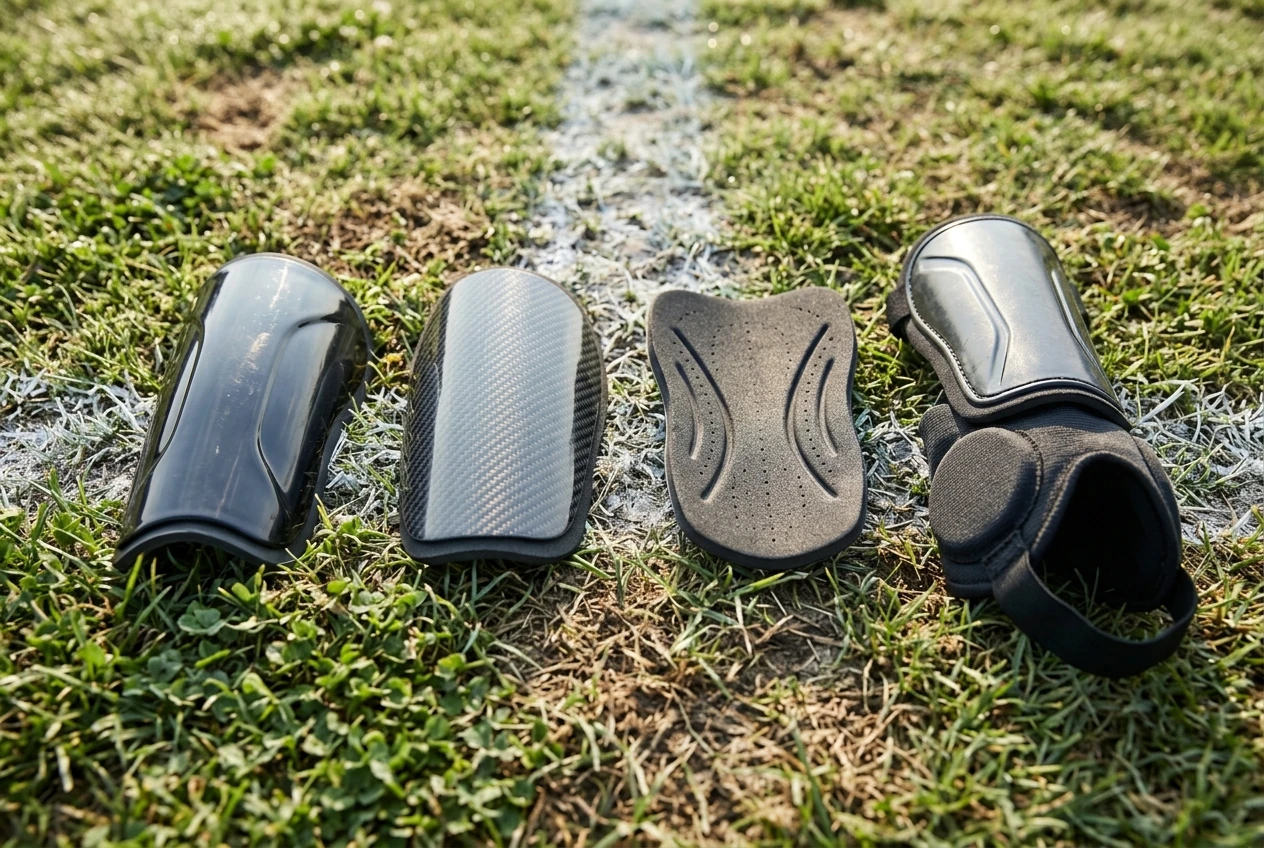
Hard shell
A hard shell is a molded plastic plate, usually backed with foam on the side that touches your leg. It is the traditional build and the one most often found in youth and recreational sets. The plate spreads a blow across a wider area, and the foam takes some of the shock.
The trade-off is thickness. To stay strong, a plastic shell tends to be a little bulkier than a composite plate. For most players, though, that bulk is easy to live with, and hard shells are usually among the most affordable options.
Composite (carbon or fiberglass)
Composite guards use carbon fiber or fiberglass in the plate. These materials are stiff for their weight, so a manufacturer can make the plate thinner and lighter while keeping the rigidity. That is the appeal: a slim profile that sits flat under a sock.
Composite guards usually cost more than plastic ones. Check the label for the same safety marking you would look for on any other guard, because a thin plate that is not certified tells you little about how it performs.
Foam slip-in
A slip-in guard is a flexible foam or soft-shell pad you slide under the sock, with no straps. It is the lightest and least restrictive build, and the easiest to forget you are wearing.
Its limit is protection. Foam absorbs small knocks well but spreads a hard direct hit less effectively than a rigid plate. Slip-ins suit players and levels where contact is lighter, and only where league rules and the label allow them.
Ankle-guard styles
These guards add padded wings or a sleeve around the ankle bones, often joined to a shell by a sleeve or strap. They cover an area plain guards leave open, which matters because the ankle bones sit close to the surface and take a lot of stamps and clipped tackles.
The cost is bulk around the joint, and some players feel the padding limits ankle movement when they cut or strike the ball. Others find the attached design reduces slipping, since the ankle section anchors the whole guard. Both reactions are common, so try them on if you can.
How much protection each material really gives against studs and direct kicks
No review can give you an exact number for how much force a given guard stops, and published claims from sellers are hard to compare. What you can reason about is how each material behaves.
A rigid plate, whether plastic or composite, does two jobs. It stops a stud from pressing into one small point on the shin, and it spreads a kick across a wider patch of leg. That is why hard shells and composites are the usual choice where tackles are firm and studs are likely to land on the front of the leg.
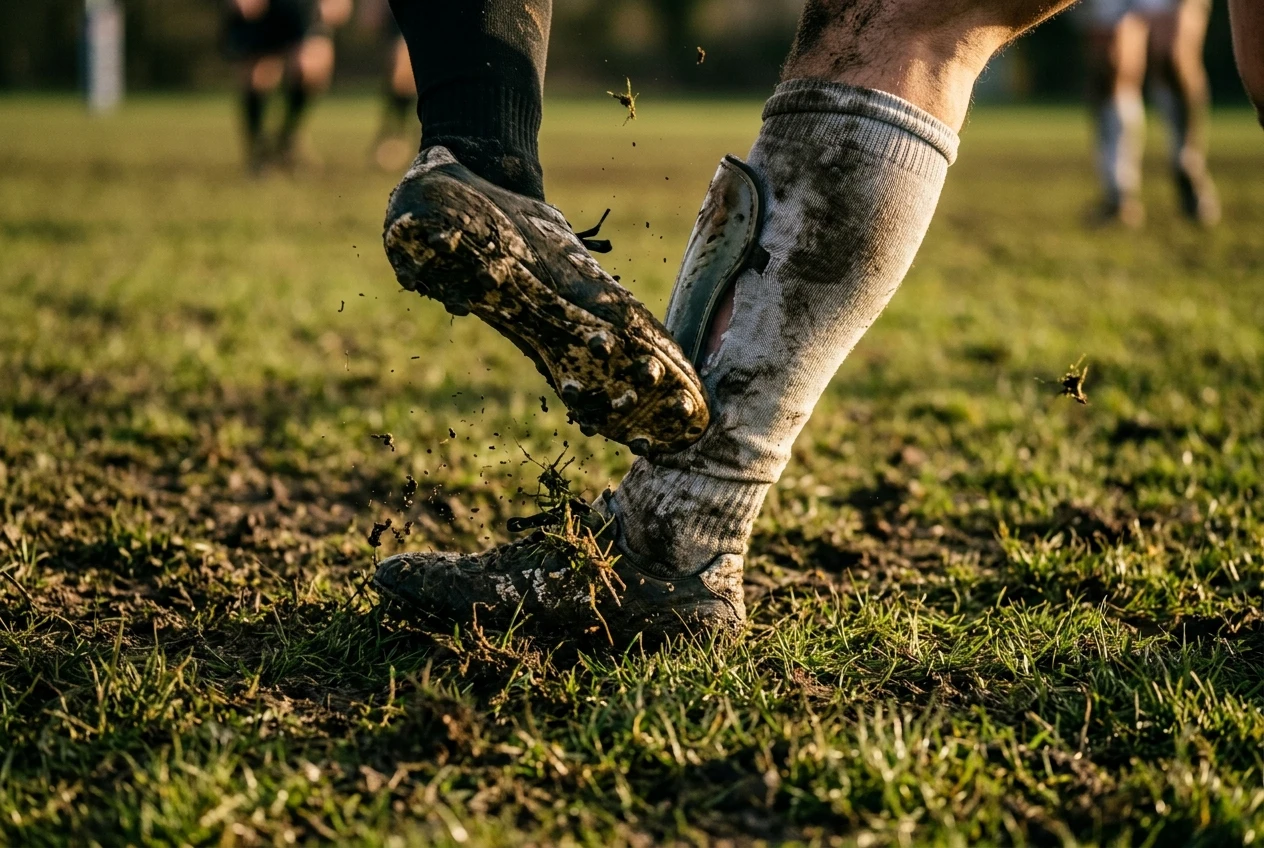
Foam alone mostly cushions. It softens the shock of a knock, but a stud or a hard boot can push through to the bone with less spreading of the force. Foam-only guards give the least protection against a direct kick.
A few points hold across all builds:
- Coverage counts as much as material. A strong plate that leaves the lower shin or the ankle bone open does nothing for those spots.
- Fit counts too. A guard that has shifted to the side leaves part of the shin exposed at the moment of contact.
- A safety marking is the best shortcut you have. In the United States, look for a NOCSAE standard marking, and in Europe look for the EN 13061 standard. A certified guard has met a defined test, which a marketing claim has not.
If you have had a bruise, a cut or a sore shin from a guard that seemed fine, treat that as information. You may need more coverage, a stiffer plate or a better fit rather than a different brand.
Fit and comfort: sizing by height, sleeves vs straps, and what causes slipping and chafing
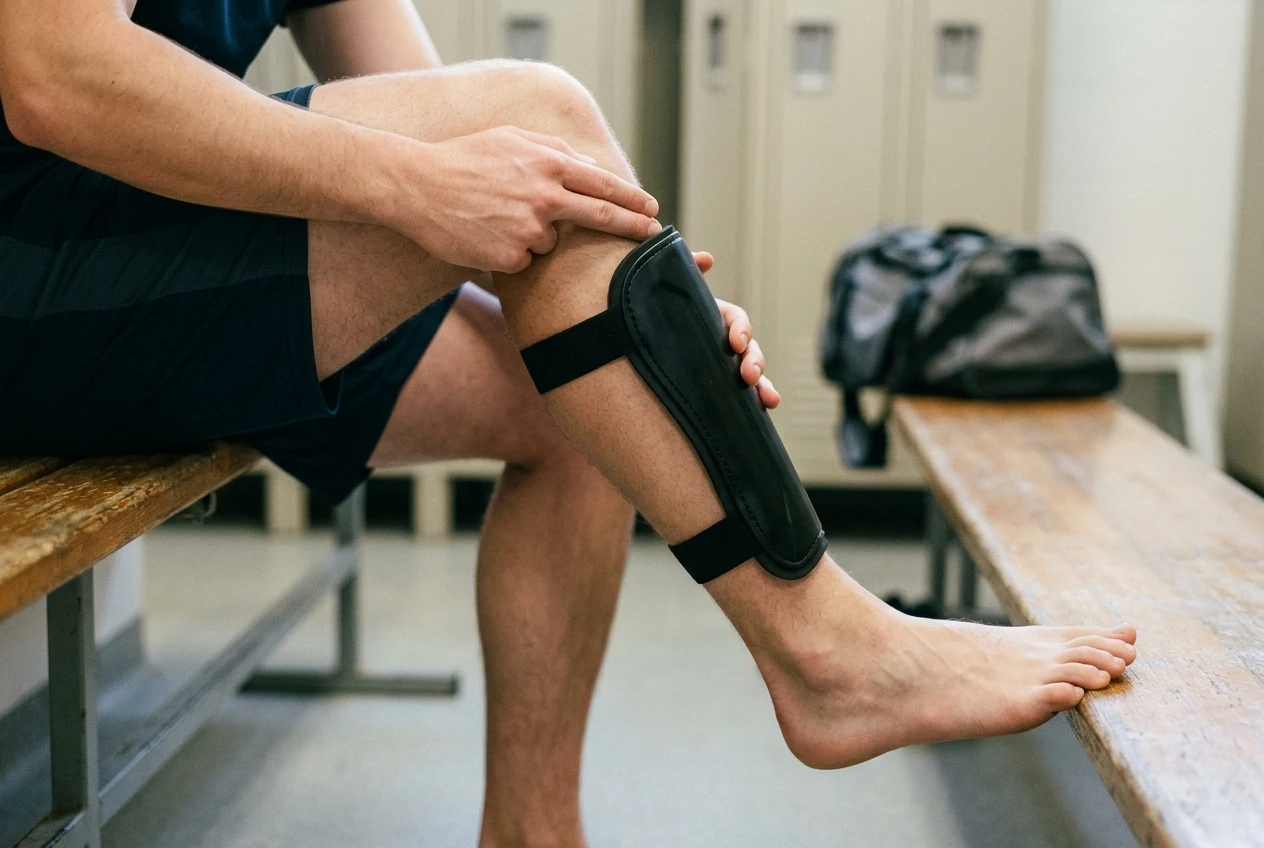
Sizing
Most brands size guards by player height and publish a chart. Follow the chart for the specific brand, because sizes differ between makers. As a general guide, the guard should start a few fingers below the bottom of the kneecap and end above the ankle bone, covering most of the shin without pressing on the joints. A guard that is too long bends against the knee or ankle when you run and tends to rub. One that is too short leaves the lower shin open.
Sleeves vs straps
- Sleeves hold the guard against the leg with an elastic tube. They are quick to put on and stay put well, but a tight sleeve can feel hot or restrictive over a long match.
- Straps let you adjust tension, but a strap that is too tight can cut into the leg and one that is too loose lets the guard slide.
- Socks and tape: many players rely on a snug pair of socks to hold a slip-in or a strapped guard. Tape over the guard, applied to the sock rather than skin, is a common fix for guards that creep.
Slipping and chafing
Slipping usually comes from a guard that is too long or too short, loose socks or straps set too lightly. Chafing usually comes from edges rubbing at the knee or ankle, from a guard that is too large, or from damp, sweaty material. If a pair rubs, check the size first, then try a thin sock layer between skin and guard. Do not tighten straps harder to stop slipping, since that moves the problem to the skin.
Matching the guard to your position: defenders, midfielders, strikers and keepers
Position changes the amount and type of contact, so it changes the balance between protection and freedom. Treat the following as starting points rather than rules.
- Defenders: They face the most tackles, blocks and studs landing on the shin from forwards trying to get past them. A rigid plate, plastic or composite, with good coverage and often ankle protection, is a sensible default.
- Midfielders: They run the most and contest the most loose balls, so a balance of low weight and solid coverage fits. A composite plate or a slim hard shell suits many midfielders. Choose a guard that does not restrict a long stride.
- Strikers: They need free movement for quick turns and shooting, but they also take plenty of late challenges from defenders. Many go for a slim composite or light shell. Foam-only guards are a risk for anyone who expects hard tackles.
- Keepers: They are down on the ground in crowded penalty areas, where studs and knees are close. Some keepers wear a light guard because they move less than outfield players, while others prefer more coverage. Whatever you choose, the guard has to meet the same rules as everyone else’s. Keepers who also want better hands can read our guide to choosing goalkeeper gloves by level of play.
Level matters as much as position. A recreational league with lighter contact asks less of a guard than a competitive amateur or school side, where tackles are harder and players are faster.
Youth players and league rules: what to confirm before you buy
The Laws of the Game require every player to wear shin guards, to cover them entirely with the socks, and to use guards made of rubber, plastic or a similar suitable material that gives a reasonable degree of protection. That is the baseline everywhere. Leagues, clubs and schools often add their own rules on top, so ask before you buy.
Confirm these points with the coach, club or league:
- Whether a safety marking such as NOCSAE is required, and which one.
- Whether foam-only slip-ins are allowed at your child’s age group and level.
- Whether ankle guards are allowed or required.
- Whether there are limits on guard size or any rule about attached sleeves.
For growing players, sizing is the practical difficulty. A guard that is too big slips and rubs, so buying a size up for the next two seasons usually costs more in comfort than it saves in money. Check the fit against the brand’s chart each season, and replace the pair when the guard no longer reaches from below the knee to above the ankle.
Children also tend to leave a guard at home or in the bag if it feels uncomfortable. A guard that fits and that the child likes wearing is more protective in practice than a better one left on the bench.
A quick buying checklist and how to care for your guards so they last
Before you buy
- Check the rules for your league, club or school, including any required safety marking.
- Look for a standard marking on the guard or packaging, such as NOCSAE or EN 13061, rather than trusting marketing words.
- Measure height and follow that brand’s size chart, then try the guard on with your match socks.
- Decide your build by position and level: rigid plate for heavier contact, slim composite for lighter weight, ankle guard for more coverage, slip-in only where contact and rules allow.
- Check the edges and inside lining for anything that could rub at the knee or ankle.
- Walk, jog and cut in them if you can. If you feel them after a minute, you will feel them after ninety.
Care
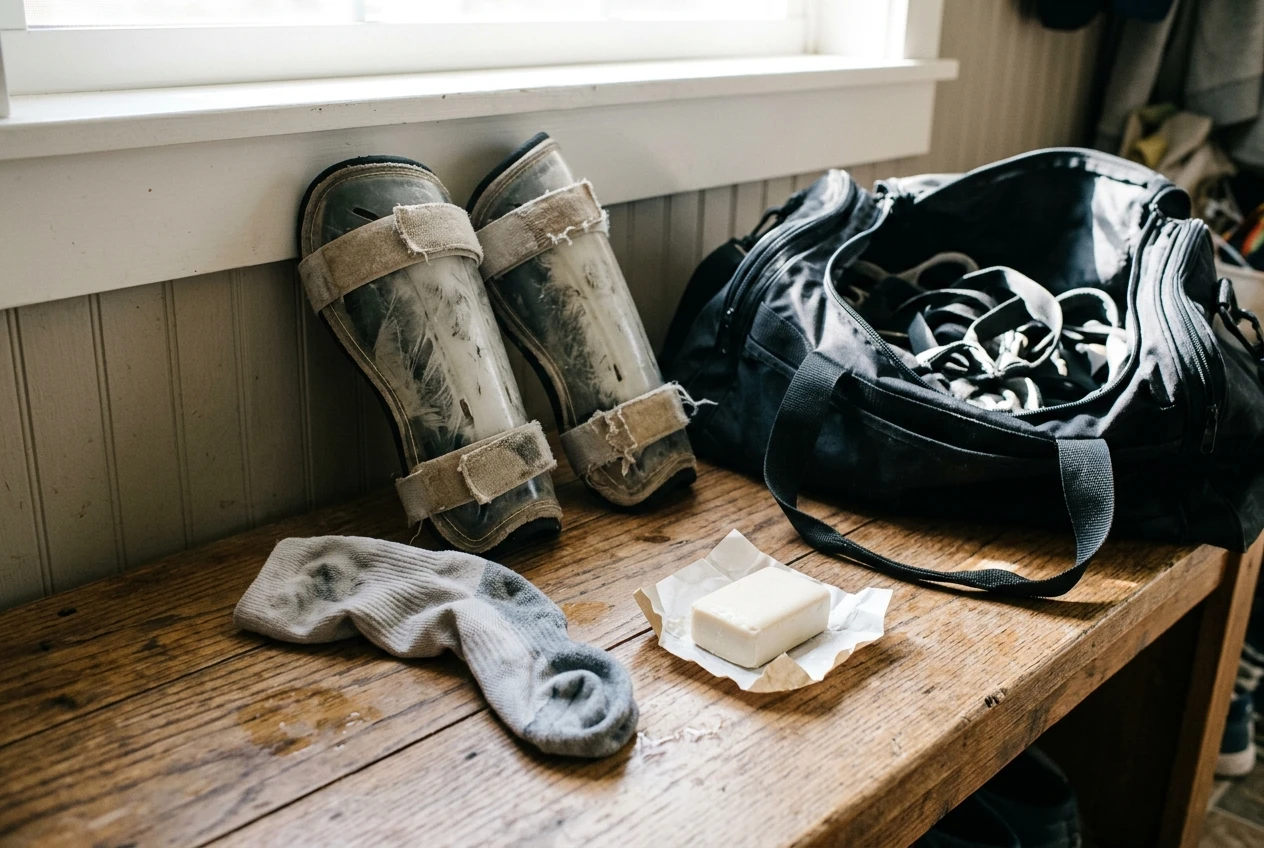
- Wipe the guards and let them dry after each session. Do not leave them in a closed bag, where sweat breeds odor and breaks down the foam.
- Wash sleeves and straps by hand with mild soap if the maker allows it, and air dry them away from direct heat.
- Look over the plate for cracks or flattened foam, and replace any guard that is damaged, since a cracked plate protects less.
- Replace the pair when it no longer fits, whatever its condition.
Finding the best soccer shin guards for comfort and protection comes down to a certified guard in the right build, sized properly and allowed by your league. Check those three things and the choice between brands gets much easier.
Pair your new shin guards with the right footwear by reading our guide to soccer cleats by position.