
The best soccer cleats for wide feet are the ones whose shape matches yours, and a brand name or price tag tells you very little about that. Cleats are built to fit snugly so the foot does not slide during sharp turns, which leaves little room for a forefoot that is broader than average. A wide-footed player who buys a popular model in their usual size often ends up with pinched toes, blisters on the outside of the little toe, or a numb forefoot by the second half.
This guide skips the ranked list and teaches a method: measure your foot, read the materials and shape clues on a product page, size sensibly, and test the pair before you wear it on grass.
Why standard cleats pinch wide feet in the first place
Most cleats are made on a narrow, tapered last, which is the foot-shaped mold the shoe is built around. A tapered last tightens toward the toes, so the widest part of your foot lands exactly where the shoe is narrowest. The result is pressure across the ball of the foot and against the outside edge, where the little toe and the fifth metatarsal sit.
Sizing makes it worse in a predictable way. Length and width are different measurements, but a player who feels the squeeze often goes up half a size or a full size. That adds length, which does little for the pressure across the forefoot and lets the heel slide. A sliding heel causes blisters of its own.
A third factor is volume, meaning how tall your foot is from the sole to the top of the instep. A foot can be average in width and still feel crushed by a low-profile upper if the instep is high. Numbness across the top of the forefoot usually points to volume, while pain on the sides points to width. Many players have both.
How to measure your foot width and volume at home
You need a sheet of paper, a pen, a ruler, and a wall. Measure in the evening, when feet are at their largest, and wear the socks you play in.
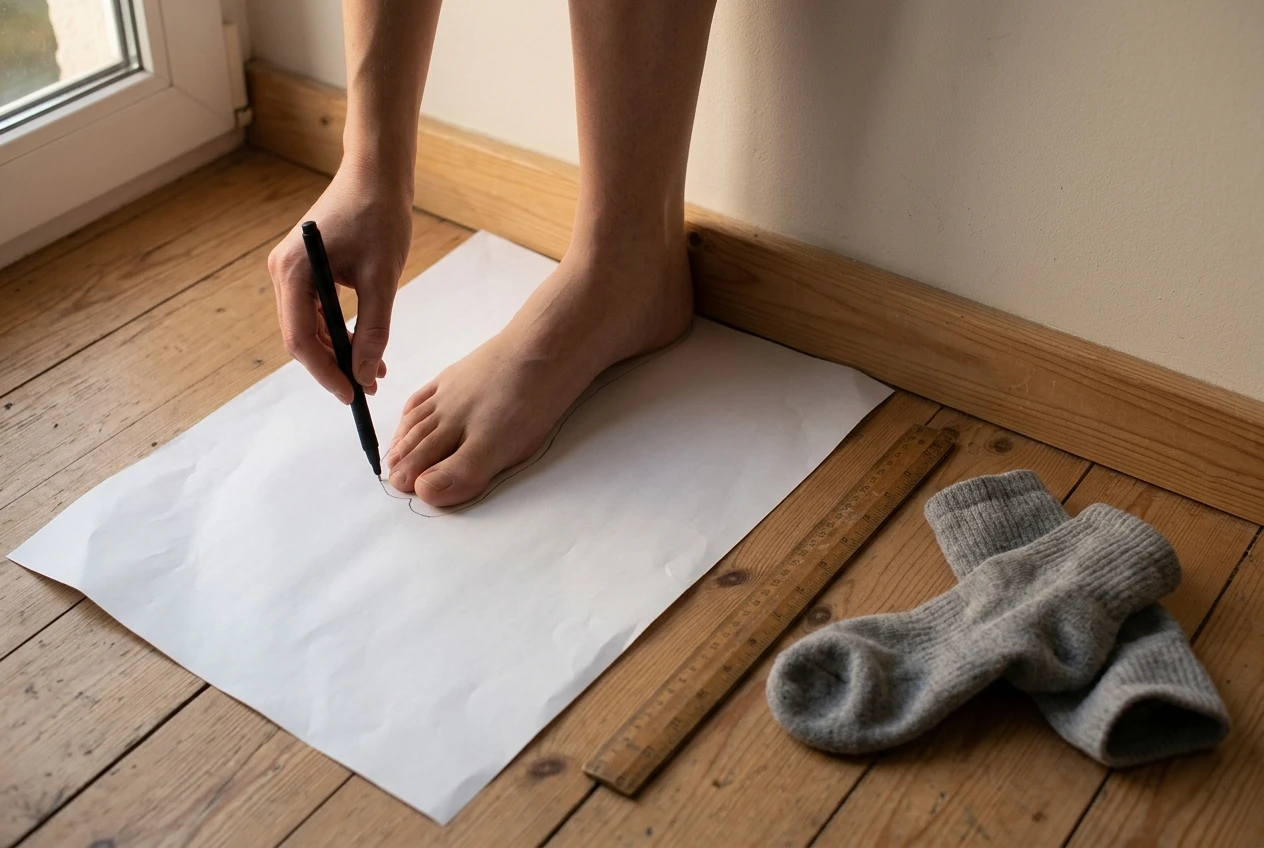
- Stand on the paper with your heel against the wall and your weight evenly on both feet.
- Have someone trace around your foot with the pen held upright, or lean down and do it carefully yourself.
- Measure from the wall to the tip of your longest toe. This is your length.
- Measure the widest point across the traced outline, usually across the ball of the foot. This is your width.
- Repeat for the other foot. Most people have one larger foot, and you should fit the larger one.
Compare both numbers to the size chart on the brand’s own site rather than a generic conversion chart. Charts differ from one manufacturer to the next, and some list width categories while others do not.
Volume is harder to put a number on, but you can read it from experience. If lace-up shoes of any kind always leave a gap at the tongue, your volume is low or average. If you have to loosen laces all the way to get your foot in, or the top of your foot goes numb in tight shoes, you probably have a high instep. Write that down, because it changes which materials will work for you.
For a youth player, repeat the tracing every few months. Feet grow in bursts, and a measurement from the start of the season may be out of date by the middle.
Upper materials compared: what stretches, what doesn’t, and what breaks in
The upper is the part of the cleat you can change the least, so the material matters more for wide feet than almost any other feature.
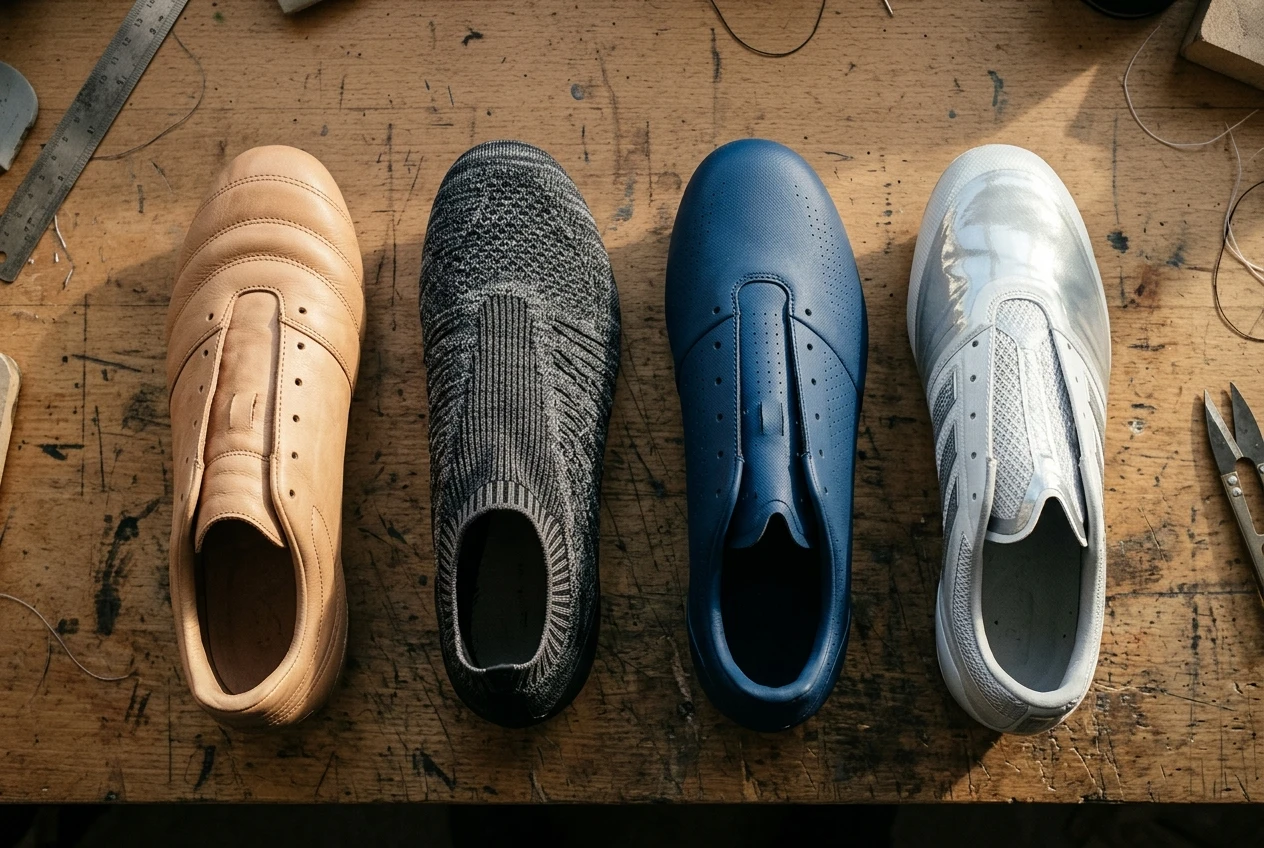
Natural leather stretches and molds to the foot over several wears. Soft leathers give the most. The stretch is mostly sideways, which is the direction a wide foot needs. A leather cleat that feels snug but not painful in the store will usually loosen to a comfortable fit. One that hurts in the store will probably still hurt after breaking in.
Knit and stretch-fabric uppers flex with the foot from the first wear and can accommodate a wider forefoot and a higher instep better than a stiff material. They stretch in a limited way and tend to recover their shape, so they adapt to your foot without growing permanently larger.
Synthetic uppers vary widely. Thin, soft synthetics may give a little, but many are coated or backed with layers that hold their shape and will not stretch. A rigid synthetic that pinches on day one will pinch on day thirty.
Heavily structured or layered uppers, such as those with a stiff internal skeleton or a plastic-like film over the forefoot, resist stretching most of all. They can work for narrow feet and are usually a poor bet for wide ones.
The practical rule: choose a material that stretches, and treat any pinch in a non-stretching material as permanent.
Last shape and wide-fit options: what to look for on a product page
Product pages rarely say “narrow last,” but they leave clues. Look for these:
- A wide or extra-wide option. Some models come in more than one width, usually labeled “wide” or with a W in the size field. If a model offers it, start there.
- A description of the forefoot. Phrases like “roomier toe box,” “wider fit,” or “accommodating forefoot” are worth noting. Phrases like “snug, sock-like fit” or “locked-in feel” describe a close fit that wide feet may find too tight.
- Photos from above. A cleat that tapers sharply to a pointed toe will squeeze a wide forefoot. A rounder, blunter front is a better sign.
- The material list. Check the upper material against the section above before looking at anything else.
- Reviews from wide-footed players. Search the review text for “wide,” “narrow,” and “toe box.” A pattern of comments about running narrow tells you more than the average star rating does.
Use the manufacturer’s own product page and size chart as the source for width details, and ignore claims from sellers that are not backed by the brand. If the page says nothing about width, treat the model as standard and expect it to run narrower than a wide-fit design.
Sizing up versus buying wide: when each one makes sense
Buying a wide version is the better first choice when one exists, because it adds room across the forefoot and leaves length alone. Your heel stays locked, and the toes keep their proper position relative to the studs.
Sizing up works only in limited cases. It can help when:
- the cleat is a soft leather or knit model that will mold to the foot, and the width gain from half a size is enough;
- your foot is on the long side of a size and a half-size up gives needed volume without too much extra length;
- no wide version exists and the model otherwise fits well.
Sizing up goes wrong when the extra length leaves a gap in front of your longest toe. Your foot will slide forward on stops, and the toes will jam into the front of the cleat on every deceleration. As a rough guide, you should have a little space, up to about half a thumb’s width, in front of the longest toe, and no more than that. Cleats are meant to fit more closely than casual shoes.
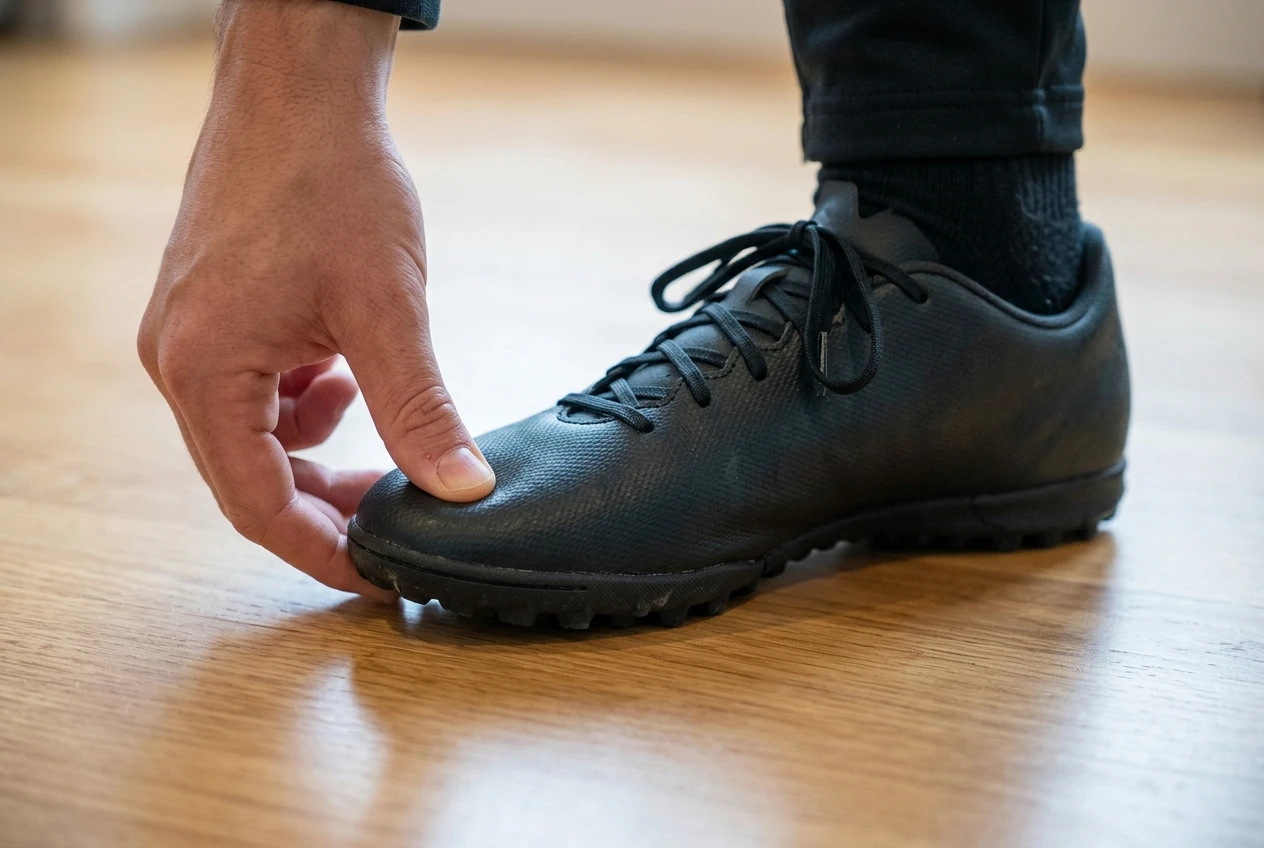
For youth players, resist the old habit of buying a size or two large to grow into. Oversized cleats cause blisters and tripping, and a pair that is too big at the heel can change how a child runs.
The fit test: what to check in the first ten minutes before you commit
Do this indoors, on a clean floor or carpet, so the pair stays returnable. Check the retailer’s policy on trying shoes at home before you start, because some will not accept returns on cleats once they have touched grass or been worn outside.
- Wear your match socks and lace the cleat fully, starting snug at the toes and working up.
- Stand and check the length. Your toes should not touch the front, and your heel should sit flat.
- Press along the sides. You should feel the upper against the widest part of your foot but not a hard edge digging in. Pressure that is firm and even is normal in a new leather pair. A sharp pinch is not.
- Walk, then do some small movements. Rock onto your toes, shift side to side, and make short sharp steps. Watch for heel lift and for toes sliding forward.
- Check the top of the foot. Numbness, tingling, or a pressure line under the laces means the volume is too low for you.
- Wear them for ten minutes. Discomfort that is already building in that time rarely goes away. A pinch that is mild and fades in a knit or soft leather pair is more likely to settle.
If you find a pinch in a material that will not stretch, send it back. That decision is easier to make in the first ten minutes than after a game.
Small fixes for a pair that’s almost right
Some pairs miss by a small margin, and a few cheap changes can close the gap.
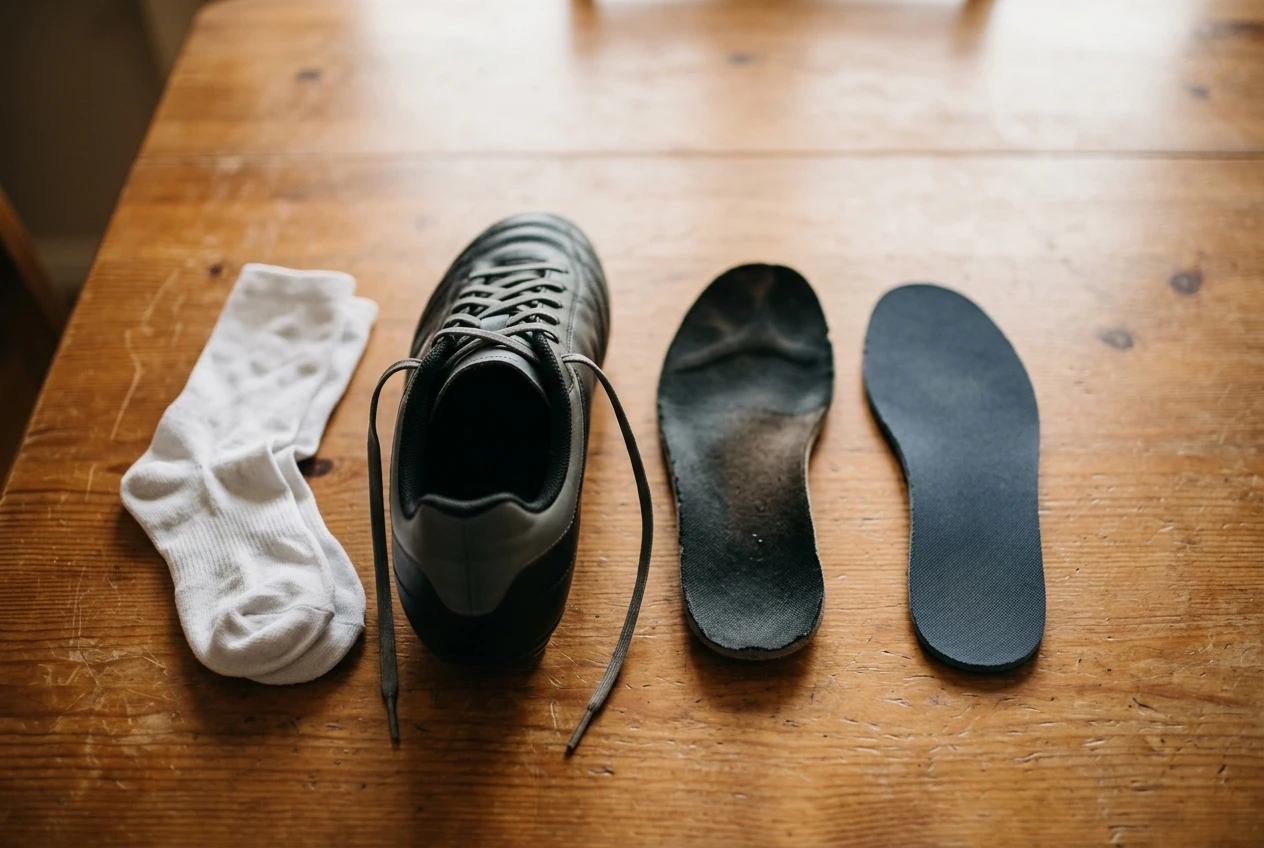
- Insoles. The stock insole in many cleats is thin and shaped to the narrow last. Swapping it for a thinner, flatter insole frees a little vertical space for a high instep. Removing the stock insole and testing with nothing underneath shows whether volume is your issue. A thicker insole does the opposite and helps if your foot swims in a pair that is otherwise wide enough.
- Lacing. Skip the eyelets that sit over the sore spot, or lace the cleat so the pressure moves away from the forefoot. Lacing loosely through the lower eyelets and snugly at the ankle gives the forefoot room while still holding the heel. A parallel lacing pattern, with straight bars instead of crossed laces, spreads pressure more evenly across the top of the foot.
- Socks. Thick socks take up the room a wide foot needs. A thinner sock can give back a few millimeters across the forefoot, while a snug sock that fits the foot without bunching reduces slippage.
- Gradual breaking in. For leather, wear the pair around the house and during light training sessions for a few days before a match. This lets the material loosen with less risk of blisters on game day.
These fixes work on small problems. If a cleat pinches badly in the store, none of them will rescue it.
Where wide-footed players should look first by budget and level of play
Because fit depends on material and last more than price, the starting point changes with how much you can spend and what you play on.
Tight budget. Focus on return policy and on any model offered in a wide fit. Soft synthetic or leather-like uppers at lower prices vary in how much they give, so the in-store or at-home fit test matters more here than anywhere else. If you can try pairs in a shop, do it.
Mid-range. This tier often includes leather or flexible knit uppers, which suit wide feet best. Look for models with a rounder toe shape and read the wide-foot reviews carefully.
Higher-end. Premium models often use thin, soft, stretchy uppers and can mold closely to the foot, but many are cut narrow. Check the width options and try the pair indoors before you decide that price guarantees comfort.
Youth and recreational players. Comfort and correct size outrank any feature. A pair that fits properly this season is a better buy than a more expensive one that rubs.
Competitive adult players. Match the fit to how you play. A closer fit gives a more direct feel but only works if it does not cut off circulation. If you spend long hours on the pitch, comfort in the second half counts as much as touch.
Once you know which fits and materials work for your foot, you can narrow the field by role. The soccer cleats by position guide covers what defenders, midfielders and strikers should look for, which helps you choose between pairs that already fit. Then match the stud pattern to your pitch with the firm ground versus artificial grass cleats guide, so the pair you picked for fit also grips the surface you play on.