Two players can stand on the same field in the same brand of shoe and have very different afternoons. The reason is usually the sole. A shoe made for a flat indoor court behaves differently on artificial turf, and a turf trainer behaves differently on a gym floor. Choosing turf vs indoor soccer shoes comes down to one question: what are you standing on while you train and play?
This guide covers how each type is built, what happens when you wear the wrong one, how to tell them apart at the store, and a simple rule for players who split their time between surfaces.
Why the surface decides the shoe before the brand does
A soccer shoe is a grip system first. Every plant, cut, turn and sprint starts with the sole holding the ground for exactly as long as you need and then letting go. The surface sets what “holding” means. Artificial turf is a bed of plastic blades, often with rubber or sand infill. A court floor is hard and smooth, with almost no give.
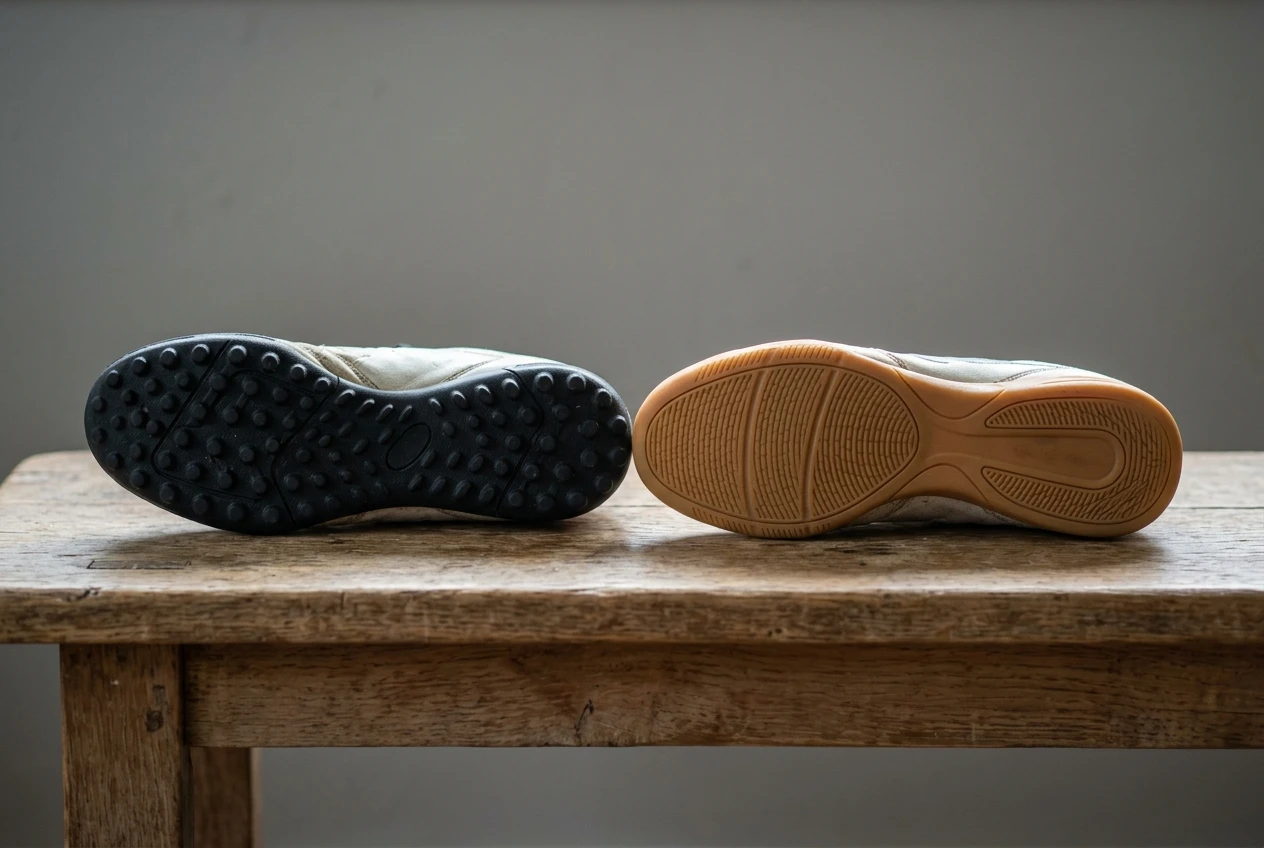
Those two surfaces need opposite things from the outsole. Turf wants a sole that sinks into the carpet and releases cleanly. A court wants a sole that grips the smooth floor through flat contact, with nothing sticking out to catch.
Brand, colour and price matter less than that match. A well-matched mid-range pair will serve you better than a premium pair built for a different surface.
What turf trainers are built for: outsole studs, grip and cushioning
Turf trainers, usually labelled TF, have an outsole covered in many short rubber studs or nubs. Because there are so many of them, they spread your weight across the whole sole. Long studs would sink deep into the carpet and hold on, so turf studs stay short.
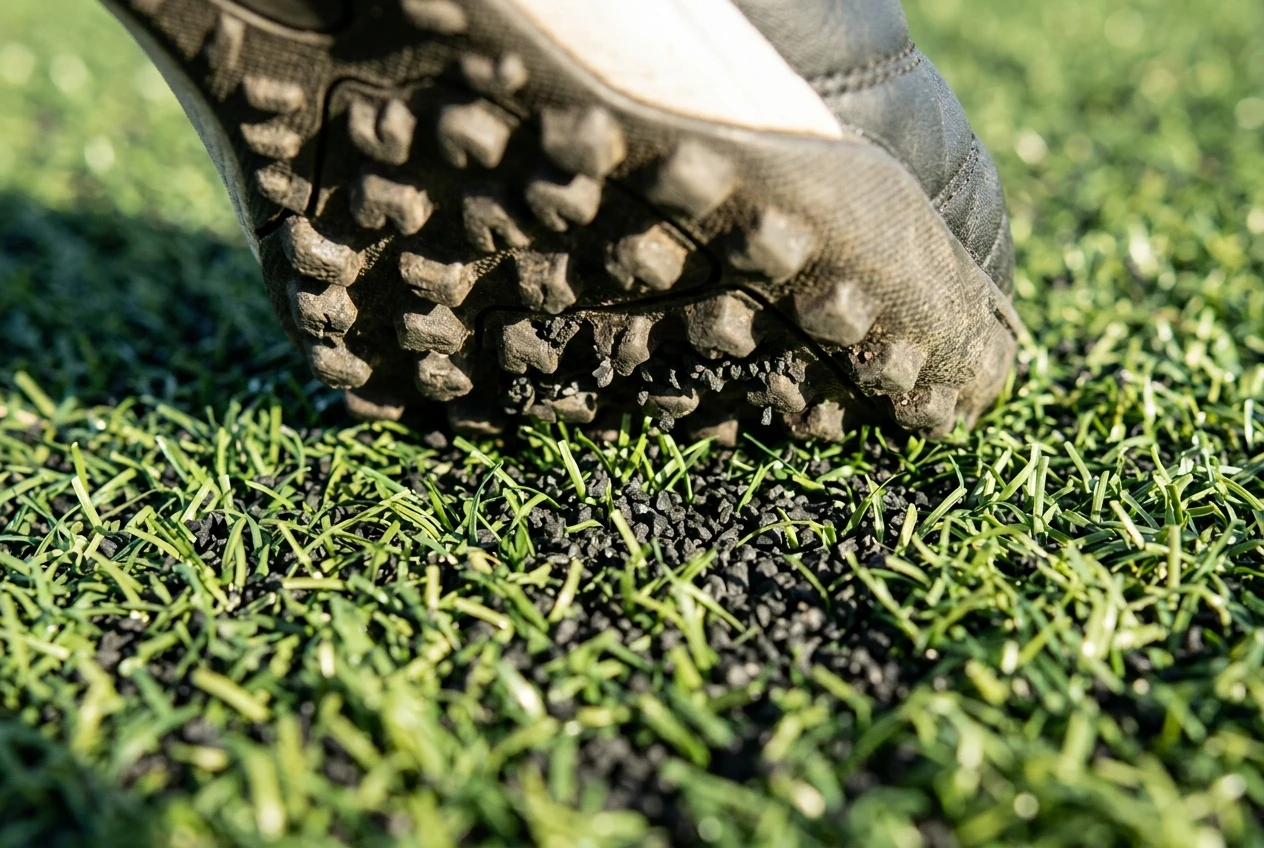
Outsole. The nubs bite into the turf fibres for traction while letting your foot rotate and release. Their number and shallow depth are what make the shoe forgiving when you pivot.
Midsole. Artificial turf is harder than natural grass, and repeated sessions on it load your feet and legs. Turf trainers generally carry more cushioning under the heel and forefoot than a thin indoor shoe does. That padding takes some of the impact out of each step.
Upper. The upper has to cope with abrasion, since a ball struck on turf and a shoe dragged across it both wear material down. Synthetic uppers are common here because they handle scuffing and moisture well. The fit should be snug through the midfoot so your foot does not slide inside the shoe when you cut.
Turf trainers suit practice on artificial fields, small-sided games on turf, and any surface that is firm, dry and carpet-like. They are the usual choice for training sessions on a turf field that does not allow longer studs.
What indoor soccer shoes are built for: flat gum soles, court feel and low profile
Indoor soccer shoes, usually labelled IC, have a flat outsole, typically made of gum rubber, with a pattern of grooves or lines rather than studs. The flat contact patch grips a smooth floor through friction, the way a basketball shoe does.
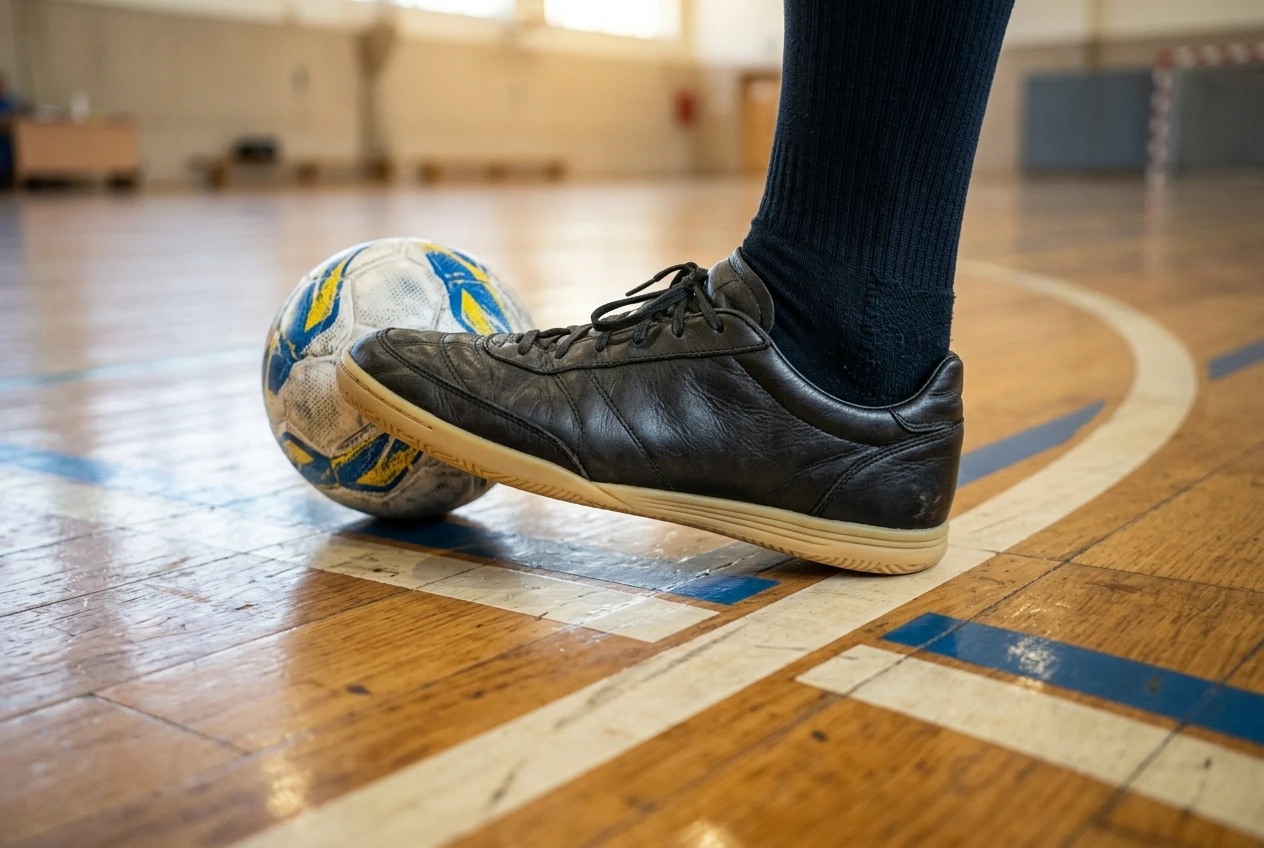
Outsole. Gum rubber is soft and sticky on a clean court. It is typically non-marking, which matters because many indoor facilities require shoes that will not leave scuffs on the floor. Check your facility’s rules before you buy.
Midsole. Indoor shoes sit low to the ground and keep the midsole thin. That low profile gives you a better sense of the floor and the ball under your foot. On a hard floor you give up some cushioning in exchange for that feel and stability.
Upper. Because indoor play is built on touch, many indoor uppers are thin and flexible, in leather or soft synthetic materials. They are made to give close contact for dribbling, passing and quick control in tight space. They also tend to protect less against rough contact than a heavier turf upper.
Indoor shoes suit futsal courts, gym floors and any smooth, hard indoor surface. They are made for quick, short movements and precise touches.
Where the wrong pair hurts you: grip, rotational stress and joint load
Most problems from a mismatch fall into three areas: grip, rotation and impact.
Indoor shoes on turf
A flat gum sole has nothing to bite into artificial turf, so you can slip when you plant or accelerate. That slip can show up as a stumble, a lost step or a sudden slide that strains the groin or hamstring. The thin midsole also gives you little padding on a surface that is harder than grass, so your feet and shins take more of the impact. Turf also wears gum rubber quickly, so the shoes may not last.
Turf shoes on an indoor court
Here the problem is too much grip in the wrong places. Rubber nubs can catch on a smooth floor during a pivot, and when the foot stays planted while the body keeps turning, the force goes up through the ankle and knee. Turf trainers can also leave marks on a court, and some facilities will not allow them. And the cushioned midsole raises your foot off the floor, which makes the shoe feel less stable on quick changes of direction.
Long-studded cleats on turf
Firm-ground cleats are built for natural grass and have longer studs. On artificial turf they can hold the foot too firmly while the body rotates over it. Many players and parents choose turf trainers over them on artificial fields for this reason, and some leagues set their own rules about footwear on turf, so check yours.
Touch and control
Grip is not the only cost. A thick, cushioned shoe on a court dulls the feel of the ball, and a thin shoe on a hard turf field leaves your feet tired sooner. Tired feet make for heavier touches late in a session.
No shoe removes injury risk, and technique, fitness and rest matter as much as footwear. A good routine of mobility work, like the one in this daily stretching routine for soccer players, works alongside the right shoe. If you feel pain that lingers after play, have it looked at by a qualified professional rather than assuming new shoes will fix it.
How to tell which pair you need in 30 seconds at the store
You can sort out most of the decision before you try anything on. Run through these checks:
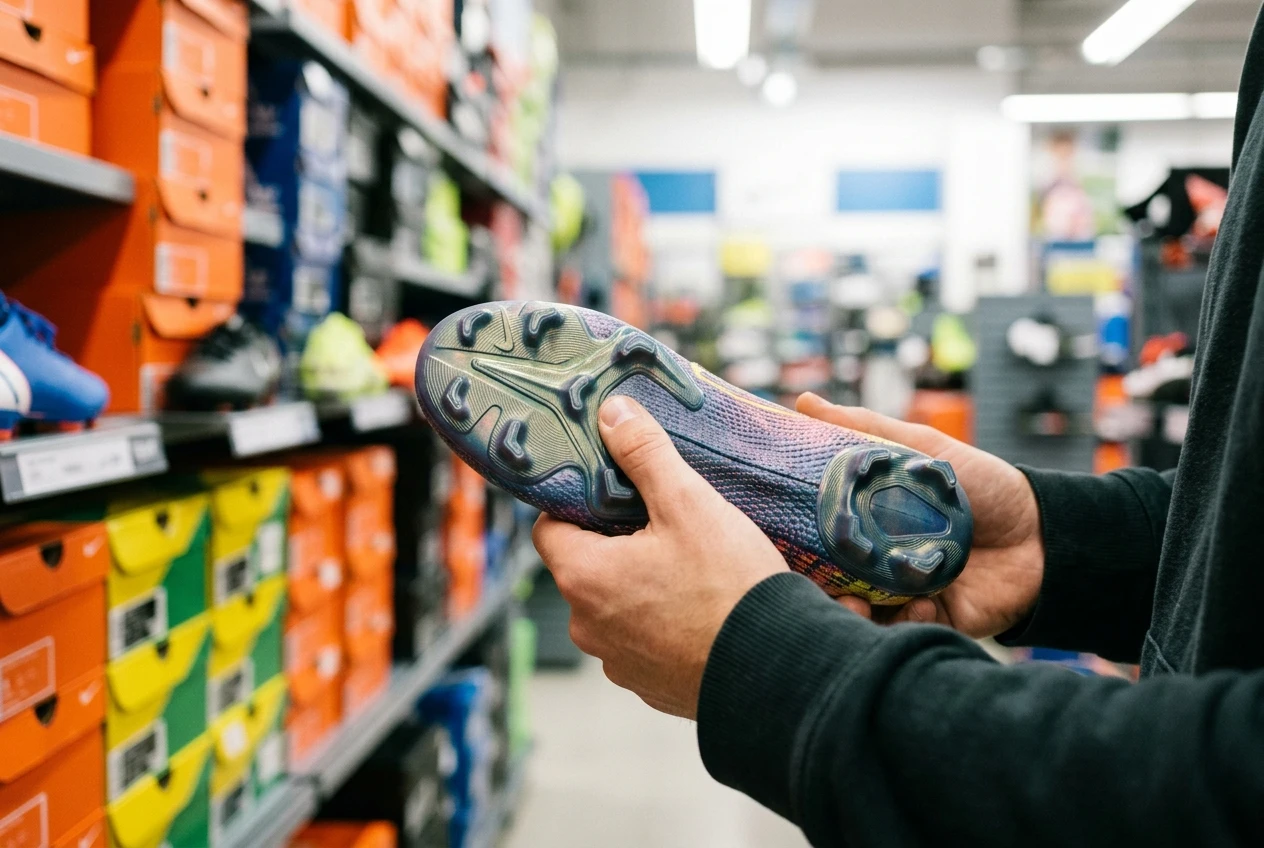
- Turn the shoe over. Many small rubber studs or nubs means turf trainer. A flat, smooth or finely grooved sole, often in a tan or pale gum colour, means indoor.
- Press your thumb into the sole. Turf studs will have a little give and visible height. An indoor sole will feel flat and firm.
- Read the label. TF usually marks turf and IC usually marks indoor. Product pages and the tongue or sole often say which surface the shoe is made for.
- Check the facility rule. If you play at a venue that requires non-marking soles, confirm it before buying.
- Try the fit. Stand up with your normal training socks on and leave about a thumb’s width of space in front of your longest toe. Your heel should stay put when you rise onto your toes, and the midfoot should feel snug without pressure points.
- Do a pivot on the store floor. Plant your foot and turn. The shoe should rotate smoothly and not stick or slide.
Parents buying for a growing child should buy for the current fit, not for the size the child will grow into. A shoe that is too big lets the foot slide and blunts touch, and it works against the grip the sole is designed to give.
Can one pair do both? When a compromise works and when it doesn’t
One pair can work, but only in limited cases, and it helps to be honest about what you give up.
When a compromise works. A turf trainer can be acceptable for casual, occasional indoor kickabouts on a surface that allows it, such as a gym floor with permission to wear them. A young player in a first season, who plays on both surfaces only now and then, can reasonably get by with one pair while working out which surface they actually spend more time on.
When it does not. If you train indoors every week, a turf trainer will feel clumsy and may be banned. If you play regularly on turf, an indoor shoe will slip and wear out. Anyone doing both surfaces regularly will notice the compromise in their touch and in how their legs feel after sessions.
A decision rule for players who use both surfaces
Use this rule when you cannot decide:
- Buy for the surface where you spend the most time. Count your sessions and matches across a typical week, and the surface with the most hours gets the first pair.
- Buy the second pair when the second surface becomes a regular part of your week. If you are on it most weeks, it is no longer an occasional extra.
- Never wear the pair you bought for one surface on the other as your default. Use it for the occasional exception only.
Players who rely on a second surface weekly will usually be better off with two pairs than one pair that does neither job well. Over a season, two matched pairs also last longer, because each pair is worn only on the surface it was made for.
What to look for in each type by budget and level of play
You do not need the most expensive shoe in either category. What you need is a correct sole and a good fit, and the features below matter in roughly this order.
Turf trainers
- Entry level. A durable synthetic upper, a full covering of rubber studs and a snug fit. Casual and youth players need little more than this.
- Mid-range. Better cushioning in the midsole, a more secure midfoot and a more refined upper that holds up to repeated sessions. This is a sensible tier for players training several times a week.
- Higher level. Lighter materials, more touch-oriented uppers and more support. These are worth considering when you play often enough to feel the difference, but they do not change the basic job of the sole.
Indoor shoes
- Entry level. A flat, non-marking gum sole and a basic upper. This is enough for casual or youth play.
- Mid-range. A thinner, more responsive upper for touch, a more durable sole and better stitching around the toe where indoor shoes take the most wear from the ball.
- Higher level. A very light upper and a refined sole feel for fast, technical play. Competitive futsal players are the ones likely to use all of it.
For youth players, who outgrow shoes quickly, a sensible entry or mid-range pair in the right category is usually the better choice than a premium pair that will be too small in a few months. Spend where the shoe touches the ground and where your foot sits inside it, and leave the extra cost of luxury materials for later.
Keeping each pair in shape so the sole keeps gripping
A sole that has lost its grip is a worn shoe whatever the upper looks like, so a little care keeps both pairs working.
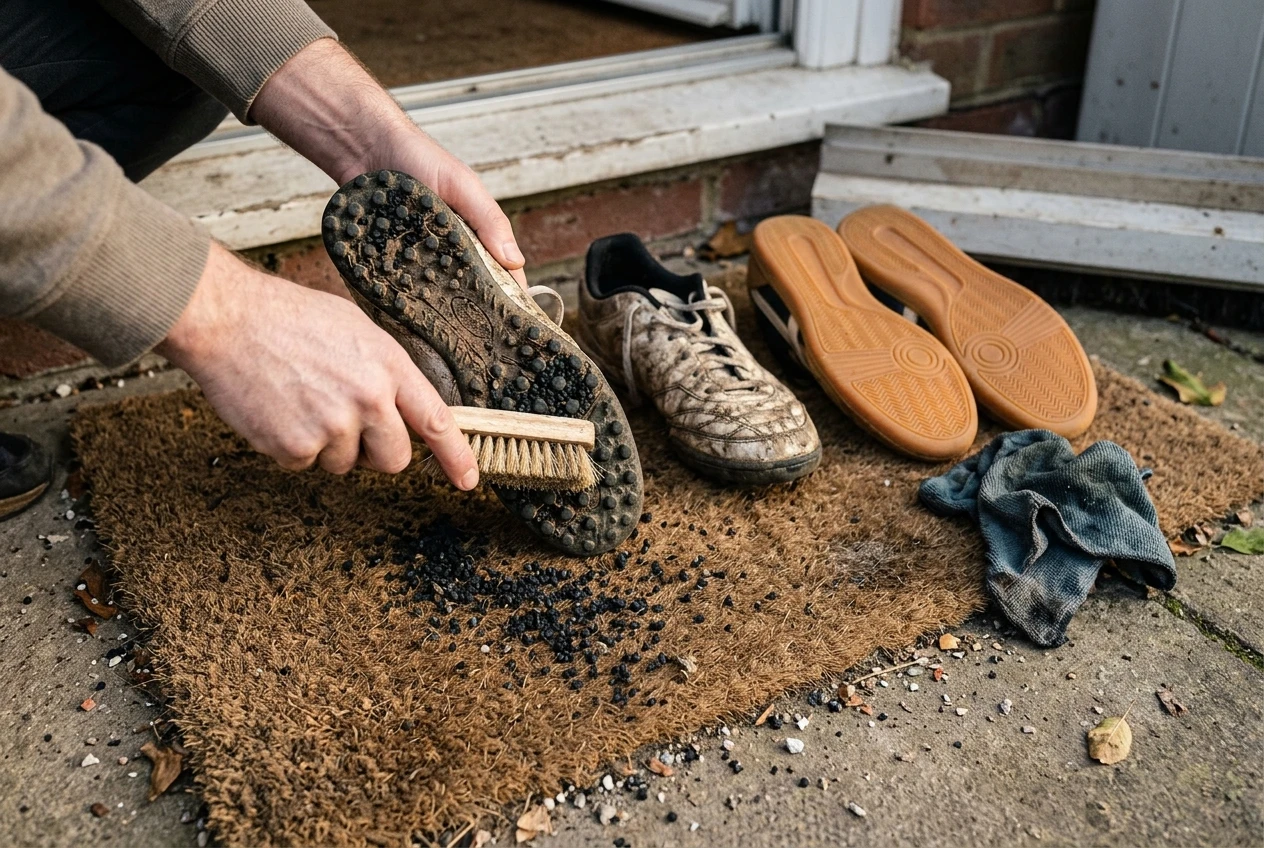
Turf trainers
- Knock out loose infill and dirt from between the studs after each session.
- Wipe the upper with a damp cloth and let the shoes dry at room temperature. Heat from a radiator or a hot car can warp synthetic materials and weaken the glue.
- Check the studs for flattening. When they are worn smooth, the shoe has lost much of what it was built to do.
Indoor shoes
- Wipe the gum sole with a damp cloth to remove dust, since dust on the sole is what makes a court shoe slide.
- Wear them only on the indoor surface. Walking across a car park or pavement wears the sole and picks up grit that carries onto the court.
- Store them dry, away from direct sun, so the rubber stays supple.
Whichever pair you own, take the shoes out of your bag after play so they can air out. Letting them dry properly helps the materials last.
Surface first, then fit, then budget: that order will get you the right pair most of the time.
Read next: Soccer Cleats by Position, to match the shoes you pick for your surface with what your role on the field demands.