Shin guards look alike from the outside: a curved shell, a foam backing and a couple of straps. The shell material decides how the guard behaves when a stud lands on it, how heavy it feels by the 80th minute, and how long it lasts. Two materials dominate the serious end of the market: carbon fiber and high-impact polymer. This comparison covers what each does, where each falls short, and what to check before you spend money.
The brand printed on the shell tells you less than the material under it. Two guards from different makers with the same shell material and similar thickness will behave more alike than two guards from the same maker in different materials. If you are still deciding between slip-in, ankle-guard and hard-shell designs, start with this breakdown of shin guard styles, then come back here to choose the shell.
Why the shell material matters more than the brand name
A shin guard does two jobs. The shell spreads a point impact, such as a stud or a boot toe, across a wider area. The foam or padding behind the shell slows the force before it reaches the bone. Material choice mostly affects the first job, and it also determines weight, thickness and how the guard ages.
Carbon fiber is a woven fabric of carbon strands set in resin. It is stiff for its weight, so a thin sheet can resist bending. Polymer shells are molded plastic, usually a tough, slightly flexible type. They give a little under load and then return to shape.
Neither is automatically better. Stiffness helps when you want force spread widely and a slim profile. Flex helps when you want the shell to absorb part of a hit and survive repeated knocks. The sections below show where each property pays off.
One caution before the comparison: product pages often use “carbon” loosely. Some guards have a real carbon fiber layer, while others only have a carbon-look print on a plastic shell. Read the material description, and treat a listing that says only “carbon design” or “carbon style” as polymer until it says otherwise.
How carbon fiber shin guards handle a studs-up tackle
When a stud lands on a rigid carbon shell, the shell barely bends. Because it does not deform, the load travels along the shell and spreads over a larger patch of your shin instead of concentrating under the stud tip. That is the main protective advantage, and it is why carbon fiber appeals to players who expect heavy contact.
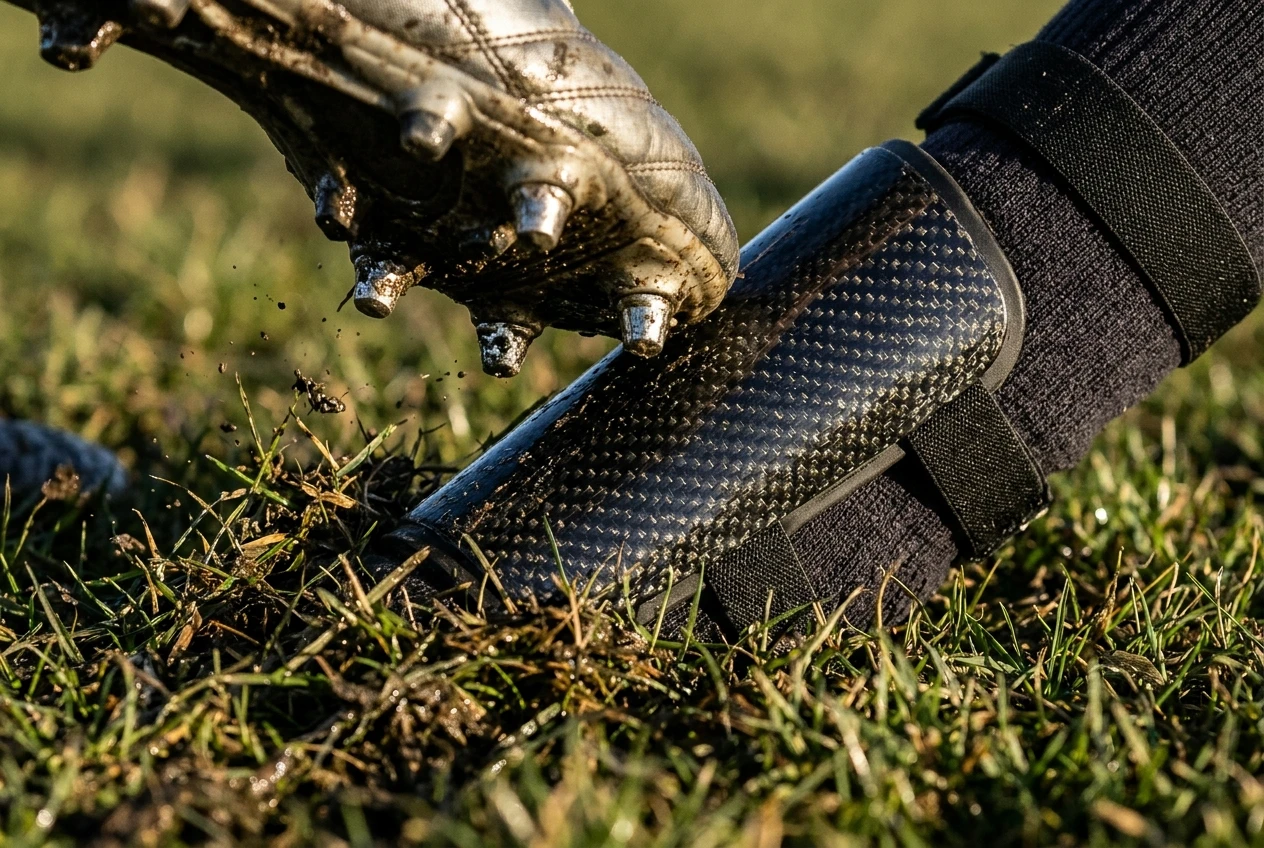
The foam behind the shell still matters. A stiff shell over thin padding transmits a sharp, short impact to the bone. A stiff shell over well-chosen foam spreads the load and slows it. When you compare carbon guards, look at the padding as closely as the shell.
Carbon fiber’s weak point is its stiffness. Under a very sharp or very hard impact it is more likely to crack or splinter than to bend and recover. A cracked shell can have sharp edges, and it protects less than it did before. After any heavy hit, such as a stamp or a collision with a post, check the shell for cracks, white stress marks and rough edges.
The stiffness also means a carbon shell keeps its shape on a curved shin, so it does not sag or fold when you sprint. That makes fit more consistent, provided the curve of the shell matches your leg.
Where high-impact polymer holds its own, and where it flexes too much
A good polymer shell absorbs some of the impact by bending slightly, then springs back. Repeated knocks from boots, balls and the ground do not leave lasting damage on a well-made one. For a player who gets kicked often in training and matches, that tolerance for abuse counts for a lot.
Polymer also costs less to make, which usually puts well-built polymer guards in a lower price bracket than carbon ones. Many players find a quality polymer shell gives all the protection they need for their level of contact.
The trade-off is flex. A thin polymer shell can bend under a hard stud and let the force concentrate in a smaller area than a rigid shell would. Makers compensate by making the shell thicker, which adds weight and bulk, or by adding ribs and a stiffer layer. A polymer guard that feels flimsy when you squeeze the shell between your hands will flex the same way on the pitch.
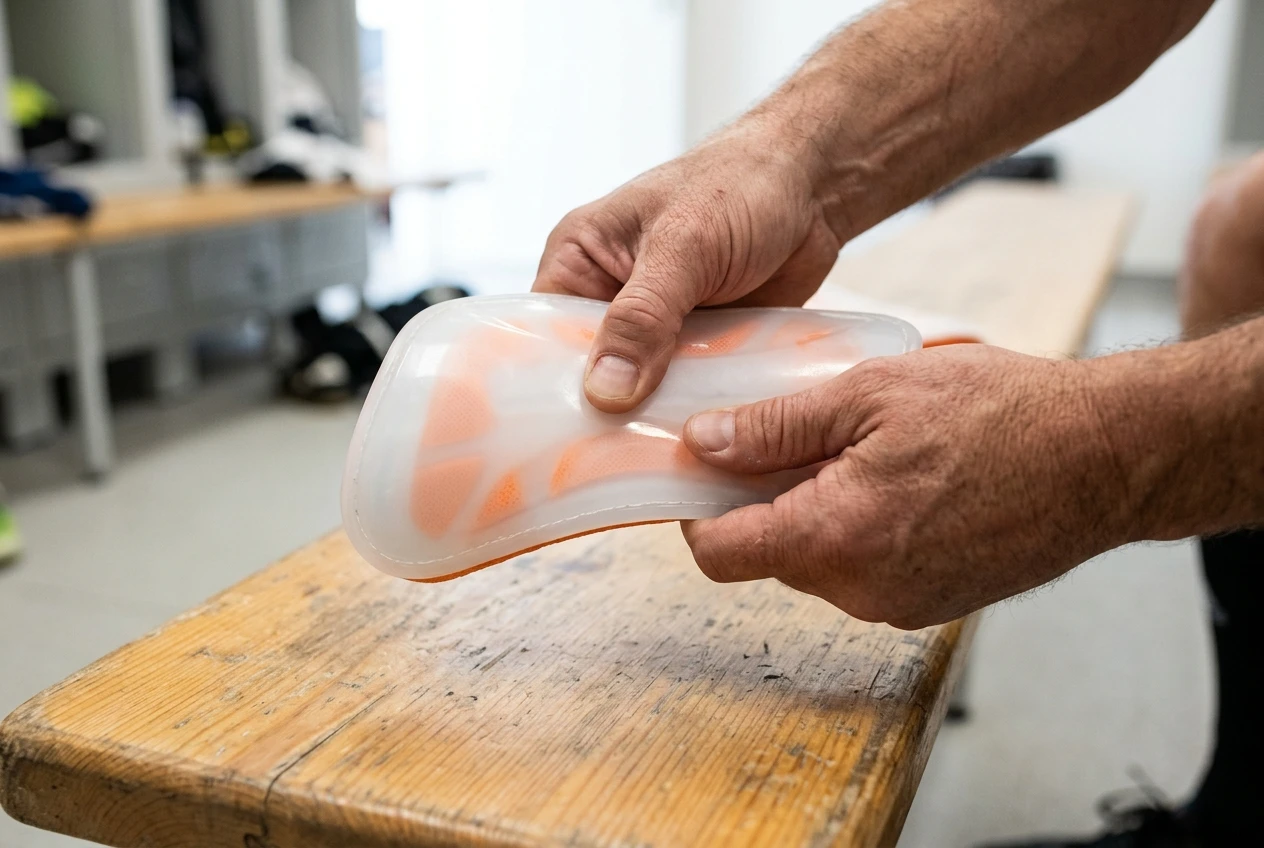
A simple test in the shop or at home: press the middle of the shell with your thumb, then twist the guard gently. Some give is normal in polymer. If the shell folds or twists easily, look at a thicker or more heavily ribbed model.
Weight, thickness and how each material feels inside a sock
Carbon fiber can reach the same stiffness as polymer at a smaller thickness and lower weight. That shows up in two ways: the guard is slimmer against the shin, and it is lighter when you are tired late in a match. If you dislike the feeling of anything bulky under your sock, this is the strongest argument for carbon.
Polymer guards tend to be thicker where they need extra strength, so the profile can be bulkier. Many players stop noticing a polymer guard once it is strapped in, but a few find a thick shell shifts in the sock, bunches the fabric or presses on the shin during sharp turns.
Feel depends on three more things besides the material:
- Foam density. Soft foam feels comfortable but can compress too far. Denser foam feels firmer and cushions better under impact.
- Edge finish. Rolled, smooth edges stay comfortable. Hard, square edges dig in during long sessions.
- Shell curve. A guard that follows the shape of your shin sits flat. One that does not will rub or rock.
Weigh the guards you are shortlisting if the seller lists the weight, and compare it only between guards of the same size. A lighter guard in a larger size can still outweigh a heavier one in a smaller size.
Durability: cracks, delamination and what wear looks like over a season
The two materials wear out differently, so you need to look for different signs.
Carbon fiber tends to fail in one of two ways. The shell can crack after a severe impact, or the layers can separate, which is called delamination. Delamination shows up as a lifted edge, a rough or flaky surface, a visible gap between layers or a soft spot where the shell used to be rigid. A delaminating shell is weaker and should be replaced.
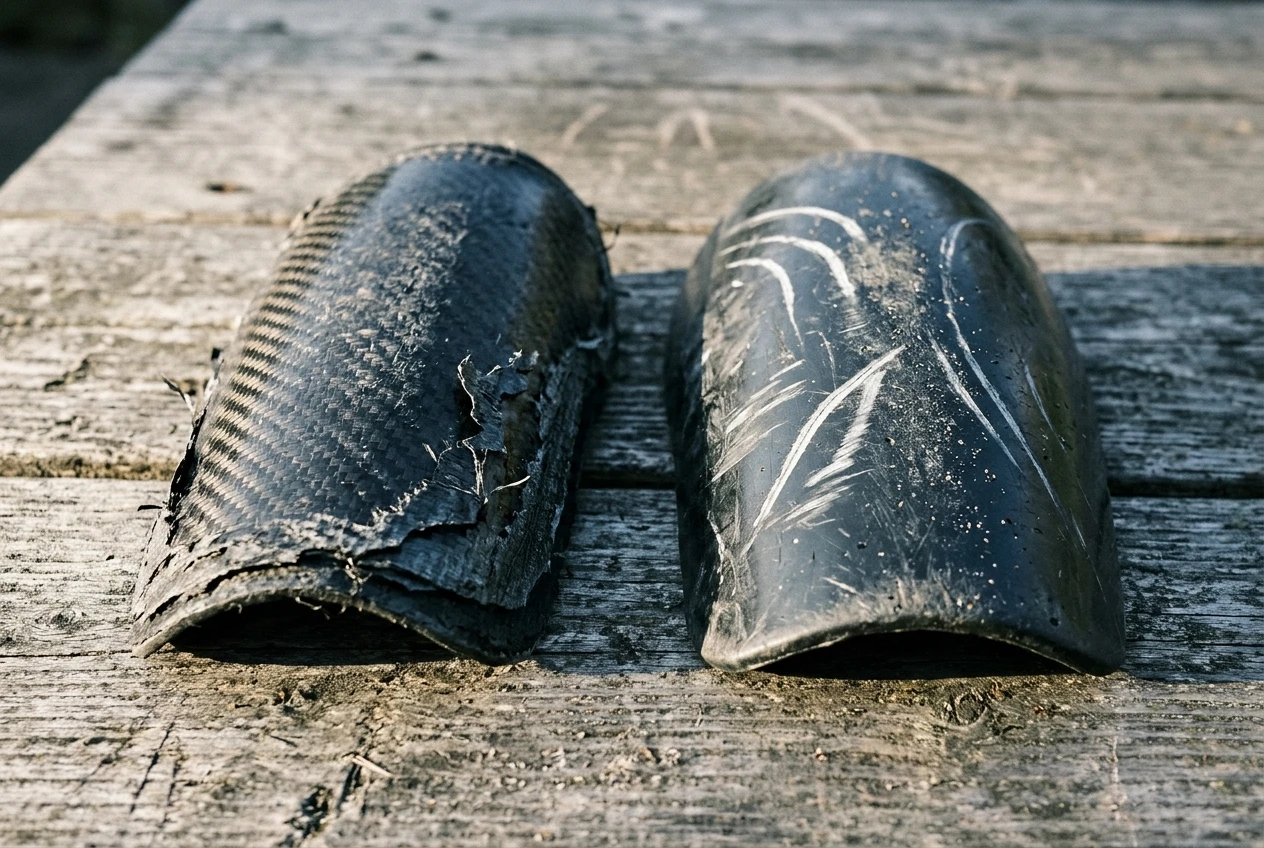
Polymer tends to wear gradually. Expect scuffs, scratches and some yellowing. Under heavy abuse, a polymer shell can develop stress lines, white streaks where the plastic has been bent repeatedly, or a permanent warp. Slight surface wear is cosmetic. Cracks and a shell that no longer returns to shape are not.
Straps and foam wear out before the shell in most guards. Elastic loses tension, hook-and-loop fasteners collect grit and stop gripping, and foam flattens or tears. A guard with a good shell and a dead strap will slide down your leg. Many guards allow replacement straps or sleeves, so check whether the model you want does.
A check worth doing every few weeks:
- Flex the shell gently and look for cracks or white stress lines.
- Run a finger along the edges for lifting layers or sharp spots.
- Press the foam and see whether it springs back.
- Test the straps and the grip on the fasteners.
Washing matters too. Rinse mud off with water and let the guards air dry away from direct heat. Leaving them wet in a bag lets odor build up and speeds up wear on the fasteners. If you want a tidy way to keep them dry between sessions, the soccer bag checklist covers what to carry for wet-weather days.
Which material suits a defender, a winger and a holding midfielder
Position changes how often you take contact, from which direction, and how much a few extra grams matter. Use these as starting points rather than rules.
Defenders are involved in the most challenges and often get hit from the front and side. A rigid carbon shell spreads those impacts well, but a thicker polymer guard is a reasonable alternative if you want something that tolerates knocks and costs less. Prioritize coverage and a secure fit over weight. If you are also choosing footwear, the cleats by position guide covers the same kind of position-based thinking.
Wingers run long distances at speed and are often caught by late challenges from behind or the side as they cut inside. A slim, light carbon shell suits that role because it protects without adding bulk to the leg. A winger who dislikes any stiffness against the shin may prefer a flexible polymer model that moulds a little to the leg.
Holding midfielders go into contested challenges often and also cover a lot of ground. They sit between the other two. A mid-weight guard works well: either a carbon shell with generous foam, or a polymer shell with ribbing and good ankle coverage. The decision often comes down to budget and how much bulk you will tolerate.
Goalkeepers, strikers and players in particularly physical leagues may weigh things differently again. The general rule holds: the more contact you take, the more you should favor a stiff shell with good foam, and the more you run, the more weight and bulk matter.
The fit checks that matter more than the material
A well-fitted polymer guard protects better than a badly fitted carbon one. Check these before you buy.
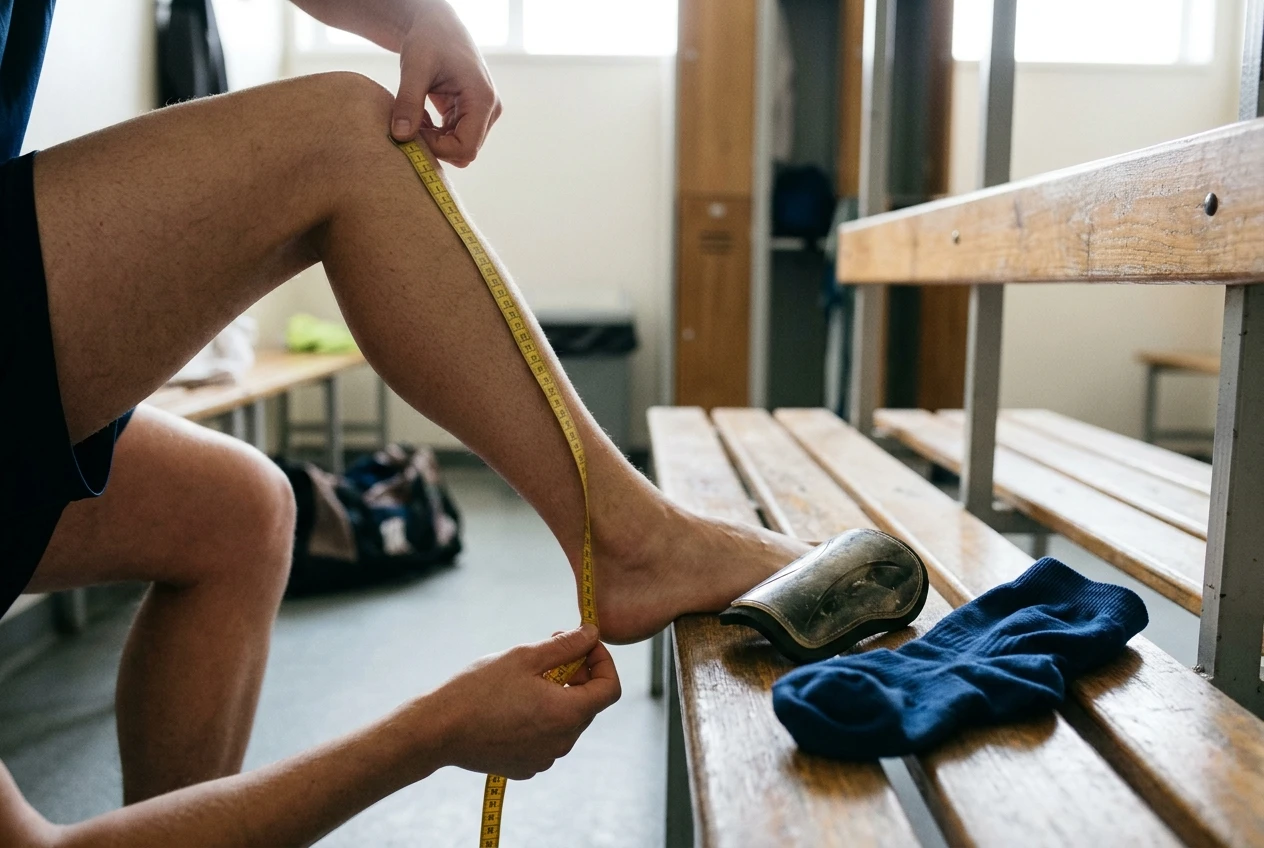
- Length. Measure from just below the knee to above the ankle. The guard should cover most of that span without touching the kneecap or restricting ankle movement. A guard that is too long digs into the knee when you bend, and one that is too short leaves the lower shin exposed.
- Width and curve. The shell should sit flat against your shin without rocking from side to side. Gaps at the edges mean the guard is the wrong shape or size.
- Straps and sleeves. Straps should hold the guard in place without cutting off circulation. If you wear a sleeve, check that it grips and does not roll down. Fit the guard first, then run, kick and turn in it.
- Ankle coverage. Guards with ankle protection cover the bony bumps that take a lot of knocks, but they add bulk and can limit ankle movement. Decide whether you want that coverage before choosing the material.
- Rules. Leagues and clubs may require guards to meet certain standards or be worn under the socks. Check what yours requires before you buy.
Try guards on with your usual socks and boots. If you wear compression gear, bring it too, since compression socks and tights can change how a guard sits and how much room you have.
Quick picker: match your position, budget and tolerance for bulk to a shell type
Use this to narrow your shortlist.
- You take a lot of contact and want maximum spread of impact: carbon fiber with dense foam. Check the shell after heavy hits.
- You want the lightest, slimmest option and have the budget: carbon fiber. Confirm the carbon is a real structural layer, not just a printed pattern.
- You want durable protection at a lower price: high-impact polymer with a thicker shell and ribbing.
- You dislike a stiff shell against your leg: polymer with a slight flex, as long as it does not fold when twisted.
- You are a parent buying for a growing academy player: a good polymer guard is often the more practical choice, because the player may outgrow the size before a carbon shell wears out. Measure again at the start of each season.
- You tolerate bulk and want a robust guard: thick polymer, with ankle coverage if you want it.
Whichever you pick, buy the right size, replace worn straps and foam, and retire any shell that cracks or delaminates.
Measure your shin from just below the knee to above the ankle, pick the shell material that fits your position, then check current sizes and prices for the guards you’ve shortlisted.