
Most goalkeeper gloves feel good in the shop and on a dry training pitch. A wet match is a different test. The latex gets slick with mud, the backhand soaks up water and gets heavy, and a glove that sat snugly on a dry hand starts to slide. If you are shopping for the best goalkeeper gloves for wet weather, the features that matter are the palm foam, the cut, the closure and how you look after the pair.
This guide covers only the wet-weather problem. For choosing gloves by level of play and budget, the last section points to a separate guide.
Affiliate disclaimer
Your article should have a goalkeeper-glove-specific disclosure instead of a general fitness-products disclosure.
Why gloves that feel great dry can fail in the rain
Latex grips by being tacky and by compressing slightly around the ball. Water changes both. A thin film on the ball and the palm reduces direct contact, and mud adds grit that sits between the two surfaces. Dirt clogs the surface texture of the foam, and the glove loses tack long before the latex is actually worn out.
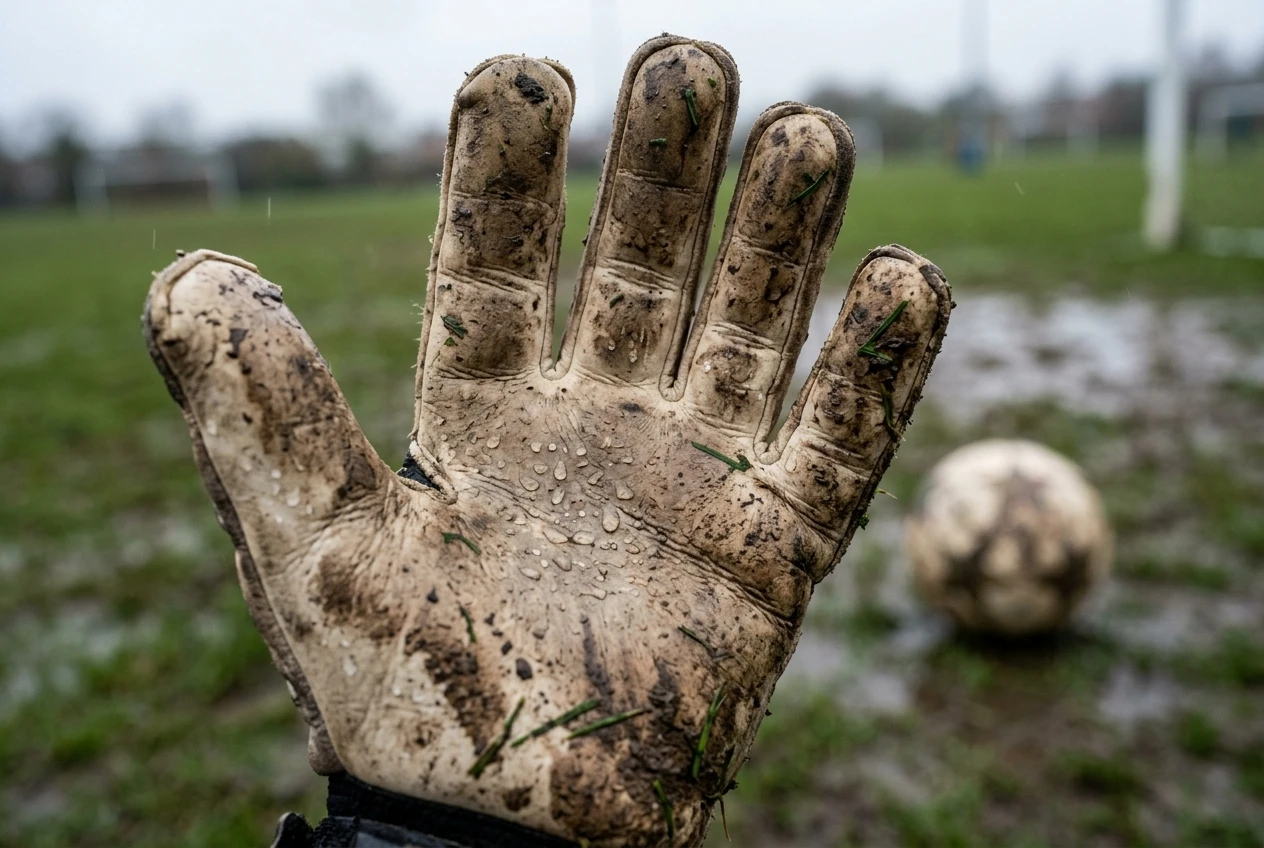
Wet conditions also change the glove’s shape. Fabric and foam on the backhand take on water and stretch. Straps loosen and finger tubes can shift. A glove that has moved even a few millimetres on the hand makes the palm contact uneven, and you notice it first on crosses and low drives.
Cold adds a third problem. Latex feels firmer in low temperatures, and stiff fingers handle a slick ball less well. Rain, mud and cold usually arrive together, so a wet-weather glove has to deal with all three.
It helps to separate two causes of a poor wet grip:
- The palm has lost grip: wrong foam for the conditions, or foam clogged with mud and dirt.
- The glove has moved on the hand: poor cut, loose closure, or an absorbent backhand that stretches.
The next sections take each in turn.
Latex palms in the wet: soft, medium and hard-wearing foams compared
Palm foam is the single biggest variable. Brands use their own names, so compare the type of foam instead of the product label. Three broad groups cover most gloves.
Soft, high-grip foam
Soft foam is the tackiest and cushions the ball best. Many keepers find it holds well on a damp ball, since latex of this kind often works better with a bit of moisture on it. The trade-off is wear. Soft foam breaks down faster on abrasive surfaces, and mud that is dragged across it can scuff the surface. If you play on soaked grass pitches, it can be a strong match-day choice, but expect to replace it sooner than a firmer palm.
Medium, all-round foam
Medium foam gives up a little tack for noticeably more life. It suits keepers who train several times a week and want one pair that copes with dry sessions and the occasional downpour. In heavy rain it will not feel as sticky as the soft type, but it also does not tear up as quickly on gritty, muddy ground.
Hard-wearing, durable foam
Firmer foam lasts longest and holds its shape, which makes it a sensible training glove when the pitch is rough or the weather is bad all week. The cost is grip: on a wet ball it gives you the least tack of the three. Do not choose it as your match glove if you are relying on it to hold a greasy ball.
Other palm features that matter in the wet
- Surface texture: a defined texture or channels in the foam can help the glove shed some water, though mud can fill them, so rinsing matters.
- Foam thickness: thicker foam cushions shots but can feel spongy once soaked. Thinner foam gives a more direct feel.
- Wet-weather labels: some brands sell palms described as suited to wet conditions. Treat the label as a starting point and compare the foam description against the three groups above.
A practical approach for keepers who play in rain regularly is two pairs: a softer pair kept for matches and a firmer pair for training.
Does a wet glove need a different cut? Flat, rolled, negative and hybrid styles
The cut is how the palm and finger pieces are stitched together. It decides how closely the glove fits the hand, and fit decides how well the glove stays in place when soaked.
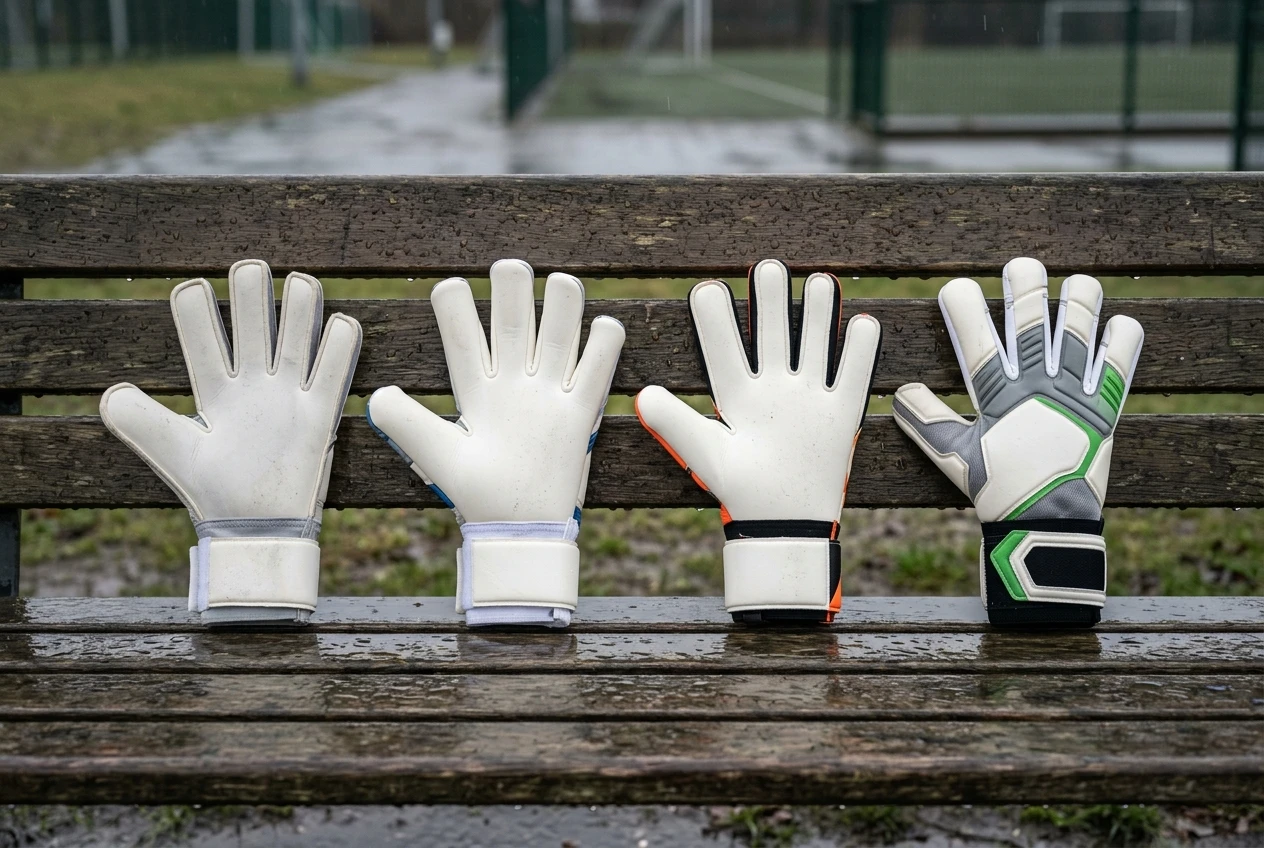
- Flat cut: the palm is a flat panel with separate side pieces (gussets) sewn between the fingers. It has a roomy feel, with more space around the fingers and a more relaxed fit. That room can allow movement when the glove is wet, but it is comfortable, and it suits keepers with wider fingers.
- Rolled cut: the latex wraps around the finger and the seam sits on the outside edge. This puts more latex in contact with the ball and gives a snug, close fit around the fingers. It is a popular match-day choice for wet conditions because there is less empty space for the glove to shift.
- Negative cut: the seams are stitched on the inside, so the fingers sit tight and there is no spare fabric. The fit is very close. Keepers who like a glove that feels like a second skin favour it, and the tight fit helps a soaked glove keep its position. It can feel restrictive on larger hands, and the snugness is worth testing before a match.
- Hybrid cut: combines features from two styles, for example a rolled palm with negative-style finger construction. Hybrids try to give you the contact area of one and the fit of another. Check the description of what is combined rather than relying on the name.
For wet weather, the closer-fitting styles (rolled, negative and most hybrids) generally keep the glove seated better than a roomy flat cut, because there is less slack for water to expand. The right choice still depends on your hand shape. A tight cut that pinches at the finger base is worse than a flat cut that fits.
If you are buying for a young keeper, fit matters even more. Hands grow, but a glove that is too big will slide and fold when wet, so buy for the hand they have now.
Backhand, closure and wrist strap: keeping the glove seated when everything is soaked
Once the palm and cut are chosen, the parts of the glove that hold it on the hand decide whether the grip you paid for stays where you need it.
The backhand
The backhand is the back of the glove. Foam-padded backhands absorb water and get heavy. Thinner or perforated backhands drain better, while thicker backhands protect more when you punch. In the wet, a backhand that holds water pulls on the straps and loosens the fit over a match, so look for materials that dry quickly or that do not soak up much to begin with.
Finger protection
Finger spines, the flexible supports inserted along the finger, add stiffness and protection. In cold weather they can make the glove feel firm. Some keepers choose removable spines for training and a glove without them for the wet. Whether you need them depends on level of play and any previous finger injuries, which the level-of-play guide at the end covers in more detail.
Closure and wrist strap
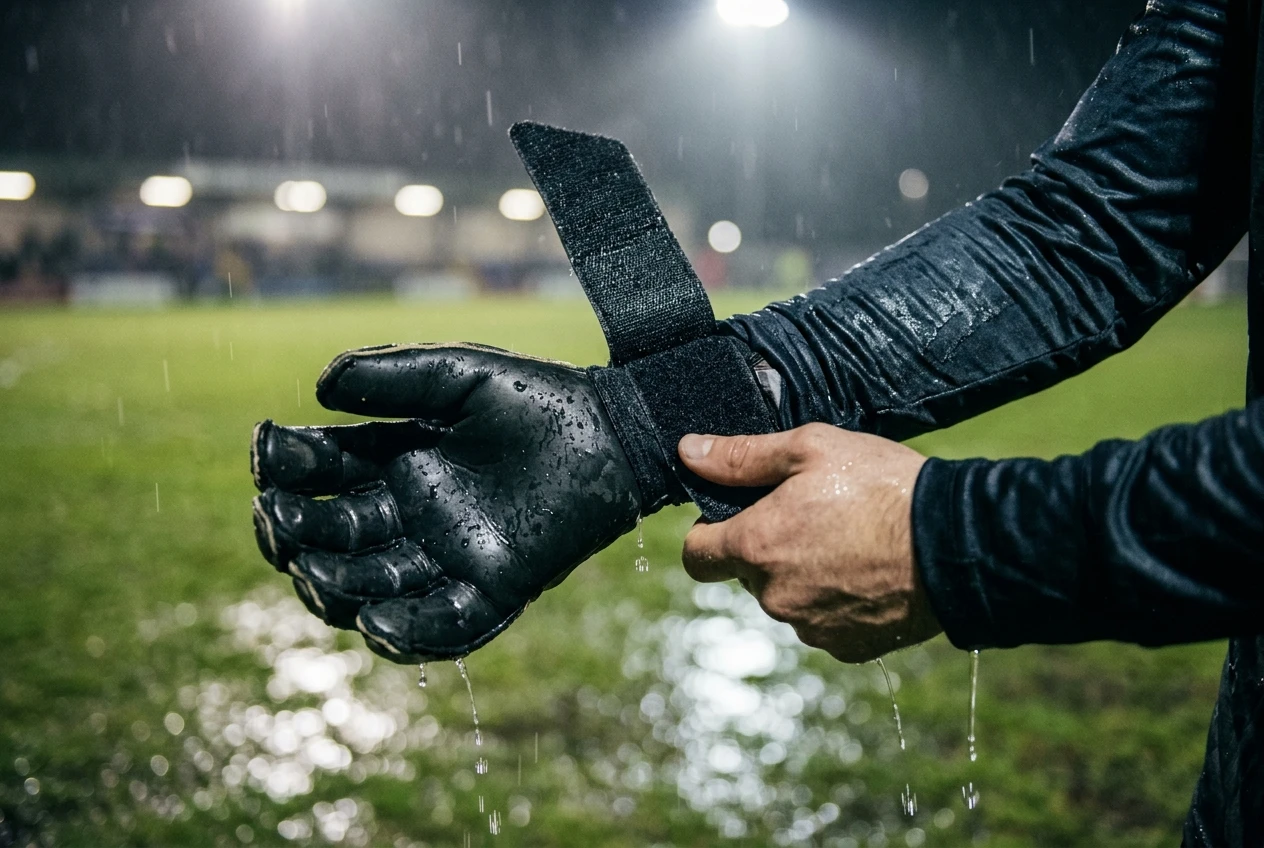
The wrist closure holds the glove on, and a wet one is the one most likely to slip. Features to compare:
- Full wrap strap: a strap that goes fully around the wrist, usually with a hook-and-loop fastening. It tends to give the most secure feel and can be tightened as the glove loosens.
- Elastic band or half-strap: quicker to put on and lighter, but it can lose tension when soaked and may hold less securely.
- Strap width and material: a wide strap with a firm fastening spreads pressure. A strap that attracts mud on the hook-and-loop will stop gripping, so wipe it clean.
- Wrist cuff: a neoprene or similar cuff adds a second layer of fit and keeps rain from running into the glove.
A secure strap should be snug enough that the glove does not rotate when you shake your hand, without cutting off circulation. Adjust it again at half time when the glove has stretched.
How to prep new gloves for a wet match, and what to do at half time
Before the match
New latex often has a slightly slick surface from manufacturing. Most keepers break gloves in with a few training sessions before using them in a match, since the foam usually grips better after a little wear and moisture.
On the day:
- Dampen the palms with clean water before you go out, or just before kick-off. Latex generally grips better slightly damp than bone dry, and it keeps the glove from drying out and getting stiff.
- Check the strap and closure before you put them on. Wipe any grit off the hook-and-loop.
- Put the gloves on while your hands are dry, then fasten the strap firmly.
- Take a spare pair if you have one, and keep it in a dry bag.
Avoid applying anything sticky or heavy-handed to the palms. Some commercial grip sprays are made for goalkeeper gloves, and if you choose to use one, follow the maker’s instructions and check that it suits your foam. Plain water is the safe default.
At half time
Halftime is the best chance to restore grip:
- Rinse off mud: use clean water to flush the palm. Dirt left on the foam is what kills the tack.
- Do not rub hard: scrubbing the latex wears it. Let the water do the work and shake the excess off.
- Re-dampen lightly: the palms should feel tacky, not dripping.
- Dry the backhand and strap: a towel on the outside and strap helps the glove keep its fit. Keep the towel off the palm so you don’t transfer lint or grit onto the latex.
- Swap pairs if needed: if the first pair is soaked through and slipping, a drier spare is a good use of the break.
Drying, washing and storing gloves after a muddy session so the latex lasts
Latex lasts or fails mostly on what happens after the whistle. Left wet in a kit bag, gloves go stiff, smell and break down.
Wash
- Rinse first: hold the glove under cool or lukewarm running water to remove mud and grit before it dries.
- Hand wash: use a small amount of mild soap or a cleaner made for goalkeeper gloves. Work the palm gently with your fingers, not a brush.
- Rinse again: leftover soap leaves a film that reduces grip.
- Do not use a washing machine: the spin cycle and detergent are hard on the latex and on the glove’s construction.
Dry
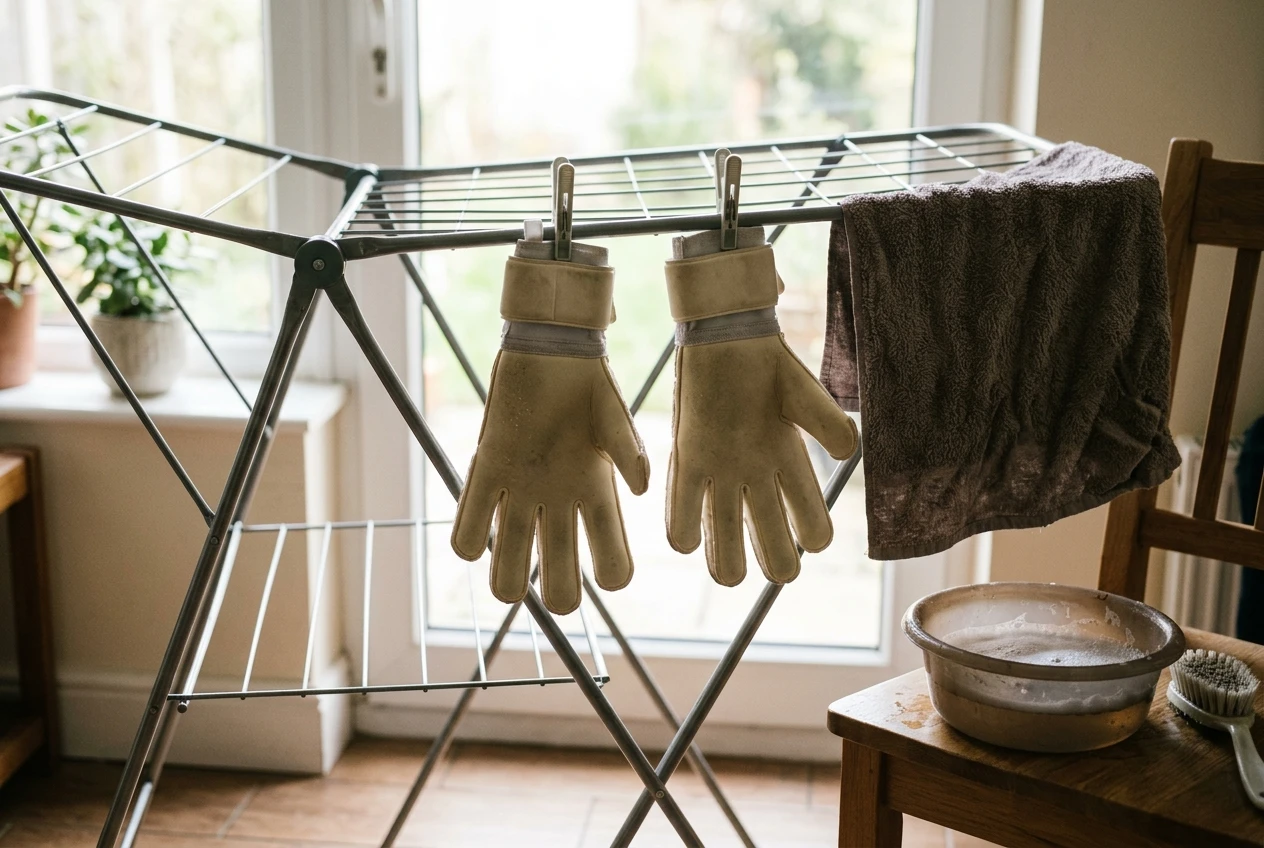
- Shake off the water and press the glove gently in a towel. Do not wring it, which twists and tears the foam.
- Air dry at room temperature with the fingers open, laid flat or hung with the palms facing out.
- Keep it away from heat: radiators, hair dryers, tumble dryers and direct sun dry out the latex and make it brittle and cracked.
- Stuffing the glove loosely with paper or cloth can help it keep its shape and absorb moisture, if you change it as it gets damp.
Store
Once dry, store the gloves somewhere cool and ventilated. Some keepers press the palms together, and some use the glove’s original wrap or a mesh bag. Avoid sealed plastic, which traps moisture. Never put a damp glove in a bag after training, and take your gloves out of your kit bag as soon as you get home.
A reasonable routine after a wet session is rinse, gentle wash, air dry, store. It takes a few minutes and extends how long the foam keeps its grip.
A wet-weather buying checklist, with a pointer back to choosing gloves by level of play
When comparing pairs, check these in order:
- Palm foam: soft for match-day tack, medium for all-round use, firm for durability. Match the foam to how often you play in the wet.
- Cut: rolled, negative or hybrid for a closer fit that stays put, or flat if you need room. Try them on and make a fist.
- Backhand: does it drain or dry quickly, and does it protect the way you need it to?
- Closure: a secure full wrap strap that you can retighten, with a clean hook-and-loop.
- Finger protection: whether you need spines, and whether they are removable.
- Fit: snug at the fingertips with no folds in the palm. For young keepers, fit for the current hand size.
- Care: can you realistically rinse and air dry them after every muddy session? The best gloves still fail if they are stored wet.
- Spare pair: a second pair for the second half of a downpour is worth having if the budget allows.
The best goalkeeper gloves for wet weather are the pair that fits your hand, uses a foam matched to how you play, and gets cleaned and dried after each session. The right pair also depends on your level and budget. To match what you have read here to your own position, how often you train and what you can spend, read our guide to choosing goalkeeper gloves by level of play.