

Offside confuses more new fans than any other rule in soccer, mostly because people try to judge it by watching where the ball ends up instead of where it started. Once you fix your eyes on the right moment, the rule stops being a mystery and starts being something you can call out loud from the stands, usually a half-second before the referee’s assistant raises the flag.
What offside really means, in one sentence
A player is offside if they are in the opponent’s half, ahead of the second-to-last defender, and ahead of the ball at the moment a teammate passes it to them.
That’s the whole rule. Everything else people argue about, the diagrams, the lines on the grass, the slow-motion replays, is just detail layered on top of that one sentence. If you remember nothing else, remember this: offside is about where a player is standing when the pass is made, not what they do after.
The one moment that decides it all: when the ball is kicked, not when it’s caught
This is where almost every new fan gets tripped up. You watch a striker receive the ball level with the last defender and your instinct says “that looks fine.” But the position that matters isn’t where the striker catches the ball. It’s where the striker was standing the instant their teammate’s foot touched it to send it forward.
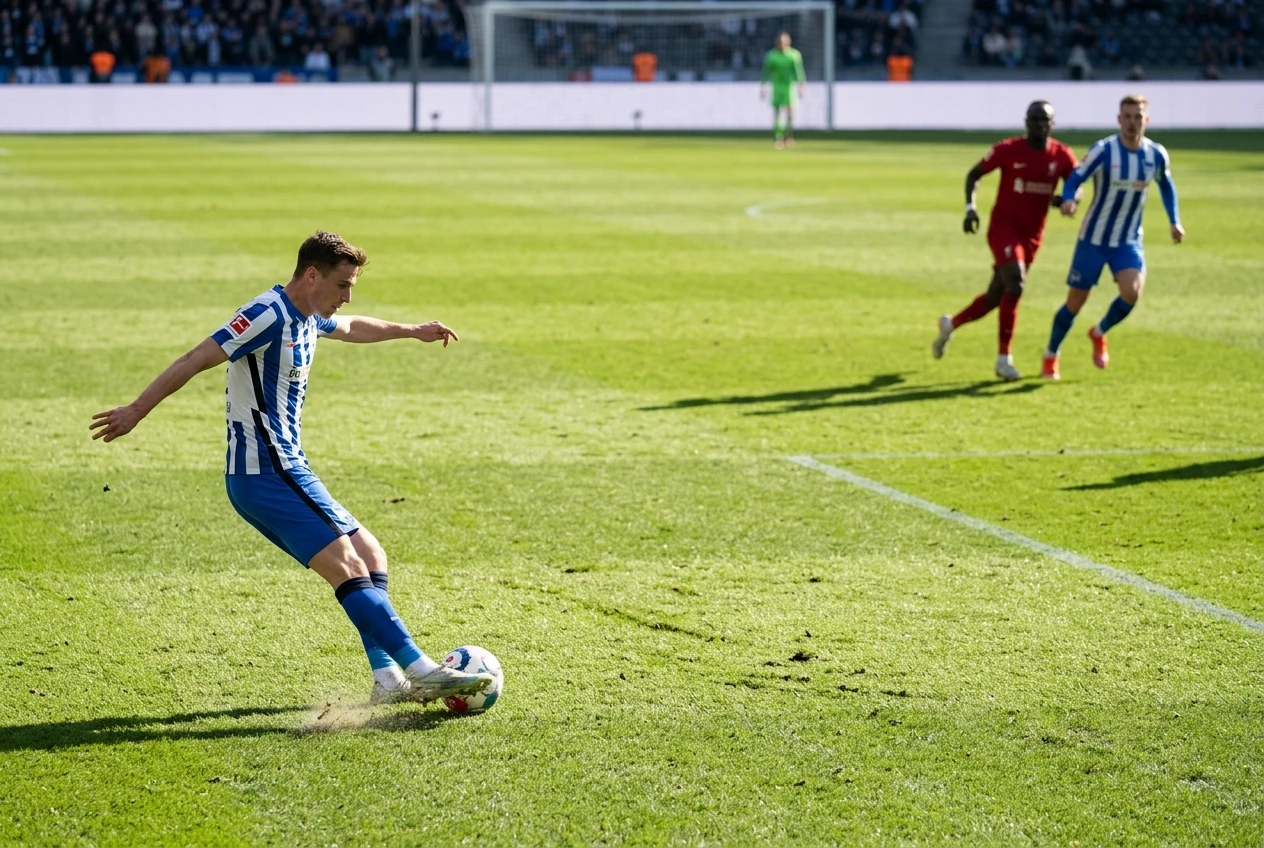
A striker can be perfectly onside when the ball is played and then sprint ten yards ahead of the defense before the ball arrives. That’s not offside. It’s just a well-timed run. Conversely, a striker can be a single step ahead of the defense at the exact instant the pass leaves the passer’s foot, then get caught by the ball while running back onside. That player is offside, even though by the time the ball reaches them, they look fine.
The rule freezes the picture at one frame: the moment of the kick. Train yourself to watch that frame, not the catch, and most offside calls start making sense.
The two conditions that both have to be true
Being ahead of the defense isn’t enough on its own. Two things have to be true at the same time for a player to be offside:
- They are nearer to the opponent’s goal line than both the ball and the second-to-last opponent (usually the last outfield defender, since the goalkeeper is typically the last one).
- They become involved in the play, by touching the ball, interfering with an opponent, or gaining an advantage from the position.
A player can be standing in an offside position and not be called offside, because position alone isn’t an offense. Only when they’re in that position and get involved does the flag go up. This is why you’ll sometimes see a player stood yards offside, completely still, while the ball is played elsewhere, and no call is made. They’re not part of the play, so the position doesn’t matter yet.
Five situations where a player looks offside but isn’t
These are the moments that make commentators pause and fans in the stands groan, usually because the picture on screen looks wrong even though the call is right.
- The player was onside when the ball was kicked, then ran past the defense. As covered above, timing beats appearance every time.
- The player is in their own half. Offside only applies in the opponent’s half. A player can stand anywhere they like in their own territory.
- The player receives the ball from a goal kick, corner, or throw-in. Offside doesn’t apply directly from these restarts, so a striker camped on the last defender’s shoulder is fine.
- A defender plays the ball back to their own teammate, putting an attacker “ahead” of the new last defender. Offside is judged against the opponent’s players, and a deliberate pass or poor touch from a defender can reset who counts as the last line.
- The player is level with the second-to-last defender, not ahead. Level is onside. The rule requires the attacker to be nearer to the goal line than the defender, so a dead-even line favors the attacker.
Each of these looks, in real time, like it should be offside. They aren’t, because the rule is stricter and narrower than most people assume.
Why this rule exists and what the game looked like without it
Offside exists to stop attackers from camping next to the opposing goalkeeper and waiting for a long ball, turning the game into a series of kick-and-chase moments rather than a sport built on movement and build-up play. Early versions of soccer in the 1800s had far stricter offside rules, borrowed partly from rugby, that required several defenders between an attacker and the goal at all times. That made forward passing almost impossible and kept the game bunched up and slow.
The rule has been loosened over time, settling into the two-condition version used today, because a game with no offside rule at all turns into exactly the kind of static, cherry-picking spectacle the original lawmakers wanted to avoid. The rule forces attackers to time their runs rather than simply stand in the best spot and wait.
Test yourself: three quick scenarios to check if you’ve got it
- A winger is standing even with the last defender when a teammate plays a through ball. The winger then sprints past the defender to collect it. Onside or offside? Onside, because the winger was level, not ahead, at the moment of the pass.
- A striker is two yards ahead of the last defender when the ball is kicked, but the pass comes from a corner kick. Onside or offside? Onside, because offside doesn’t apply directly from a corner.
- A forward is standing in an offside position but makes no move toward the ball, which a teammate dribbles into the box and scores with unassisted. Onside or offside? Onside, because the forward never became involved in the play.
If you got two or three of those right, the rule has clicked. If you got one, go back through the five situations above and watch for the moment of the kick next time you catch a match.
Offside and VAR: why replays make close calls look different
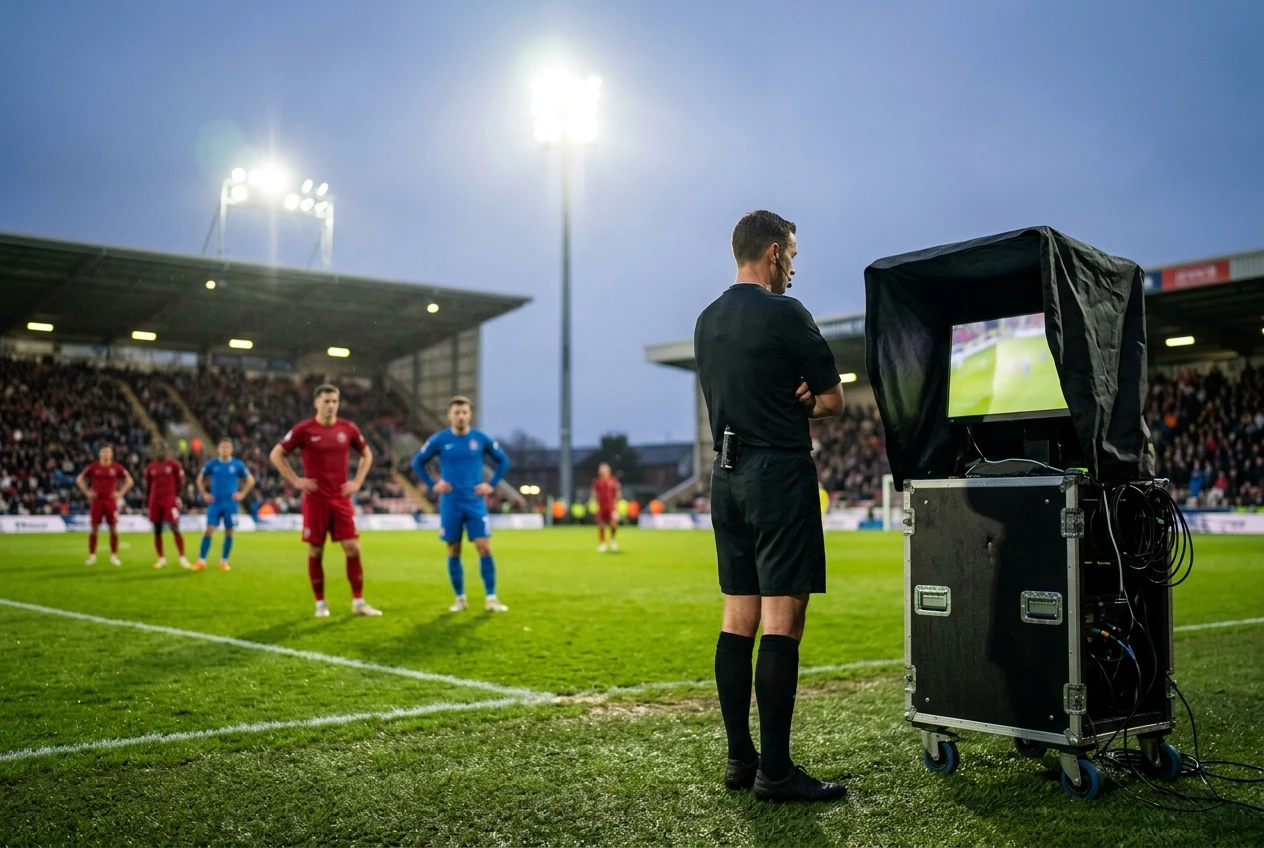
Video review has made offside calls slower but also far more precise, because officials can freeze the exact frame the ball was kicked and draw lines across the pitch to measure margins that are impossible to see at full speed. This is also why some VAR offside calls look absurd on first glance, a toe or a shoulder ahead by inches, because the technology is enforcing the same rule that’s always existed, just with a precision the human eye never had. The rule hasn’t changed. The ability to see it clearly has.
Once this clicks, you’ll start catching runs and timing before the flag even goes up, which is the real sign you’re reading the game rather than just watching it. The next layer, spotting the shape of a team’s play before the ball moves, is covered in how to build tactical intelligence as a soccer player.