
Indoor soccer for kids is energetic, fast paced, and genuinely fun. Skills develop quickly on smaller indoor courts, so having a collection of creative drills makes a big difference. I’ve had plenty of muddy field days turned into memorable indoor sessions just by having a solid lineup of indoor drills. If you’re new to coaching or just want to help your child build some core soccer skills when they can’t play outside, these drills can turn any indoor court or gym into a soccer playground.
Affiliate Disclosure: This article contains affiliate links. As an Amazon Associate, I may earn from qualifying purchases at no extra cost to you. I only recommend soccer gear that can genuinely help improve speed, comfort, and performance on the field.
Why Indoor Soccer Drills Matter
Kids pick up a lot from soccer beyond just playing the game—things like teamwork, listening, coordination, and confidence all grow with the right practice. Indoor drills can be a bit different from what you usually run on grass fields. The space is tighter, the floor is smooth. Things move a little faster. These conditions sharpen passing, first touch, and quick decision making, which is what makes indoor soccer pretty handy for skill development.
Most community centers and school gyms use futsal or a basic five aside setup. Even a living room or basement can work with a soft ball and some makeshift goals or cones. The key is to focus on exercises that keep things moving and let every kid get lots of touches on the ball. It keeps everyone engaged, even the shyer players who sometimes fade into the background during big outdoor games.
Basic Indoor Soccer Drills for Kids
Building a foundation with simple drills always helps. These exercises are easy to set up and focus on basic skills kids will use every time they step onto a soccer court.
- Dribble Relay: Set up cones in two lines. Divide players into small teams and have them dribble the ball through the cones, tag their teammate, and repeat. It’s a race, so kids stay motivated, but dribbling control is top priority.
- Red Light, Green Light: All the kids line up at one end. When you say “green light,” everyone dribbles their ball toward you. Call out “red light” to make them freeze. The catch is, you’re looking for ball control. If the ball rolls away, back they go.
- Wall Pass Practice: Use any free wall and have kids pass the ball against it and trap it when it rebounds. This teaches accuracy and first touch. You can make it fun by counting how many passes they can string together without losing control.
- Keep Away: A group of players keeps the ball away from one or two defenders. The defenders’ job is to win the ball and swap roles. This one is noisy and full of laughter, but it’s great for passing and spatial awareness.
Creative Drills to Boost Skills Indoors
Mixing in a few imaginative exercises always helps keep kids excited about practice. I use these when I notice attention drifting or when skill levels are all over the map. These can be adapted to most age groups, with just a tweak here or there.
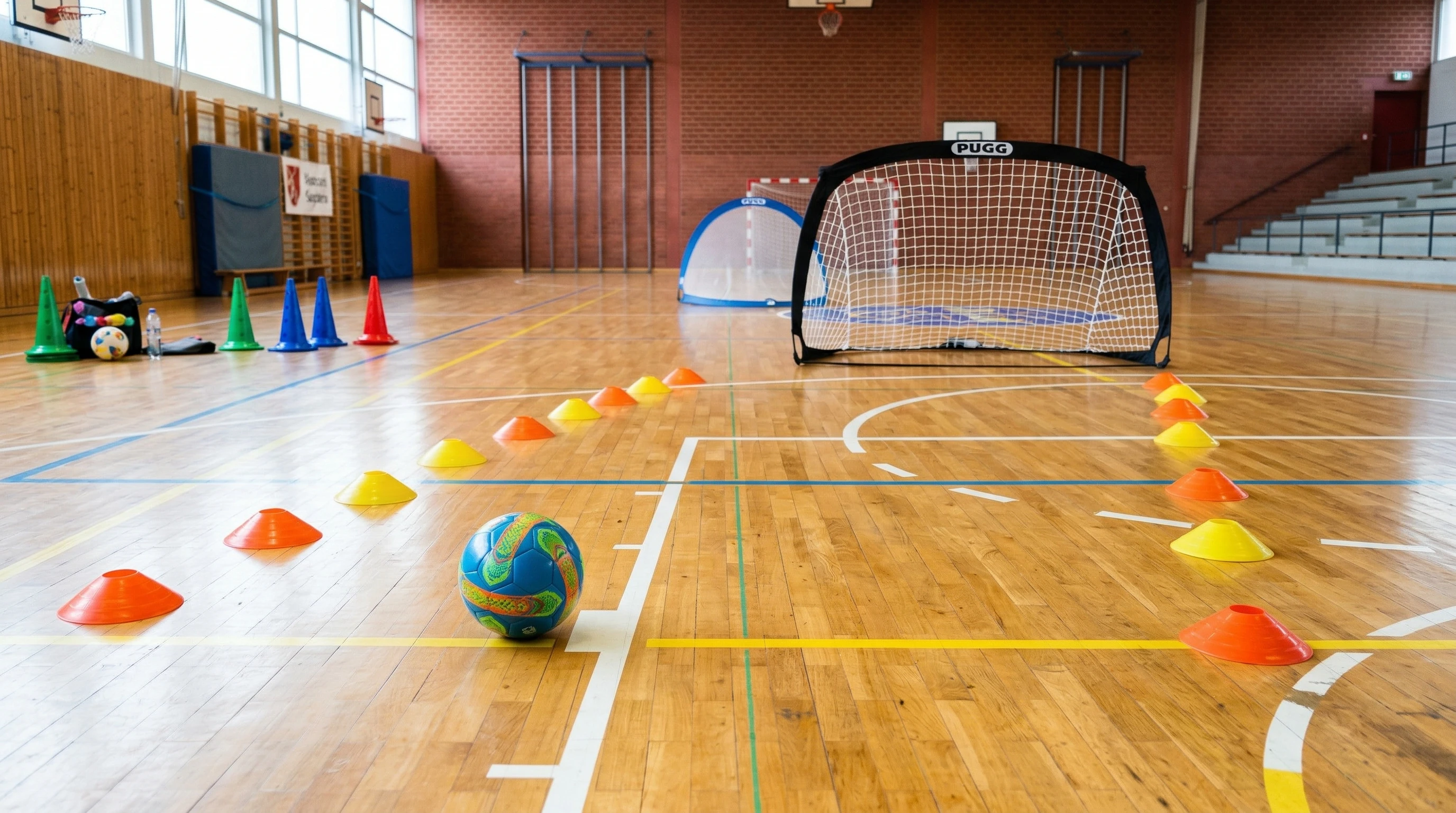
- Obstacle Course Dribbling: Use cones, gym mats, or anything safe as obstacles. Kids must dribble around or through the obstacles. If you time their efforts, it turns the drill into a challenge and encourages extra focus.
- 1v1 Mini Games: Use small goals or even cones as targets. Two kids face each other, and whoever scores first stays in. This drill really helps with attacking and defending one on one.
- Passing Gates: Create small “gates” using cones. In pairs, kids try to pass the ball through as many gates as possible in one minute. It helps improve accuracy and speed at the same time.
Keeping Kids Engaged During Indoor Practice
Indoor sessions can get off track quickly if kids are restless or bored. Having a good mix of short drills, fun games, and positive encouragement goes a long way. I find that rotating drills every 10 to 15 minutes keeps energy levels high. Also, giving every player a turn as captain or defender for a drill is a simple way to give a boost to confidence and teamwork.
Music can work wonders during warmups or breaks. I like to play something upbeat before starting a new drill. If you’re coaching younger kids, using rewards like “funny cone hats” or silly nicknames for drill winners can make the session extra memorable. Humor is your best friend for making indoor soccer practice something kids look forward to instead of just getting through a rainy day.
Setting Up a Safe Indoor Practice Environment
Space is more limited indoors, so safety needs extra attention. Watch for slick spots on the floor and make sure all obstacles are soft and sturdy. If you’re using a school basketball court, talk to maintenance ahead of time about loose floorboards or any scheduled cleaning.
Choosing the right ball is also really important. Lighter futsal balls or foam soccer balls are best. Full sized outdoor balls can bounce too high indoors and might break windows or lights. Some kids may forget to tie their shoes or wear the right gear. Quick equipment checks at the start save a lot of headaches later.
It’s also a good idea to remind kids about basic indoor safety, like no sliding tackles or hard shielding, since slick floors can surprise even experienced players. Having a first aid kit handy and knowing where the nearest exits are keeps everyone feeling secure.
Common Indoor Soccer Challenges and How to Tackle Them
- Space Limitations: Use smaller groups and rotate teams often so every kid gets lots of time on the ball. Set clear boundaries to keep drill areas organized.
- Loud Echoes: Indoor gyms can get noisy. Setting a simple signal, like one whistle means stop, makes instructions easier to follow. I always gather everyone close for quick huddles instead of shouting across the gym.
- Slippery Floors: Encourage kids to wear indoor court shoes or sneakers with good grip. Avoiding fast cuts at high speeds until everyone feels comfortable helps prevent tumbles.
- Recommended Indoor Soccer Training Gear
Recommended Indoor Soccer Training Gear
Using the right indoor soccer equipment can make practice sessions safer, more organized, and a lot more fun for kids learning the game.
⚽ Indoor Soccer Ball / Futsal Ball – Designed for better control and lower bounce on indoor surfaces, making passing and dribbling easier for young players.
👉 Shop Indoor Soccer Balls Here: Indoor Soccer Balls on Amazon
⚽ Training Cones – Perfect for dribbling relays, obstacle courses, passing gates, and indoor skill drills.
👉 View Soccer Training Cones: Soccer Training Cones on Amazon
⚽ Indoor Soccer Shoes – Indoor court shoes provide better grip and stability on gym floors and futsal courts.
👉 Check Indoor Soccer Shoes Here: Indoor Soccer Shoes on Amazon
⚽ Portable Mini Soccer Goals – Great for small-sided games, shooting drills, and indoor target practice.
👉 Shop Portable Soccer Goals: Portable Mini Soccer Goals on Amazon
⚽ Agility Ladder – Helps kids improve coordination, quick feet, balance, and movement speed during indoor training sessions.
👉 Grab an Agility Ladder Here: Soccer Agility Ladder on Amazon
⚽ Foam Soccer Ball – A safer option for younger kids practicing in living rooms, garages, or smaller indoor spaces.
👉 View Foam Soccer Balls: Foam Soccer Balls on Amazon
Taking Breaks and Managing Energy
Hydration can be an afterthought in a cool gym, but kids need water breaks just like outside. Scheduling short breaks between drills keeps nerves from fraying; my general rule is a one minute break after every 15 minutes of activity. Snack breaks work best for longer sessions, especially if everyone brings a healthy snack to share. Kids remember these moments almost as much as the soccer itself.
Making Indoor Practice Competitive and Fun
Adding a touch of friendly competition makes drills feel fresh. Set simple team goals: How many passes can your team string together? Who can hit a target from the farthest away? Kids love scoreboards, so I sometimes keep a tote board or piece of paper and update it after each challenge.
I also ask kids for their own drill ideas. Sometimes they come up with surprisingly smart games that blend their favorite gym activities with soccer. If one group comes up with a cool idea that works, let everyone try it. Nothing builds team spirit like running a drill invented by a teammate.
You can also let the group come up with silly rules for a drill, such as “score only with your weaker foot” or “must pass before any shot.” These tweaks not only make things more fun, but also work different soccer muscles.
Real World Applications: Skills That Translate Outdoors
One of the best things about indoor soccer practice is that it makes kids more confident on outdoor fields. Faster passing and closer ball control in tight spaces translate to stronger outdoor play when spring rolls around. Playing indoors teaches quick turns, smart movement, and how to use every part of the foot, which often surprises outdoor opponents.
- Quick Passing: Indoors, passes have to be short and quick; these sharp touches pay off when the penalty box is crowded during outdoor matches.
- Turning in Tight Spaces: Kids who play indoors get used to spinning and shielding the ball, which cuts down lost possessions outside.
- Staying Focused Under Pressure: The fast pace indoors teaches kids to make smart decisions even when there’s not much space to think.
When your indoor sessions wrap up, encourage kids to notice how their footwork transfers to grass. You might see them trying indoor inspired touches and pivots even in wide open outdoor games, which can boost their confidence and spark new ideas on the field.
Frequently Asked Questions
Question: What age can kids start indoor soccer drills?
Answer: Most drills can be adapted for kids as young as 4 or 5 years old if you keep things simple and focus on fun over competition.
Question: What equipment do I need for indoor soccer practice?
Answer: At minimum, a light indoor ball (futsal or foam), cones, and small goals work. Good sneakers with grip and water bottles are helpful, and gym pennies make organizing teams easier.
Question: How do I deal with mixed skill levels?
Answer: Pair more advanced kids with beginners for passing or relay drills, and use plenty of smallsided games where everyone rotates roles.
Question: If I only have a small living room, can I still do drills?
Answer: Absolutely! Floor dribbling, passing around furniture, or soft wall passes with a foam ball let kids develop skills safely in small spaces.
Getting Started With Your Next Indoor Soccer Session
Having a variety of indoor soccer drills for kids helps you make the most of any space, rain or shine. Mixing in creative games, focusing on safety, and listening to what excites your group of players can turn an ordinary afternoon into a confidence-boosting soccer experience. No gym? Any safe indoor area or cleared out living room works. With a bit of creativity, you’ll enjoy seeing kids laugh, learn, and surprise themselves with their progress. And if there’s ever a day when you can’t go outside, you’ll know how to put together an indoor session that’s both fun and memorable.
👉 Explore More Indoor Soccer Training Gear Here: Best Indoor Soccer Equipment on Amazon