 Getting better at soccer isn’t just about fancy footwork or strong kicks. Peripheral vision is a big deal on the field; it helps you spot open teammates, see defenders coming from your blind spots, and make those split-second passes that make a difference in any game. Some players think vision comes naturally, but you can definitely train it with the right drills.
If you sometimes feel tunnel vision or get surprised by an opponent out of nowhere, you’re in good company. Peripheral awareness doesn’t always get the spotlight, but without it, it’s tough to read the game and make confident, quick decisions.
I’ve pulled together 10 practical soccer drills to take your field vision up a notch. These are great for coaches and players looking for a fresh addition to their regular sessions or anyone who just wants to get an edge without a lot of extra gear or complicated setups. Improving these skills will help you play faster and smarter, making a real difference on the field.
Affiliate Disclosure: This article contains affiliate links. As an Amazon Associate, I may earn from qualifying purchases at no extra cost to you. I only recommend soccer gear that can genuinely help improve speed, comfort, and performance on the field.
1. Circle Passing With Calls: Get Your Head on a Swivel
This classic drill takes a simple passing circle and adds a clever twist to wake up your peripheral skills, not just your feet. Here’s how I like to run it:
- Set up 5 to 8 players in a circle about 8 to 10 yards apart.
- One ball starts moving around the circle at a steady pace; players must pass quickly, one touch if possible.
- The catch: while receiving a pass, each player calls out the name or number of another player on the far side. This forces you to constantly check every direction, even while focusing on the ball.
It’s practical because you’re always practicing awareness, communication, and sharp distribution under pressure. Keep score to make it competitive and push players to improve their reaction times.
2. Numbered Cone Scanning: Training Quick Recognition
This drill is all about training your eyes to catch important information, even when your attention is elsewhere.
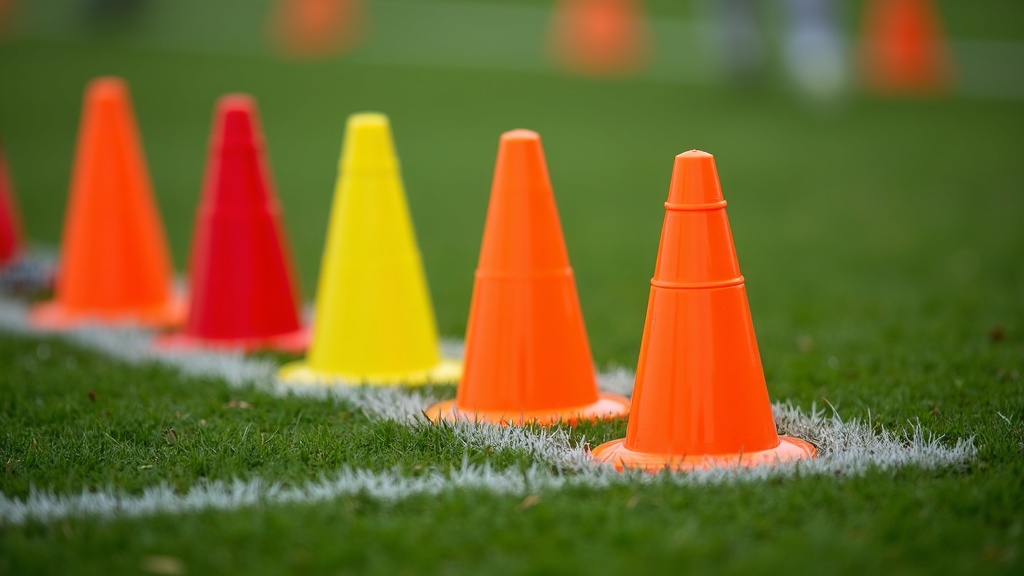
- Set up four or more cones around you, each one labeled with a large, visible number.
- Your coach or a teammate shouts out numbers randomly as you dribble or juggle the ball inside the area.
- When a number is called, immediately glance at the correct cone (without stopping your feet or losing control of the ball).
This one’s pretty handy for solo training, too. You can record a list of numbers being spoken, then play it back during your practice. You’ll start to notice faster reactions both on and off the field, as this drill boosts your ability to react to changing scenarios.
Recommended Training Gear for Peripheral Vision Drills
Using the right training equipment can help improve reaction speed, awareness, and ball control during practice. Here are a few soccer training tools worth checking out:
⚽ Soccer Training Cones – Perfect for scanning drills, passing gates, and reaction exercises.
👉 View Soccer Cones on Amazon
⚽ Agility Ladder – Great for improving foot speed, coordination, and quick movement during vision drills.
👉 Shop Agility Ladders on Amazon
⚽ Reaction Training Lights – Excellent for improving peripheral awareness and fast decision-making.
👉 Check Reaction Training Lights on Amazon
⚽ Soccer Rebounder Net – Helps players practice passing, first touch, and scanning while training alone.
👉 View Soccer Rebound Nets on Amazon:
⚽ Size 5 Soccer Ball – A quality match ball helps improve touch, passing accuracy, and control.
👉 Shop Soccer Balls on Amazon
⚽ Speed Training Resistance Bands – Useful for explosive movement, balance, and agility training.
👉 View Resistance Bands on Amazon
3. Shoulder Checks: Make It a Habit
Pro players check their shoulders almost every time the ball comes near them. This tiny habit pays off big when you need to see open space or spot a pressing defender.
How to Build the Habit:
- During small sided games or even simple drills, players must look over both shoulders before receiving the ball.
- Make it a rule; if a player forgets, pause the drill for a quick reset.
It feels repetitive, but committing to this habit in practice makes it automatic in real matches. Coaches can challenge players to call out what they see, like an open teammate or a defender closing in, to reinforce not just seeing but actually processing that info fast.
4. Peripheral Passing Gates: Target Your Blind Spots
This drill adds a physical challenge that pushes you to react to targets just outside your direct line of sight. Improving here means you’ll miss fewer surprise moves from the other team.
- Set up multiple small passing gates using cones around a central player with the ball.
- The coach points (without saying anything) to a specific gate.
- The player must spot the signal, then turn or pass the ball through the correct gate, all without looking straight at it at first.
You’ll notice a boost in quick scanning and ball control. After a few rounds, even those gates at your side won’t sneak up on you and players start reading the entire field more naturally.
5. Multi Ball Awareness Drills
Trying to track more than one ball at a time might sound tricky, but this drill tunes up your ability to split attention, which is a core part of peripheral vision and reacting on the fly.
- Create two lines: one passing and one dribbling at a slow pace, just offset from the passing lane.
- Players must receive and pass from one side while keeping a side-eye on the dribble line. If the dribble ball gets close, players must call out a cue (like “close” or “danger”).
This mix of attention demand plus physical reaction helps you get comfortable tracking motion outside your focus zone. You’ll be less likely to get caught off guard by opponents during games.
6. Mirror Drills: Shadow and Scan
Grab a partner for this one. Stand facing each other about 5 to 7 yards apart with a ball at your feet. One player acts as the leader, the other mirrors their moves.
- The leader dribbles side to side, occasionally making quick feints. The follower mirrors every move, while also calling out colored cones (placed on the edge of the drill space) as soon as they come into their peripheral view.
Switch roles every few rounds. This is great for developing anticipation, agility, and that extra level of visual scanning while managing ball control. Doing this regularly also builds quicker feet and sharper minds on the pitch.
7. Wall Pass Reaction: Solo Peripheral Challenge
No teammates available? You can still work on peripheral awareness with just a wall and some markers.
- Mark target spots at different heights and positions on the wall.
- While juggling or passing against the wall, your goal is to hit each target when a light or sound cue (could even be a phone beep) tells you to.
Because you won’t know which target to hit next, your eyes need to work as much as your feet. This is super useful for training solo at home or in the yard and helps you process surprising changes faster in games.
8. Dynamic Obstacle Courses: Fast Paced Decisions
Mix up cones, poles, and moveable objects in a dribbling circuit. As you go through the course, a coach or partner can suddenly add new objects or throw in a moving obstacle. Your job is to adjust your dribbling route instantly, keep the pace up, and use your peripheral vision to spot surprises early.
This kind of unpredictability mimics what actually happens in matches and keeps your mind and body alert. Plus, it’s a fun way to break up normal drills with something high energy and reactive. Add new challenges by timing players and encouraging competition within drills.
9. Two Goal Game: Expanding Your Field Vision
This mini-game is ideal for team sessions:
- Instead of playing toward one goal, set up two small goals on opposite ends of a rectangle. One team attacks both goals but won’t know which one is “live” until a coach signals midway through (using a flag or whistle).
The attacking team learns to keep both goals in view and switch targets in a split second. Players start to anticipate the switch, searching for new passing lanes and teammates as soon as the signal comes. This improves reaction speed, teamwork, and overall awareness.
10. Color Coded Passing Grids
Mark grid spaces with colorful cones or vests. As you play keep away or rondo, the coach shouts a color, and every player must pass or move through that colored space next. It sounds simple, but it makes everyone scan outside their comfort zone every time the color changes. This drill is really good for youth teams or anyone new to scanning training, and can be made more challenging by increasing speed and complexity over time.
How to Add Peripheral Vision Drills to Regular Training
Mixing one or two of these drills into your regular soccer practice works well without changing your entire routine. Use the easier ones, like shoulder checks or cone scanning, as a warm-up. Save the more complex or game-speed drills for later in the session when players are warmed up. These can even be used as a high tempo finisher to push both physical and mental fatigue, making your sessions more dynamic.
Improving peripheral vision isn’t just about seeing more. It’s about playing faster, staying confident under pressure, and picking better options in the tightest moments. Give these drills a try and you’ll likely notice smoother play and fewer missed opportunities right away. For more ideas, check out resources like FIFA’s training videos, tips from experienced coaches, or training guides from your local football federation. The benefits of these drills can become clear almost immediately and step up your game for good.
👉 Ready to train smarter and improve your field awareness?
Check Out the Best Soccer Training Gear on Amazon